
StarVaders
Slay the Spire meets Into the Breach in a mech suit, and the result lands a Metacritic 85 for good reason. If Heat management and Doom timers sound like your kind of pressure, clear your evening.
GamerScout Verdict
Built for players who enjoy reading a grid two turns ahead and watching a carefully trimmed deck pay off in a single chain reaction.
Compare Prices(6 stores)
Every store in this table quotes us in euros, so the EUR figure is the price the seller actually set, not our arithmetic — which is why EUR is also the currency we rank in. We only list an offer here when the store gives us its price in euros, so nothing in this table is a number we invented.
Pick USD, PLN, GBP, CAD or AUD in the header and we convert from EUR at the European Central Bank reference rate — converted amounts are prefixed with ~. Your bank or the store may apply a different rate at checkout. We never hide offers based on where you are: everyone sees this whole table.
We may earn a commission when you buy games through links on this page — at no extra cost to you. It never affects our rankings or verdicts.
Price History
Screenshots & Media
About StarVaders
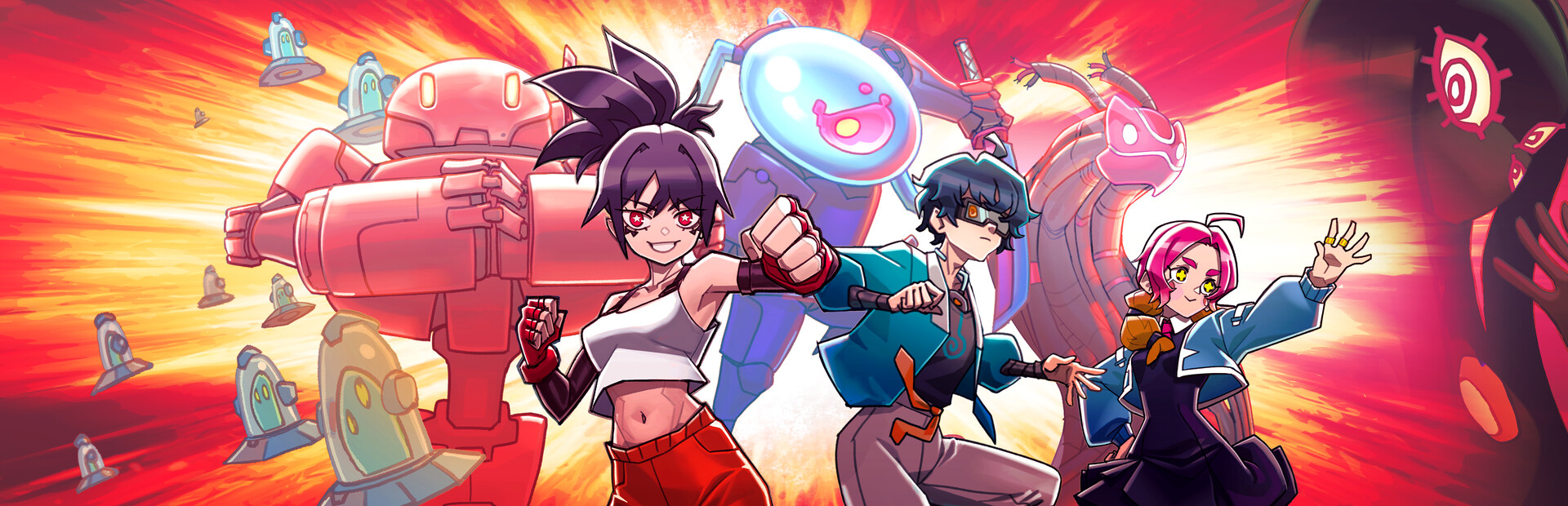
I've run enough roguelike deckbuilders to recognize when a genre mashup is cynical and when it's actually earned. StarVaders is the latter. Pengonauts, a three-person studio out of Montreal, has taken the DNA of grid tactics, classic card-based roguelikes, and the escalating-pressure loop of Space Invaders and stitched them together on a fixed 7x9 battlefield in a way that genuinely justifies every comparison reviewers keep making. You pick one of three mechs - the bullet-spraying Gunner, the nimble close-quarters Stinger, and the summon-and-spell Keeper - then layer one of up to ten pilots on top, each carrying their own starting cards, artifacts, and passive abilities. That pilot-mech combination is your build identity for the run, and the differences between them are meaningful enough that swapping feels like a fresh game rather than a palette change. The combat loop is where the strategy depth actually lives. Each turn you draw five cards from your deck, split across movement, attack, and tactical types. Playing cards generates Heat, and when your mech overheats, your turn ends early and the last card you played gets Burned - unusable until you reshuffle. That Heat ceiling is not just a punishment mechanic; with the right artifacts and card synergies, controlled overheating becomes an offensive tool. Meanwhile, enemies telegraph every action through an Intent System, so every encounter reads like a deterministic puzzle rather than an RNG dice roll. The Doom counter - which fills when enemies reach the bottom three rows of the grid and hits game-over at five - creates a constant forward pressure that stops you from turtling or overplanning. Chrono Tokens let you rewind mistakes, but supplies are limited, which keeps that pressure honest. Progression is where StarVaders earns its replay hours. A run spans three Acts of escalating enemy density, each capped by a boss that stress-tests whatever deck shape you have committed to. Beat the game, and a Trophy Level system unlocks harder difficulties that modify core mechanics rather than just inflating enemy health - enemies hit harder, Chrono Token limits tighten, and card economy gets squeezed. The unlock grind for the second and third mechs is the most common criticism across reviews, with several writers noting they spent ten-plus hours seeing only the starting Gunner. If you need to feel the full breadth of the roster quickly, that pacing might frustrate you. The other recurring critique is an abrupt difficulty spike between the first and second difficulty tiers, which can feel punishing rather than instructive without a clearer bridge. On the accessibility front, the tutorial is genuinely competent. Heat management, Doom progression, card economy, and grid positioning all arrive in a digestible sequence, and the Intent System means you are never surprised by what an enemy does - you are surprised only by whether your hand is good enough to handle it. The story is thin anime-flavored dressing, with pilot lore unlocked at run-end rather than woven through play, but most people buying this are here for the emergent narrative of a five-Doom last stand salvaged by a three-card combo they spotted at the last second. That story StarVaders tells reliably, and it tells it well. The deck size management adds a layer most newcomers miss: a smaller, tighter deck cycles key cards faster and converts draw luck into consistent tempo, which is the kind of decision-making that separates good runs from great ones.

Strategy & simulation
Tags
System Requirements
Minimum
- OS
- Windows XP, Vista, 7, 8/8.1, 10, 11
- Memory
- 4 GB RAM
- Storage
- 3 GB available space
- Graphics
- 4GB Video Memory
- Processor
- 2.0 Ghz
Keep exploring
Community Discussion
Be the first to comment on StarVaders.
Reviews & Ratings
Game Info
- Developer
- Pengonauts
- Publisher
- Joystick Ventures
- Release Date
- Apr 30, 2025