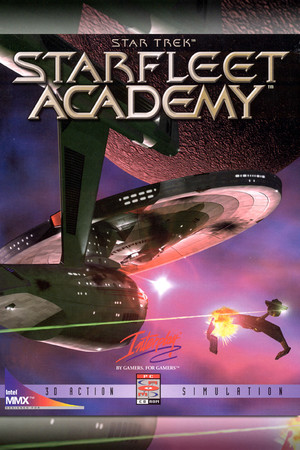
Star Trek™: Starfleet Academy
Shatner, Koenig, and Takei show up in live-action FMV to instruct you, the Kobayashi Maru is playable, and the whole thing runs about 10 hours. Trek fan or space-sim hunter - those are your two reasons to be here.
GamerScout Verdict
Best for TOS-era Trek fans who want Shatner's voice in their debrief screen and can forgive a flight model built for arcade, not the bridge.
Compare Prices(2 stores)
Every store in this table quotes us in euros, so the EUR figure is the price the seller actually set, not our arithmetic — which is why EUR is also the currency we rank in. We only list an offer here when the store gives us its price in euros, so nothing in this table is a number we invented.
Pick USD, PLN, GBP, CAD or AUD in the header and we convert from EUR at the European Central Bank reference rate — converted amounts are prefixed with ~. Your bank or the store may apply a different rate at checkout. We never hide offers based on where you are: everyone sees this whole table.
We may earn a commission when you buy games through links on this page — at no extra cost to you. It never affects our rankings or verdicts.
Price History
Screenshots & Media
About Star Trek™: Starfleet Academy
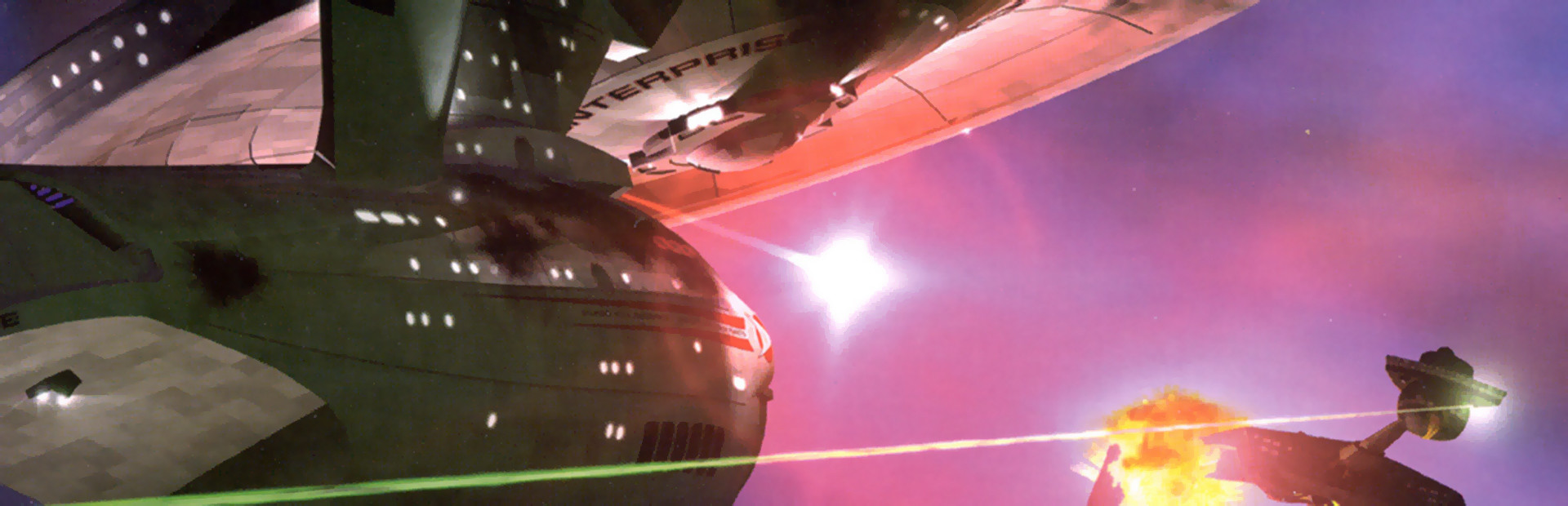
I have a soft spot for late-90s space sims that tried to out-Wing Commander Wing Commander, and Starfleet Academy is one of the more fascinating case studies in that arms race. Released originally in 1997 and landing on Steam in 2015, it puts you in the boots of cadet David Forrester on the command track, working through a sequence of starship simulator missions while a parallel story involving a terrorist faction called the Vanguard slowly unfolds in branching FMV cutscenes. The structure is closer to Wing Commander III than to anything resembling a true tactical sim - mission briefing, 3D space combat, debrief, repeat - and that framing either clicks for you or it doesn't. The flight model is the game's most divisive feature, and honestly it deserves the criticism. You are piloting what feels like a very large, very slow fighter rather than commanding a Constitution-class heavy cruiser. Phasers and photon torpedoes are your only weapons, which is accurate to the source material, but the engagement ranges and dogfight rhythm feel lifted wholesale from a different genre. Critics at the time noted it read more like a Wing Commander clone than a Star Trek experience, and that read still holds. The enemy AI running Klingon Birds-of-Prey and Romulan Heavy Cruisers is aggressive enough to punish sloppy flying but not deep enough to reward tactical planning the way a true sim might. You can interact with the science station, communications console, and engineering systems between engagements via mouse, which adds a thin layer of bridge flavor, but in the heat of a fight most players default to the full-screen combat HUD and forget the Trek trappings are there. What saves the package is genuine production value in two specific areas. First, the FMV sequences featuring Shatner as Kirk, Koenig as Chekov, and Takei as Sulu are legitimately well-done - the performances are committed, the green-screen integration was technically groundbreaking at release, and the branching dialogue actually carries consequences for crew performance. Getting dressed down by Kirk for firing on a friendly is a memorable moment that no amount of creaky 1997 geometry can undercut. Second, the mission design has real highlights. The Kobayashi Maru scenario is here and playable. There is a recreation of the Battle of the Mutara Nebula. A 'Balance of Terror' re-run puts you against a cloaking Romulan commander. These are fan-service scenarios that deliver, and the game also supports up to 32 players in its multiplayer combat mode, which is a remarkable spec for 1997 and still listed as a feature today. For a newcomer approaching this in 2025, context matters. The game runs roughly 10 hours through the main campaign. It has no mod ecosystem to speak of, no resolution scaling support, and the Steam overlay can cause freezes on shift-tab. The tutorial is essentially nonexistent - the game assumes you either read the manual or already know what a Miranda-class is. If you want the deeper, more tactically satisfying end of the Trek sim spectrum, Klingon Academy (the 2000 sequel) and Starfleet Command Gold Edition are both stronger picks. But if the Wrath of Khan era is your setting, you want to hear Kirk's voice giving you a mission debrief, and you can tolerate a flight model that prioritizes arcade feel over naval authenticity, this is the only game that scratches that exact itch. The Steam rating sits at 82% positive across a small but vocal sample, which tracks - it is a game that rewards franchise affection more than pure sim chops.

Strategy & simulation
Tags
System Requirements
Minimum
- OS
- XP, Vista, 7, 8
- Memory
- 512 MB RAM
- DirectX
- Version 7.0
- Graphics
- 3D DirectX 7 compatible graphics card
- Processor
- 1.8 GHz Processor
Recommended
- Memory
- 1 GB RAM
- DirectX
- Version 9.0
- Graphics
- 3D DirectX 9 compatible graphics card recommended
Keep exploring
Community Discussion
Be the first to comment on Star Trek™: Starfleet Academy.
Reviews & Ratings
No ratings available
Game Info
- Developer
- Interplay Entertainment Corp.
- Publisher
- Interplay Entertainment Corp.
- Release Date
- May 8, 2015