Star Dynasties
Feudal politics meets sci-fi collapse: manage a dynasty across a fractured galaxy one ruthless turn at a time. Crusader Kings in space, stripped back but sharp.
GamerScout Verdict
A focused political strategy game that works best as a gateway to the genre rather than a destination for hardened grand-strategy veterans.
Compare Prices(9 stores)
Every store in this table quotes us in euros, so the EUR figure is the price the seller actually set, not our arithmetic — which is why EUR is also the currency we rank in. We only list an offer here when the store gives us its price in euros, so nothing in this table is a number we invented.
Pick USD, PLN, GBP, CAD or AUD in the header and we convert from EUR at the European Central Bank reference rate — converted amounts are prefixed with ~. Your bank or the store may apply a different rate at checkout. We never hide offers based on where you are: everyone sees this whole table.
We may earn a commission when you buy games through links on this page — at no extra cost to you. It never affects our rankings or verdicts.
Price History
Screenshots & Media
About Star Dynasties
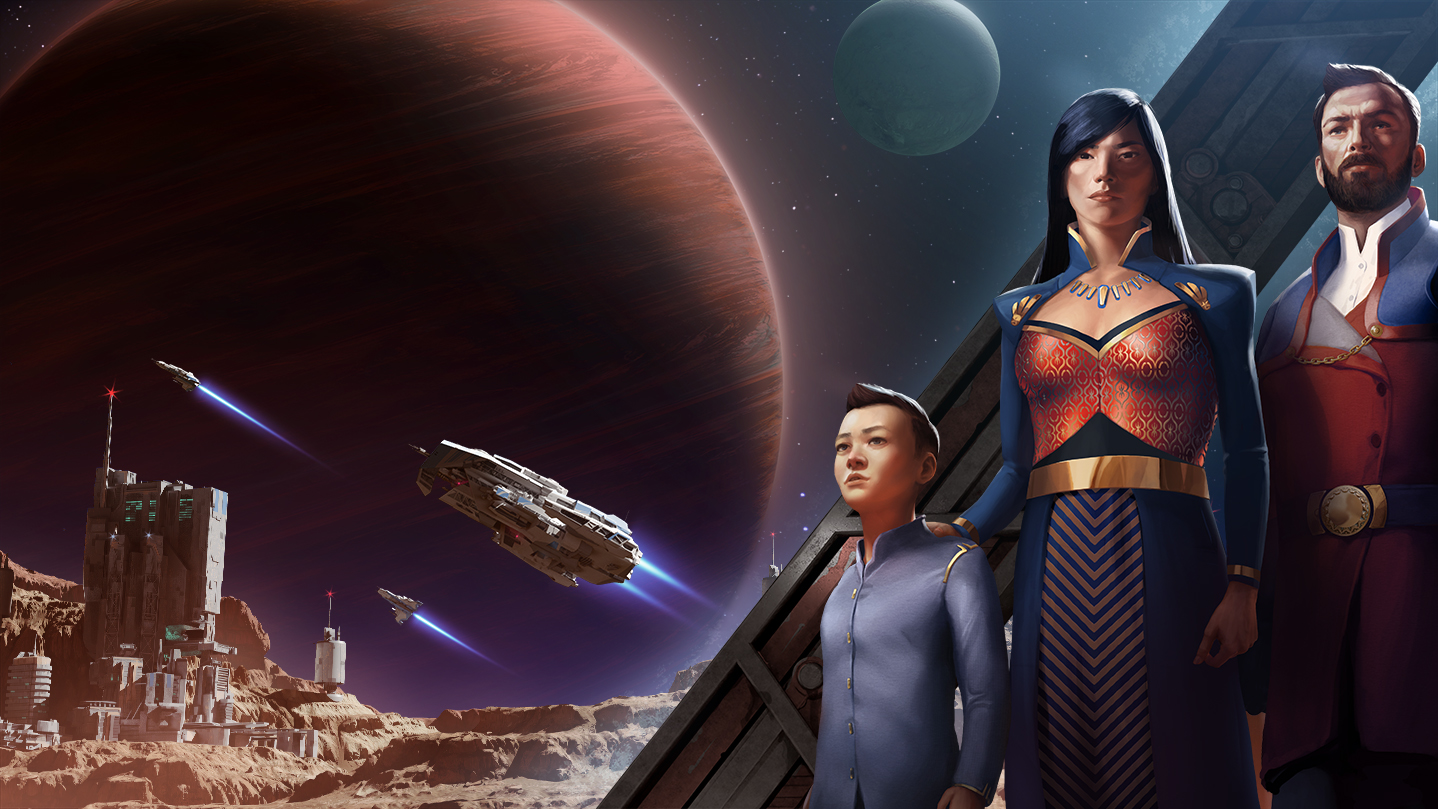
Star Dynasties is a turn-based, procedurally generated grand-strategy RPG set in a post-Earth galaxy where feudal hierarchies have replaced interstellar civilization. The premise is lean and effective: humanity fractured after losing Earth, and now noble houses scrape for influence, alliances, and survival across a handful of star systems. You are a dynastic ruler, not a fleet admiral or a colony planner. The game's core loop is personal politics - marriages, rivalries, assassination plots, oaths of fealty, and the slow accumulation of power through relationships rather than raw military expansion. The comparison to Crusader Kings is inevitable and mostly fair, but Star Dynasties is a much smaller game by design. The empire management layer is genuinely light: you are not optimizing trade routes or micromanaging planetary infrastructure. What you are doing is reading character sheets, weighing loyalty scores, and deciding whether to honor a vassal's request or quietly ruin him. Each procedurally generated run produces a different cast of nobles with distinct traits and agendas, and the event chains that emerge from those interactions are where the game earns its playtime. A succession crisis that spirals into a three-house war because you made one bad betrothal decision feels earned, not scripted. For strategy players who want deep mechanical systems, a few caveats. The AI opposition is functional but not particularly cunning at higher scales - rival houses tend to react rather than scheme proactively, which takes some of the pressure off mid-game consolidation. The turn-based structure keeps things readable and deliberate, which is a genuine design strength for players who find real-time grand strategy overwhelming, but it also means that late-game snowballing goes mostly unchallenged once you have a stable alliance network. The mod ecosystem is essentially nonexistent compared to Paradox titles, so what you see at launch is largely what you get. That said, the procedural generation does meaningful work: no two dynasties feel identical at the political level, even if the systemic options plateau after a dozen hours. Where Star Dynasties genuinely shines is as an entry point for players curious about political grand strategy but intimidated by games with 400-page wikis. The tutorial is direct and respects your time. The interface communicates what matters - character relationships, opinion values, succession lines - without burying you in nested menus. If you have ever wanted to understand why someone spends 200 hours in a dynastic strategy game, this is a lower-risk way to find out. The narrative hooks work, the tone is appropriately grim without being grimdark, and the personal-politics framing keeps sessions from feeling like spreadsheet maintenance. The mixed Steam reception reflects honest tensions in the design rather than a broken game. Players expecting deep 4X mechanics or tactical combat will bounce off it fast. Players expecting Crusader Kings depth will find the systems shallower than they hoped. But players who want a focused, readable, politically-driven experience with genuine replayability in the early and mid-game will find something worth their time here. It is a niche product made with clear intent, and within that niche it mostly delivers.

Strategy & simulation
Tags
System Requirements
Minimum
- Processor
- i5 2.7Ghz
- Memory
- 4 GB RAM
- Graphics
- Nvidia Geforce 660ti
- DirectX
- Version 10
- Storage
- 1 GB available space
Recommended
- OS
- Windows 10
- Processor
- i5 3.4Ghz
- Memory
- 8 GB RAM
- Graphics
- Nvidia Geforce GTX 960 (resolution 1366x768 or higher)
- DirectX
- Version 11
- Storage
- 1 GB available space
Keep exploring
Community Discussion
Be the first to comment on Star Dynasties.
Reviews & Ratings
Game Info
- Developer
- Pawley Games
- Publisher
- Iceberg Interactive
- Release Date
- Sep 1, 2021