Squidlit
A 45-minute Game Boy love letter made by someone who learned to code specifically to pull it off. Charming enough to disarm you, brief enough that you'll wonder if you imagined it.
GamerScout Verdict
Worth it for Game Boy nostalgists who can accept a 45-minute runtime as a feature, not a flaw.
Compare Prices(5 stores)
Every store in this table quotes us in euros, so the EUR figure is the price the seller actually set, not our arithmetic — which is why EUR is also the currency we rank in. We only list an offer here when the store gives us its price in euros, so nothing in this table is a number we invented.
Pick USD, PLN, GBP, CAD or AUD in the header and we convert from EUR at the European Central Bank reference rate — converted amounts are prefixed with ~. Your bank or the store may apply a different rate at checkout. We never hide offers based on where you are: everyone sees this whole table.
We may earn a commission when you buy games through links on this page — at no extra cost to you. It never affects our rankings or verdicts.
Price History
Screenshots & Media
About Squidlit
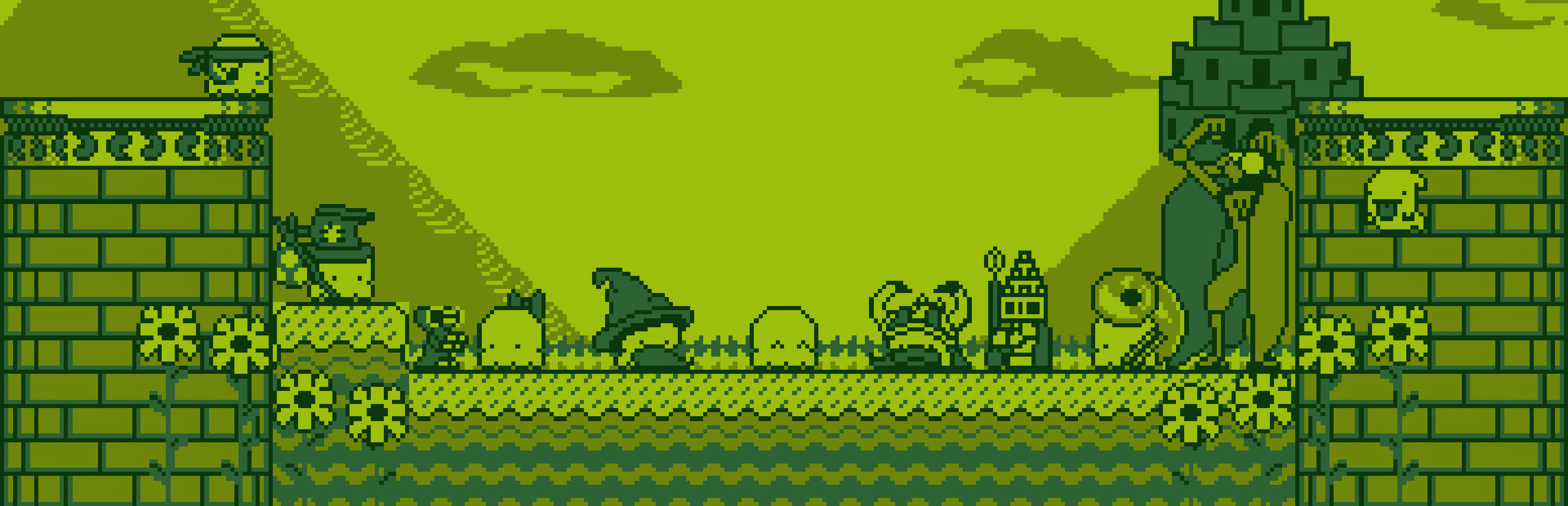
My first instinct when I load something this small and this sincere is to lean in rather than measure it against games ten times its size. Squidlit was born when its solo creator taught herself to code and compose music on actual Game Boy hardware, and that origin story is visible in every pixel. The whole thing runs at the original 160x144 resolution, locks itself to four shades of that unmistakable pea-soup green, and caps itself at 40 sprites on screen at a time. These are not aesthetic shortcuts. They are self-imposed rules, honored because the developer genuinely wanted to know what it felt like to make a real Game Boy game. The mechanical core is as lean as the palette. You play as Plip, a little squid dispatched from the village of Blipston to investigate a foreboding castle. Move, jump, and tap jump again mid-air to fire ink downward onto enemies below you. That ink-drop attack is your only offensive tool, which means positioning is everything, even if the positioning rarely demands anything scary. Regular enemies all go down in a single hit, and muffins collected along the roughly twelve stages serve as health. Consequences are gentle. The game is not trying to test you; it is trying to transport you. Boss encounters are where that core mechanic gets stretched the most. One memorable fight sends you inside a giant book, inking its pages from within while it tries to skewer you. These moments are brief flickers of genuine ingenuity before the credits appear. And they do appear fast. Depending on whether you stop to read the NPC dialogue, including the reliably silly pronouncements of the villain Skwit Skwot (GOD EMPEROR, every single time), you are looking at somewhere between 30 and 60 minutes from first boot to end screen. There is no save system, which is faithful to the era and completely manageable given the length, but worth knowing before you start. The community is divided here: some find the brevity a charming feature, a game that knows its shape and holds it without overstaying. Others feel the most interesting mechanical ideas show up just as the credits roll, which is a fair criticism. What almost nobody disagrees on is the soundtrack. The music was composed using Little Sound DJ loaded onto real Game Boy hardware with only four sound channels available, and the result is a chiptune score that feels genuinely of that era rather than imitative of it. The honest tension at the center of Squidlit is this: if you grade it as a modern indie game competing for your time and money, the lack of depth, challenge, secrets, or upgrades can feel thin. If you accept it on its own terms, as a tiny handcrafted object made by one person who loved Game Boys enough to build one from scratch, it lands differently. The NPC banter is warm and gently absurd. The platforming controls are tight. The camera can occasionally make it hard to judge what is below you before you drop an ink shot, and that is a real if minor frustration. Its sequel, Super Squidlit, addresses several of the complaints here with more content and a Game Boy Color treatment, so if the premise excites you but the brevity worries you, that may be the better entry point.

Indie & narrative
Tags
System Requirements
Minimum
- OS
- Windows 7, 8, 8.1, or 10
- Storage
- 151 MB available space
Recommended
- OS
- Windows 7, 8, 8.1, or 10
- Storage
- 151 MB available space
Keep exploring
Community Discussion
Be the first to comment on Squidlit.
Reviews & Ratings
No ratings available
Game Info
- Developer
- Squidlit Ink.
- Publisher
- Squidlit Ink.
- Release Date
- Mar 2, 2018