Compare SpaceChem prices across 50+ stores and find the best deal. Developed by Zachtronics. Published by Zachtronics. Released on 3/2/2011. Available on PC, Mac, Linux. Genres: Indie, Simulation. Metacritic score: 84/100.

One of the steepest difficulty curves in puzzle gaming, wrapped in a sci-fi factory sim that will have you sketching waldo paths on paper at 2am. Not for everyone, but for the right player it's untouchable.

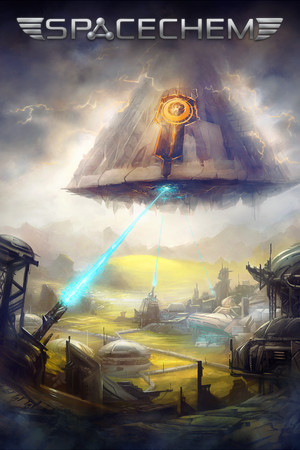
I keep a short list of games I genuinely struggled to put down even when they were beating me senseless, and SpaceChem sits near the top of it. The core loop sounds almost too simple to describe: program two robotic manipulators, called waldos, to grab atoms, bond them together, rotate and route them, then dump finished molecules into output zones. You do this inside reactors, then chain those reactors into larger production pipelines spread across alien planets. On paper it is factory automation with a chemistry skin. In practice it is one of the most cognitively demanding puzzle experiences ever released. The mechanical onion here is genuinely well-layered. Early puzzles in a single reactor ask you to choreograph a red waldo and a blue waldo around a fixed grid, placing bond commands, sync points, and flip-flops to time two parallel threads of execution. When it clicks, watching your little machine spit out a correct molecule feels like your code finally compiling after three hours of debugging. Then the game scales up: multiple reactors, inter-reactor pipelines, alternating input streams, defense missions where you redirect methane flow into timed explosive tanks. Each planet introduces a new constraint before the previous one has fully settled in your brain. The difficulty is subjective in a meaningful sense because the reactor toolkit is available almost from the start, with the challenge growing from the complexity of what you are asked to synthesize rather than from locked mechanics. Every solution is also genuinely your own. There is no single correct path: after completing a puzzle you see aggregate histograms of every player's cycle count, symbol count, and reactor count, which turns post-clear optimization into its own compulsive sub-game. I want to address the newcomer question directly, because the "only 2 percent of players finish the campaign" statistic gets weaponized to scare people off. That number reflects a brutal late-game wall, not a hostile opening. The first planet is a real tutorial, paced gently enough that someone with zero programming background can follow it. The chemistry is pseudo-science and you do not need a single molecule memorized from high school. What you do need is patience for iterative design: run the sim, watch it fail, figure out why one waldo is colliding with the other at cycle 47, fix it, repeat. If that process sounds rewarding rather than aggravating, SpaceChem is almost certainly for you. If you want a hint button and a gentle pat on the back, this game has neither, and you should know that before committing. The weakest area is the lack of any in-game hint system. When you are stuck on a mid-campaign production assignment, the game offers nothing. The community wiki and Steam guide ecosystem fills that gap adequately, but it is a design gap regardless. The ResearchNet mode, which surfaces community-created puzzles in rotating cycles, adds substantial longevity past the main campaign and scales from approachable to absolutely unhinged depending on which assignment you pick. The original soundtrack by Evan Le Ny and the sparse sci-fi narrative told through a 10,000-word novelette woven between puzzles give the whole thing a cohesive tone that most pure-puzzle games skip entirely. The visuals are utilitarian, sometimes rough, but they do exactly what the reactor grid demands: clarity over decoration. For strategy and sim players used to thinking in production chains and optimization loops, SpaceChem is a natural fit. The same brain that min-maxes factory throughput in other games will find the waldo timing puzzles immediately legible in spirit, if initially baffling in specifics. Go in with a willingness to fail, a tolerance for pencil-and-paper scratch work, and the understanding that finishing the main campaign puts you in a very small club. Diego, Scout Team

SpaceChem
IndieSimulation

SpaceChem

Mar 2, 2011Zachtronics
GamerScout Says

One of the steepest difficulty curves in puzzle gaming, wrapped in a sci-fi factory sim that will have you sketching waldo paths on paper at 2am. Not for everyone, but for the right player it's untouchable.

PCMacLinux
Best Price Available
0.00
at N/A
Historical low: $4.48

Compare Prices(0 stores)

Loading prices...

We may earn a commission when you buy games through links on this page — at no extra cost to you. It never affects our rankings or verdicts.

Screenshots & Media

Screenshot

About SpaceChem

I keep a short list of games I genuinely struggled to put down even when they were beating me senseless, and SpaceChem sits near the top of it. The core loop sounds almost too simple to describe: program two robotic manipulators, called waldos, to grab atoms, bond them together, rotate and route them, then dump finished molecules into output zones. You do this inside reactors, then chain those reactors into larger production pipelines spread across alien planets. On paper it is factory automation with a chemistry skin. In practice it is one of the most cognitively demanding puzzle experiences ever released. The mechanical onion here is genuinely well-layered. Early puzzles in a single reactor ask you to choreograph a red waldo and a blue waldo around a fixed grid, placing bond commands, sync points, and flip-flops to time two parallel threads of execution. When it clicks, watching your little machine spit out a correct molecule feels like your code finally compiling after three hours of debugging. Then the game scales up: multiple reactors, inter-reactor pipelines, alternating input streams, defense missions where you redirect methane flow into timed explosive tanks. Each planet introduces a new constraint before the previous one has fully settled in your brain. The difficulty is subjective in a meaningful sense because the reactor toolkit is available almost from the start, with the challenge growing from the complexity of what you are asked to synthesize rather than from locked mechanics. Every solution is also genuinely your own. There is no single correct path: after completing a puzzle you see aggregate histograms of every player's cycle count, symbol count, and reactor count, which turns post-clear optimization into its own compulsive sub-game. I want to address the newcomer question directly, because the "only 2 percent of players finish the campaign" statistic gets weaponized to scare people off. That number reflects a brutal late-game wall, not a hostile opening. The first planet is a real tutorial, paced gently enough that someone with zero programming background can follow it. The chemistry is pseudo-science and you do not need a single molecule memorized from high school. What you do need is patience for iterative design: run the sim, watch it fail, figure out why one waldo is colliding with the other at cycle 47, fix it, repeat. If that process sounds rewarding rather than aggravating, SpaceChem is almost certainly for you. If you want a hint button and a gentle pat on the back, this game has neither, and you should know that before committing. The weakest area is the lack of any in-game hint system. When you are stuck on a mid-campaign production assignment, the game offers nothing. The community wiki and Steam guide ecosystem fills that gap adequately, but it is a design gap regardless. The ResearchNet mode, which surfaces community-created puzzles in rotating cycles, adds substantial longevity past the main campaign and scales from approachable to absolutely unhinged depending on which assignment you pick. The original soundtrack by Evan Le Ny and the sparse sci-fi narrative told through a 10,000-word novelette woven between puzzles give the whole thing a cohesive tone that most pure-puzzle games skip entirely. The visuals are utilitarian, sometimes rough, but they do exactly what the reactor grid demands: clarity over decoration. For strategy and sim players used to thinking in production chains and optimization loops, SpaceChem is a natural fit. The same brain that min-maxes factory throughput in other games will find the waldo timing puzzles immediately legible in spirit, if initially baffling in specifics. Go in with a willingness to fail, a tolerance for pencil-and-paper scratch work, and the understanding that finishing the main campaign puts you in a very small club. Diego, Scout Team

Tags

singleplayerachievementstrading-cardscloud-savestier:aaaVisual ProgrammingWaldo MechanicsFactory OptimizationOpen-Ended SolutionsHistogram LeaderboardsDefense MissionsResearchNetNo Hint SystemPipeline Design

Steam Deck & Linux

Steam Deck PlayableProtonDB Gold

Valve rates this game Steam Deck Playable. Runs great on Linux after minor tweaks. Based on 10 ProtonDB community reports.

System Requirements

Minimum

OS
Windows XP SP3 / Vista / 7 / 8 / 10
Memory
1GB RAM
Graphics
frame buffer support recommended
Processor
2.0 GHz Processor
Hard Disk Space
300MB

Community Discussion

Be the first to comment on SpaceChem.

Reviews & Ratings

Metacritic
84

Game Info

Developer
Zachtronics
Publisher
Zachtronics
Release Date
Mar 2, 2011

Price Alert

Get notified when the price drops below your target!

Create Alert

Price History

2026-06-104.48(lowest)

More from Zachtronics

Buy smarter: helpful guides

Looking for more? See games like SpaceChem

Frequently asked questions about SpaceChem

How much does SpaceChem cost?

SpaceChem pricing changes often and varies by store, edition and region. The live price table on this page compares the cheapest in-stock key and store offers across 50+ verified shops, so you always see the current lowest price before you buy.

Where can I buy SpaceChem cheapest?

Compare SpaceChem prices across every verified store in the price table on this page. We list the cheapest in-stock key and store offers, updated regularly, so you always see the best current deal before you buy.

What platforms is SpaceChem available on?

SpaceChem is available on PC, Mac, Linux.

When was SpaceChem released?

SpaceChem was released on 2 March 2011.

Who developed SpaceChem?

SpaceChem was developed by Zachtronics.

Is SpaceChem worth buying?

SpaceChem holds a Metacritic score of 84/100, making it one of the standout Indie titles. See the full reviews, ratings and how-long-to-beat times on this page to decide.