
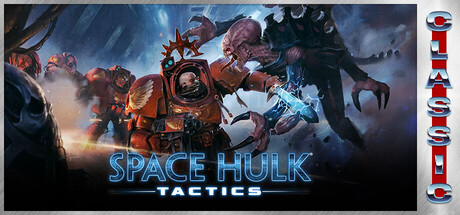
Space Hulk: Tactics (Classic)
A claustrophobic board game port that gets the tension right but fumbles the balance, landing squarely in the 'good enough for WH40K diehards, frustrating for everyone else' zone.
GamerScout Verdict
Best for WH40K board game veterans who have a friend to play the other side; solo players will hit the AI ceiling fast.
Compare Prices(3 stores)
Every store in this table quotes us in euros, so the EUR figure is the price the seller actually set, not our arithmetic — which is why EUR is also the currency we rank in. We only list an offer here when the store gives us its price in euros, so nothing in this table is a number we invented.
Pick USD, PLN, GBP, CAD or AUD in the header and we convert from EUR at the European Central Bank reference rate — converted amounts are prefixed with ~. Your bank or the store may apply a different rate at checkout. We never hide offers based on where you are: everyone sees this whole table.
We may earn a commission when you buy games through links on this page — at no extra cost to you. It never affects our rankings or verdicts.
Price History
Screenshots & Media
About Space Hulk: Tactics (Classic)
I went in expecting a clean tactical adaptation and came out with a respect for the source material and a genuine frustration at how close this gets without quite sticking the landing. Space Hulk: Tactics is an asymmetric turn-based strategy game built on the bones of the classic Games Workshop board game, and the bones are solid. You pick a side - either a five-man Blood Angels Terminator squad or a near-limitless swarm of Genestealers - and fight through a gauntlet of narrow corridors and cramped compartments aboard a derelict hulk called the Forsaken Doom. The claustrophobia is real. Action points matter every single step, and because these marines are walking tanks, even turning on the spot costs AP. Mess up your rotation order and you're staring down a Genestealer corridor with the wrong marine pointed the wrong way. That tension is the game's best asset. The card system is the headline new mechanic, and it actually works. Each turn you draw from a pool you've built up through an upgrade tree in the campaign, or selected in skirmish. You can play a card for its effect - buffs, debuffs, spawn triggers on the Genestealer side - or burn it for extra action points. That choice, every single turn, adds real texture to what would otherwise be a very faithful but very dry recreation of the tabletop rules. As the Terminators, burning a card for one extra AP to squeeze a Storm Bolter shot off before the blips close in is the kind of micro-decision that makes the system click. The Genestealer side uses cards differently, pushing spawns and flanking pressure, which is a genuinely different play style rather than just a reskin. Here is where the impatience sets in. The campaign AI is not good. Early missions use a soft-touch AI by design, supposedly to ease new players in, but the transitions are uneven and the AI can swing from passive to erratic in ways that feel like bugs rather than scaling difficulty. The Genestealer campaign - nine missions where you face Ultramarines, Dark Angels, and Space Wolves squads - is a genuinely novel framing, told from an Inquisitor's perspective, and that campaign is more interesting narratively than the Blood Angels' thirteen missions. But the AI issues undercut both. Multiplayer is where this game wants to live, and the asymmetry creates real problems there too: community feedback at launch was clear that the Genestealer side holds a structural advantage, making the Terminator pick a high-skill, high-stakes proposition where a single AP miscalculation can end a run. That is faithful to the board game, but it means the learning curve for marines is steep and the ranked experience for anyone who prefers that faction is going to feel punishing fast. There is also a first-person view mode, which reviews praised as atmospheric but practically everyone agreed is tactically useless compared to the isometric view. It is a cool screenshot mode, basically. The map editor is genuinely strong - clip-together tile design, shareable with the community, and inspired directly by how you build scenarios in the board game. Customisation across four Space Marine chapters and four Genestealer Hive Fleets adds visual variety, though some of the deeper paint-job options are gated to multiplayer, which annoyed solo players at launch. Asset reuse across the hulk environments is noticeable; after a few missions the corridors blur together because there is no attempt to give each ship its own visual identity. At a Metacritic 73, the score is honest. This is a solid, sometimes great adaptation of a cult classic that needed another patch cycle before release. WH40K fans and board game veterans who want to play against a live opponent will find genuine depth here, especially with the card system and map editor extending replayability past the campaigns. Solo players hoping for a polished campaign experience with a competitive AI will run out of patience before they run out of missions.

Shooters
Tags
System Requirements
Minimum
- OS
- Windows 7/8/10 (64 bits)
- Memory
- 8 GB RAM
- Storage
- 5 GB available space
- Graphics
- 2 GB, GeForce GTX 660/Radeon R7 370
- Processor
- Intel Core i3-3220 (3.3 GHz)/AMD FX-4200 (3.3 GHz)
Recommended
- OS
- Windows 7/8/10 (64 bits)
- Memory
- 8 GB RAM
- Storage
- 5 GB available space
- Graphics
- 4 GB, GeForce GTX 960/Radeon R9 380
- Processor
- Intel Core i5-4690K (3.5 GHz)/AMD FX-8300 (3.3 GHz)
Keep exploring
Community Discussion
Be the first to comment on Space Hulk: Tactics (Classic).
Reviews & Ratings
Game Info
- Developer
- Cyanide Studio
- Publisher
- Focus Entertainment
- Release Date
- Oct 9, 2018