SMIB: Mission Cure
A quiet, thoughtful robot-programming puzzler that rewards the methodical planner type - just know the camera will test your patience before the puzzles do.
GamerScout Verdict
Best for patient, plan-first puzzle fans who can tolerate Early Access camera friction in exchange for a warm, well-crafted robot adventure.
Compare Prices(4 stores)
Every store in this table quotes us in euros, so the EUR figure is the price the seller actually set, not our arithmetic — which is why EUR is also the currency we rank in. We only list an offer here when the store gives us its price in euros, so nothing in this table is a number we invented.
Pick USD, PLN, GBP, CAD or AUD in the header and we convert from EUR at the European Central Bank reference rate — converted amounts are prefixed with ~. Your bank or the store may apply a different rate at checkout. We never hide offers based on where you are: everyone sees this whole table.
We may earn a commission when you buy games through links on this page — at no extra cost to you. It never affects our rankings or verdicts.
Price History
Screenshots & Media
About SMIB: Mission Cure
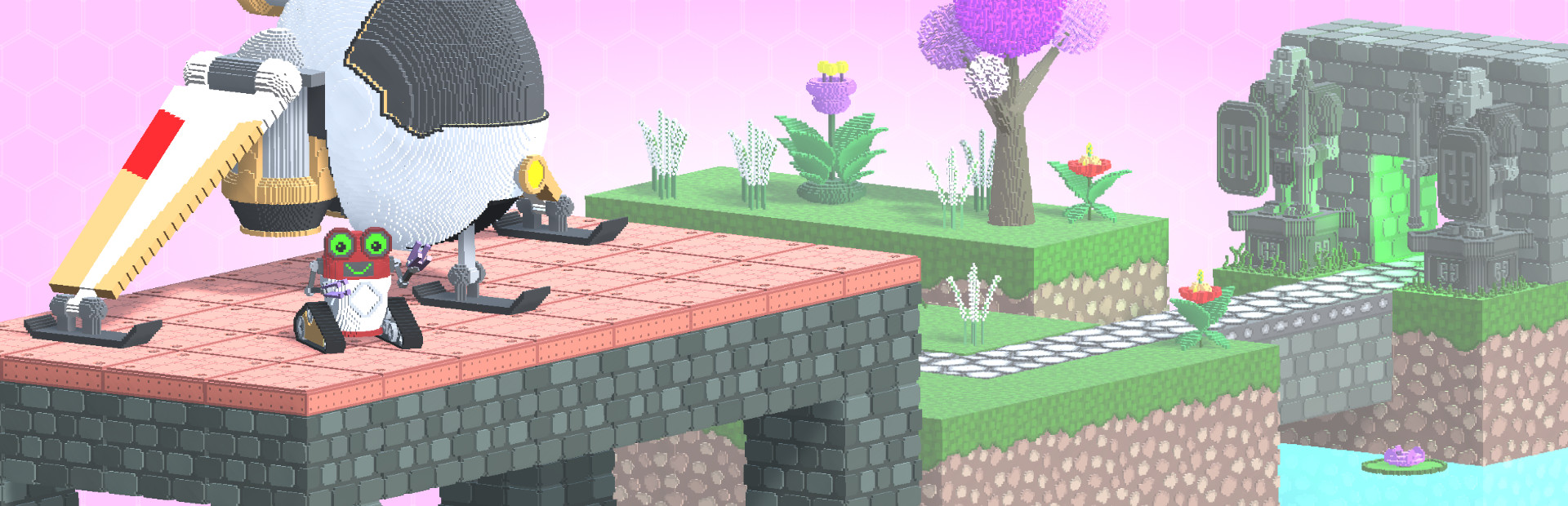
I have a soft spot for games that ask you to slow down and think in sequences rather than react in milliseconds, which is exactly why SMIB: Mission Cure caught my attention from a tiny developer's page with almost no coverage. The central idea is genuinely lovely: you are a retired operator, pulled back into service to remotely guide a small voxel robot named SMIB across alien planets, one carefully pre-programmed route at a time. There are no real-time inputs. You place commands - turn left, turn right, jump, push an object, shoot a laser - along SMIB's projected path during a planning phase, then press play and watch your logic either succeed or quietly unravel. The mechanical constraint that gives the whole thing its tension is the eight-command battery limit per turn. SMIB can only execute eight instructions before it needs to reach a recharge station, which means each level becomes a two-part problem: first, can you reach the intermediate recharge at all, and second, can you then chain a second sequence all the way to the exit? When this clicks, the satisfaction is real. The voxel art style adds genuine warmth - decorative fish, carved statues, little ambient touches that communicate a developer who cares about the spaces they build. Each planet carries its own visual personality, and the planned scope of at least three planets across 36 levels gives the game room to expand its palette. That said, SMIB: Mission Cure is still in Early Access, and the seams show in a few specific, frustrating ways. The isometric 3D camera is the biggest recurring offender. Upper floors frequently block sight lines to lower tiles, making it genuinely difficult to place commands accurately - a problem compounded by the fact that clicking the wrong tile while adjusting your view is easy to do. Community feedback has flagged this persistently, along with uneven audio mixing that can catch you off guard. SMIB itself also moves slowly during the execution phase, which is charming on a first attempt but becomes a minor ordeal when you are iterating through a hard level for the sixth or seventh time. There is no hint system and no option to skip a level if you get stuck, which means the patience bar is load-bearing. What keeps me in the game's corner is the quality-of-life decision to preserve your previously placed commands after a failed run. You do not start from a blank slate every time; you can review and tweak what you already built, which respects your time in a way that matters. The premise is sweet without being saccharine, the puzzle logic is sound, and the handcrafted feel of each small level area is consistent with a studio that takes its craft seriously. If Virtual Arts Studio addresses the camera obstruction, adds a speed toggle for the execution phase, and ideally introduces a hint or skip system, this could become a quietly essential entry in the robot-programming puzzle genre alongside Robo Rally-style board game conversions. For right now, in Early Access, it sits in a honest middle ground: charming, occasionally maddening, and best approached by players who genuinely enjoy deliberate, plan-first puzzle design and can forgive a rough camera for the sake of a good idea with real heart behind it.

Indie & narrative
Tags
System Requirements
Minimum
- OS
- Windows 7
- Memory
- 2 GB RAM
- DirectX
- Version 9.0c
- Storage
- 300 MB available space
- Graphics
- Integrated Graphics
- Processor
- 2 Ghz Dual Core
- Sound Card
- Any
Recommended
Requires a 64-bit processor and operating system
Keep exploring
Community Discussion
Be the first to comment on SMIB: Mission Cure.
Reviews & Ratings
No ratings available
Game Info
- Developer
- Virtual Arts Studio
- Publisher
- Virtual Arts Studio
- Release Date
- Nov 19, 2020