Skelattack
Gorgeous hand-drawn underworld, a skeleton hero with a sword and a bat pal, and a difficulty curve that starts punishing and never really apologises. Worth it for the art alone if you have the patience.
GamerScout Verdict
Worth it for fans of handcrafted indie aesthetics who can tolerate an uneven difficulty curve across a tight five-to-seven hour run.
Compare Prices(9 stores)
Every store in this table quotes us in euros, so the EUR figure is the price the seller actually set, not our arithmetic — which is why EUR is also the currency we rank in. We only list an offer here when the store gives us its price in euros, so nothing in this table is a number we invented.
Pick USD, PLN, GBP, CAD or AUD in the header and we convert from EUR at the European Central Bank reference rate — converted amounts are prefixed with ~. Your bank or the store may apply a different rate at checkout. We never hide offers based on where you are: everyone sees this whole table.
We may earn a commission when you buy games through links on this page — at no extra cost to you. It never affects our rankings or verdicts.
Price History
Screenshots & Media
About Skelattack
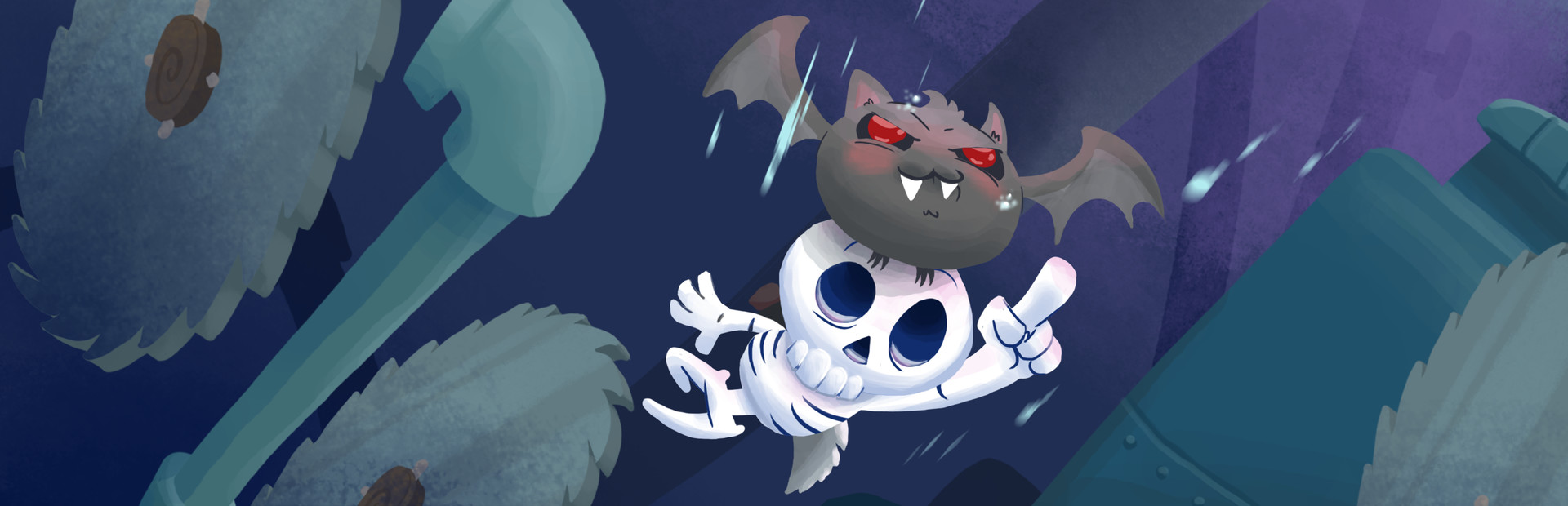
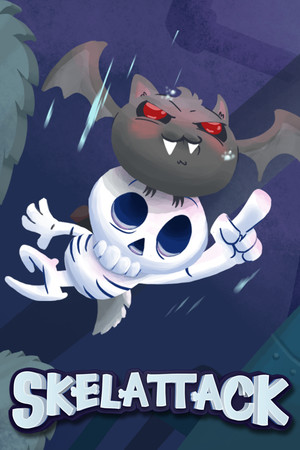
I have a soft spot for games where the craft clearly outpaced the budget, and Skelattack sits squarely in that category. Ukuza is a small Californian studio, this was their debut title published under Konami, and you can feel the love radiating off every hand-drawn frame, even when the design decisions are quietly infuriating. The premise alone earns points for wit: you are Skully, a freshly dead skeleton in Aftervale, and the humans have invaded your home to steal the Blue Flame that keeps the afterlife running. For once, the skeletons are the ones defending the dungeon. That role-reversal hook carries genuine charm, and the human antagonists are written as Monty Python-adjacent parody adventurers, complete with a bard who sings about his own heroism while Skully looks on, arms crossed, completely unbothered. The gameplay is a side-scrolling action platformer with light Metroidvania structure. Skully has a sword slash, a double-jump, and a wall-jump, and those three tools are essentially the whole toolkit throughout. Imber, the bat companion, adds variety through flap-and-dodge sections that play like a gentler Flappy Bird corridor challenge, and she unlocks magic abilities that give Skully a modest upgrade path. There are hidden chests, a fast-travel map, and world areas that open progressively, but critics were right that the Metroidvania bones feel undercooked. The upgrade currency is expensive, insta-kill spikes are everywhere especially early, and the difficulty curve runs backwards: the opening is the hardest stretch, front-loaded with spike tunnels that feel designed to lose casual players before the game finds its footing. Wall-jumping has a specific quirk where you push the stick away from the wall rather than pressing jump, which takes real adjustment time and costs lives before it clicks. Where Skelattack genuinely shines is in its presentation. The art style reads like Tim Burton filtered through the cheerful macabre of a Saturday morning cartoon, and each zone, from lava caves to haunted corridors, has its own colour palette and visual personality. Composer Jamal Green's soundtrack does quiet, effective work, matching the breezy gothic tone of each area without ever overstaying its welcome. The NPC writing has a pun-heavy, dad-joke energy reminiscent of Guacamelee, and the dialogue is snappy enough that the text-heavy moments feel earned rather than laborious. The whole run wraps up in roughly five to seven hours, which is exactly the right length for what the game actually offers. It knows when to end, and that restraint counts for something. The honest tension in Skelattack is that the visuals and writing inspire affection the gameplay does not always sustain. Combat is thin, enemies are few and mostly stationary, and the moment-to-moment platforming oscillates between satisfying precision and sloppily placed traps. The checkpoint system is generous in some areas and then oddly absent in others, and the lack of invincibility frames after taking damage makes certain spike corridors feel unfair rather than challenging. It is not a broken game. The controls are tight when the level design gives them room to breathe, and boss fights escalate well. But anyone coming in expecting the layered mechanical depth of Hollow Knight or the exact precision of Celeste will find something more uneven. For the right player, none of that is disqualifying. If you are drawn to small, handcrafted games with genuine personality, a short runtime, and a mood that stays pleasant even when it frustrates, Skelattack delivers. It is the kind of game I would have stumbled across on a quiet Sunday and finished before dinner, charmed throughout and occasionally annoyed, but never bored.

Indie & narrative
Tags
System Requirements
Minimum
- OS
- Windows 8.1+
- Memory
- 4 GB RAM
- DirectX
- Version 10
- Storage
- 1 GB available space
- Graphics
- GeForce 9800GTX+ (1GB)
- Processor
- Intel Core i3
Recommended
- OS
- Windows 10
- Memory
- 4 GB RAM
- DirectX
- Version 10
- Storage
- 1 GB available space
- Graphics
- GeForce GTX 560+
- Processor
- Intel Core i5
Keep exploring
Community Discussion
Be the first to comment on Skelattack.
Reviews & Ratings
Game Info
- Developer
- Ukuza, Inc.
- Publisher
- KONAMI
- Release Date
- Jun 2, 2020