Six Sides of the World
A quiet solo passion project that turns spatial reasoning into a meditative sci-fi ritual - satisfying for patient puzzle fans, punishing for anyone who hates restarting from scratch.
GamerScout Verdict
Best for patient puzzle solvers who enjoy spatial logic and can stomach full level restarts on failure.
Compare Prices(6 stores)
Every store in this table quotes us in euros, so the EUR figure is the price the seller actually set, not our arithmetic — which is why EUR is also the currency we rank in. We only list an offer here when the store gives us its price in euros, so nothing in this table is a number we invented.
Pick USD, PLN, GBP, CAD or AUD in the header and we convert from EUR at the European Central Bank reference rate — converted amounts are prefixed with ~. Your bank or the store may apply a different rate at checkout. We never hide offers based on where you are: everyone sees this whole table.
We may earn a commission when you buy games through links on this page — at no extra cost to you. It never affects our rankings or verdicts.
Price History
Screenshots & Media
About Six Sides of the World
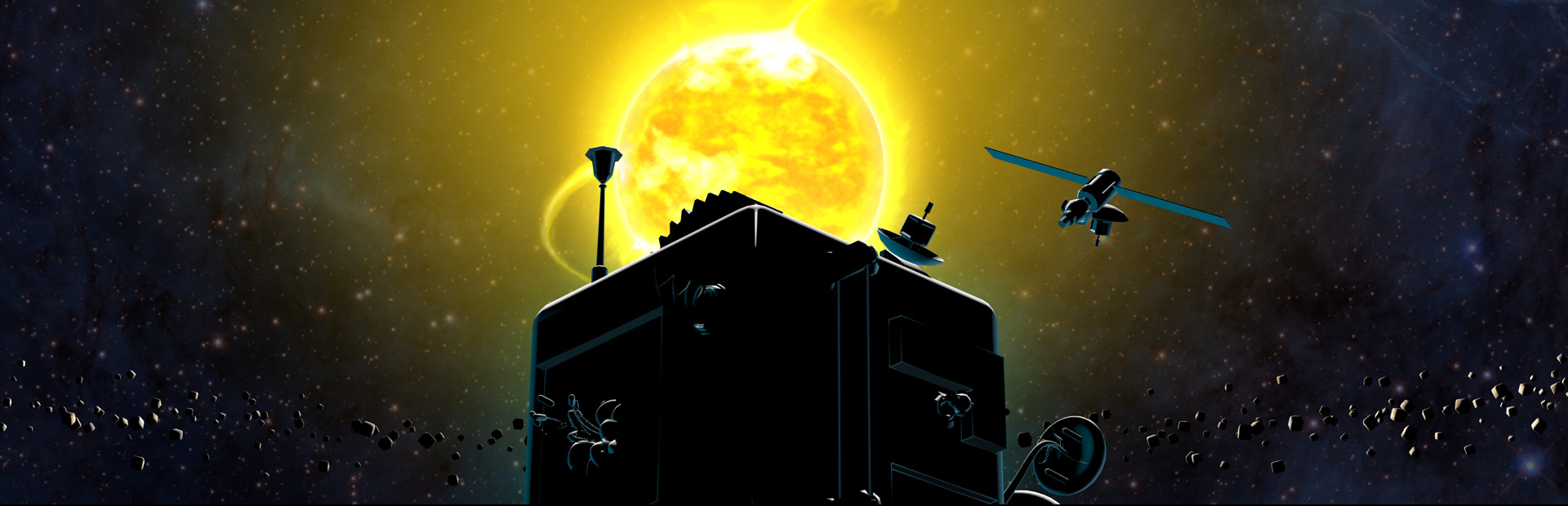
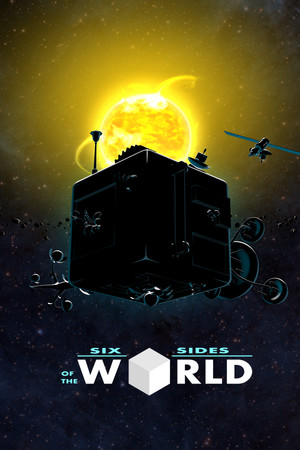
My soft spot for one-person studios means I go into something like this already rooting for it, and Six Sides of the World rewards that patience in curious, uneven ways. Cybernetik Design is, in its own words, a one-person operation, and the whole game carries that handmade weight: a deliberate pace, a focused mechanical premise, and a certain roughness around the edges that feels earned rather than careless. The core idea is quietly elegant. You guide Maigo, a small robot explorer, across cube-shaped planetary systems - rotating each cubic world to survey all six faces, then plotting a path through crystals, color-coded portals, timed switches, laser grids, and pressure gates to find the exit wormhole. Mouse controls keep things simple: one button to move, a drag to rotate. The spatial logic here is the game's real engine. You have to mentally hold the sides you cannot currently see, remember which switch controls which laser, and sequence your moves before committing. Fifty-odd levels across eight star systems keep introducing new hazards at a steady enough clip that staleness doesn't set in too quickly. What works best is the branching difficulty. Most puzzles have a secondary, harder solution hidden inside them. Finding that alternate path unlocks bonus stages that are genuinely cruel in the best sense - the kind that make you put the mouse down, stare at the ceiling, and come back ten minutes later with a new theory. It is a clever, low-friction way to let casual players finish the game while giving spatial-puzzle obsessives a proper wall to climb. No timer on most levels means you can think for as long as you need, which suits the contemplative tone well. The rough patches are real, though. No checkpoints inside levels means a single misstep on a longer stage sends you back to the very beginning - and by the mid-game, levels are long enough that this stings. The soundtrack, composed by Carlos Viola, aims for something otherworldly and mostly gets there in mood, though some reviewers found it grew repetitive on retries. Visually the game is functional - clean enough, colorful enough - but nothing here is going to stop you mid-level to admire it. The story wrapping (Maigo seeking a mysterious cosmic architect) is light and delivered in text screens; treat it as flavoring, not a reason to play. This is a game that knows exactly what it is: a compact spatial puzzle toy built by one person with genuine care for the mechanics. It does not try to be Portal, and it does not need to. If you have a patience for cube-rotation logic, enjoy planning several moves ahead, and can forgive the absence of mid-level saves, there is a real, honest challenge here at a price that reflects the scale of the project fairly.

Indie & narrative
Tags
System Requirements
Minimum
- OS
- Windows 7 SP1
- Memory
- 500 MB RAM
- DirectX
- Version 9.0c
- Storage
- 1100 MB available space
- Graphics
- DirectX 9 Compatible card with 500 MB of RAM
- Processor
- Dual Core 2.0 GHZ
Recommended
- OS
- Windows 7 SP1
- Memory
- 1 GB RAM
- DirectX
- Version 9.0c
- Storage
- 1100 MB available space
- Graphics
- DirectX 9 Compatible card with 1 GB of RAM
- Processor
- Quad Core 2.7 GHZ
DLC & Add-ons for Six Sides of the World1
Expansions, DLC packs and add-on content for this game. Click any item to see store offers.

Keep exploring
Community Discussion
Be the first to comment on Six Sides of the World.
Reviews & Ratings
No ratings available
Game Info
- Developer
- Cybernetik Design
- Publisher
- Cybernetik Design
- Release Date
- Jan 20, 2016