
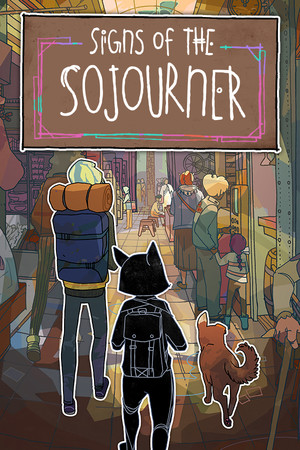
Signs of the Sojourner
A quiet gut-punch of a deck-builder where every card swap is a choice about who you're becoming, and the soundtrack alone is worth the trip.
GamerScout Verdict
A must for narrative and indie fans who want mechanics and meaning fused together, as long as you can forgive a punishing fatigue system.
Compare Prices(4 stores)
Every store in this table quotes us in euros, so the EUR figure is the price the seller actually set, not our arithmetic — which is why EUR is also the currency we rank in. We only list an offer here when the store gives us its price in euros, so nothing in this table is a number we invented.
Pick USD, PLN, GBP, CAD or AUD in the header and we convert from EUR at the European Central Bank reference rate — converted amounts are prefixed with ~. Your bank or the store may apply a different rate at checkout. We never hide offers based on where you are: everyone sees this whole table.
We may earn a commission when you buy games through links on this page — at no extra cost to you. It never affects our rankings or verdicts.
Price History
Screenshots & Media
About Signs of the Sojourner
I went in expecting a chill visual novel with card decoration. What I got instead was one of the more quietly devastating things I've played, a game that uses a ten-card deck to say something true about how people drift apart the further they roam from home. That central mechanic, where every conversation forces you to swap one of your cards for one the other person played, is the whole thesis. The further you travel with the caravan, the harder it becomes to talk to people back in Bartow. Your vocabulary changes. The people who raised you start to feel like strangers. Echodog Games built that feeling into the rules themselves, and it lands harder than most CRPGs manage with a hundred hours of cutscenes. Mechanically, conversations work like a cooperative domino chain. You and an NPC take turns playing cards, each needing its left-side symbol to match the right-side symbol of the card before it. The symbols are not arbitrary: circles and squares represent ways of organizing the world, triangles and diamonds map to reasoning styles, and each character you meet has a personality reflected in their deck. Learn their vocabulary and you connect. Ignore it and the chain collapses into discord. Special cards add texture. An Accord creates a checkpoint in the chain when four symbols line up in a row. Clarify and Observe shift the flow of a conversation mid-exchange. The dog in the game, a small early companion, has cards that match any symbol because dogs do not care what kind of communicator you are, and yes, that is a design decision that made me pause and sit with the game for a moment. The roughest edge is the fatigue system. Each day you travel adds blank fatigue cards to your deck. They carry no symbols and match nothing, meaning a full hand of fatigue is a conversation that simply cannot succeed. The narrative intent is clear and actually admirable: exhaustion makes you a worse listener. But the mechanical execution does not give you enough counterplay, especially on a first run. Interacting with a dog companion or Gray Cambet can shave fatigue, and certain weather events offer temporary relief, but these feel thin against the relentless accumulation. Critics were split here, with some reading it as brilliant thematic consistency and others finding it a slog by the final expedition leg. I lean toward the former, but I also understand why a player who wants to befriend every character in Pachenko and Old Marae in a single run will hit a wall. Visually, each settlement has its own color palette: the rain-soaked blues of Old Marae, the brightening streets of Bukam Boro as a railway gets built nearby, the sun-hammered yellows outside Barstow. The art has the slightly imperfect quality of hand-drawn work produced with intention, not polish for its own sake. The soundtrack gives each town its own track, and a few of them are the kind of thing you hum while washing dishes three days later. The writing is sharp without being showy, and the bittersweet relationships you form with Nadine, Elias, and the caravan regulars develop over multiple short runs rather than a single marathon. A playthrough runs roughly three to five hours, but multiple endings and different deck philosophies reward replays in a way that does not feel compulsory. This is a game for people who love the idea that mechanics and meaning can be the same thing. If you want Slay the Spire combat rhythms or branching dialogue trees with clear right answers, look elsewhere. But if a game that treats the act of listening as its core loop sounds appealing, Signs of the Sojourner is one of the more handcrafted things to come out of the solo-dev scene in recent years, and it knows exactly when it needs to end.

Indie & narrative
Tags
System Requirements
Minimum
- OS
- Windows 7 SP1
- Memory
- 2 GB RAM
- DirectX
- Version 10
- Storage
- 1 GB available space
- Graphics
- 1GB VRAM
- Processor
- 2GHz
Keep exploring
Community Discussion
Be the first to comment on Signs of the Sojourner.
Reviews & Ratings
Game Info
- Developer
- Echodog Games
- Publisher
- Echodog Games
- Release Date
- May 14, 2020