
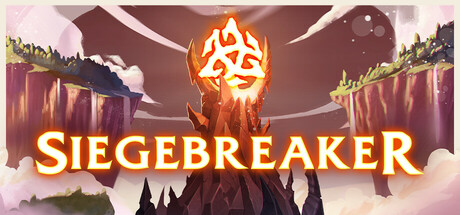
Siegebreaker
Tower defense where your towers shoot back at enemies that shoot back at them - and that single wrinkle changes every placement decision you'll ever make across 25+ levels.
GamerScout Verdict
Best for tower defense fans who want every placement decision to carry real risk - not just optimal math.
Compare Prices(7 stores)
Every store in this table quotes us in euros, so the EUR figure is the price the seller actually set, not our arithmetic — which is why EUR is also the currency we rank in. We only list an offer here when the store gives us its price in euros, so nothing in this table is a number we invented.
Pick USD, PLN, GBP, CAD or AUD in the header and we convert from EUR at the European Central Bank reference rate — converted amounts are prefixed with ~. Your bank or the store may apply a different rate at checkout. We never hide offers based on where you are: everyone sees this whole table.
We may earn a commission when you buy games through links on this page — at no extra cost to you. It never affects our rankings or verdicts.
Price History
Screenshots & Media
About Siegebreaker
I've spent enough time stress-testing tower defense games to know that most of them live and die on a single question: does the upgrade tree actually make me think, or does it just make numbers bigger? Siegebreaker, from Immortal Forge, passes that test in the most direct way possible - by making your towers mortal. Enemies don't just march politely to your base; they actively target and destroy your defensive structures mid-wave. That one mechanical decision ripples through everything. Suddenly you're not just plotting coverage arcs and choke points, you're building a hierarchy of protection, deciding which tower is worth shielding and which is expendable bait. The upgrade system earns its depth. With over 40 upgrades available, towers don't simply scale up their base stats - they acquire abilities that change their fundamental behavior. A basic projectile tower can branch into a long-range sniper, an elemental damage dealer, or a rapid-fire artillery unit depending on what the randomized progression hands you in a given run. That randomization is the roguelite layer sitting on top of the classic tower defense skeleton, and it is the main engine of replayability. You cannot pre-plan an optimal build and execute it. You work with the options the run gives you, find synergies between upgrades you'd normally ignore, and adapt on the fly when a combination you were counting on doesn't appear. Runs through the deserts of Eranakis will play nothing like runs through the frozen peaks of Haedmyr, not just because the layout shifts but because your available toolkit shifts with it. For newcomers to the genre, that randomization is actually an easier entry point than it sounds. Because no fixed optimal strategy exists, there is no wrong way to start experimenting. The four biomes - Aethryn's forests, Eranakis's deserts, Haedmyr's frozen peaks, and Bal'Volar's hellfire zones - introduce layout challenges progressively, and the card-driven upgrade selection gives you context for what each choice does before you commit. The learning curve is real but it comes from the game's depth, not from obscured information. Where Siegebreaker shows its indie seams is at the edges. Community feedback flags the final boss, Vazrah'mor, as a significant difficulty spike on higher settings, with some players reporting the encounter feels punishing in ways that outpace the build variety available at that stage. There are also a handful of technical complaints - screen shake issues on certain levels, and rare hardware-level crashes - that suggest the polish is still catching up to the design ambition. The absence of a mod ecosystem and the slim community size mean those rough edges won't be smoothed out by third-party fixes anytime soon. The Steam review count is modest, which limits social validation, but the positive sentiment among those who have played it skews clearly in the game's favor. For a strategy player who wants a tower defense that respects their decision-making rather than just rewarding memorization, Siegebreaker is a legitimate contender in a genre that rarely surprises. Go in understanding that the late game asks more of you than the tutorial prepares you for, and you'll find a tighter, more demanding experience than the low price point suggests.

Strategy & simulation
Tags
System Requirements
Minimum
- OS
- Windows 10 (64-bit)
- Memory
- 4 GB RAM
- DirectX
- Version 10
- Storage
- 2 GB available space
- Graphics
- GeForce GTX 1050 or Radeon HD 7870
- Processor
- Intel i5-4460 or AMD FX-8310
Keep exploring
Community Discussion
Be the first to comment on Siegebreaker.
Reviews & Ratings
No ratings available
Game Info
- Developer
- Immortal Forge
- Publisher
- indie.io
- Release Date
- Jul 19, 2024