
Compare Sid Meier's Starships prices across 50+ stores and find the best deal. Developed by Firaxis Games. Published by 2K. Released on 3/12/2015. Available on PC, Mac. Genres: Strategy. Metacritic score: 64/100.

A Firaxis-branded mobile port wearing PC clothes: worth a glance at a deep discount, but strategy veterans will chew through it before dinner is ready.

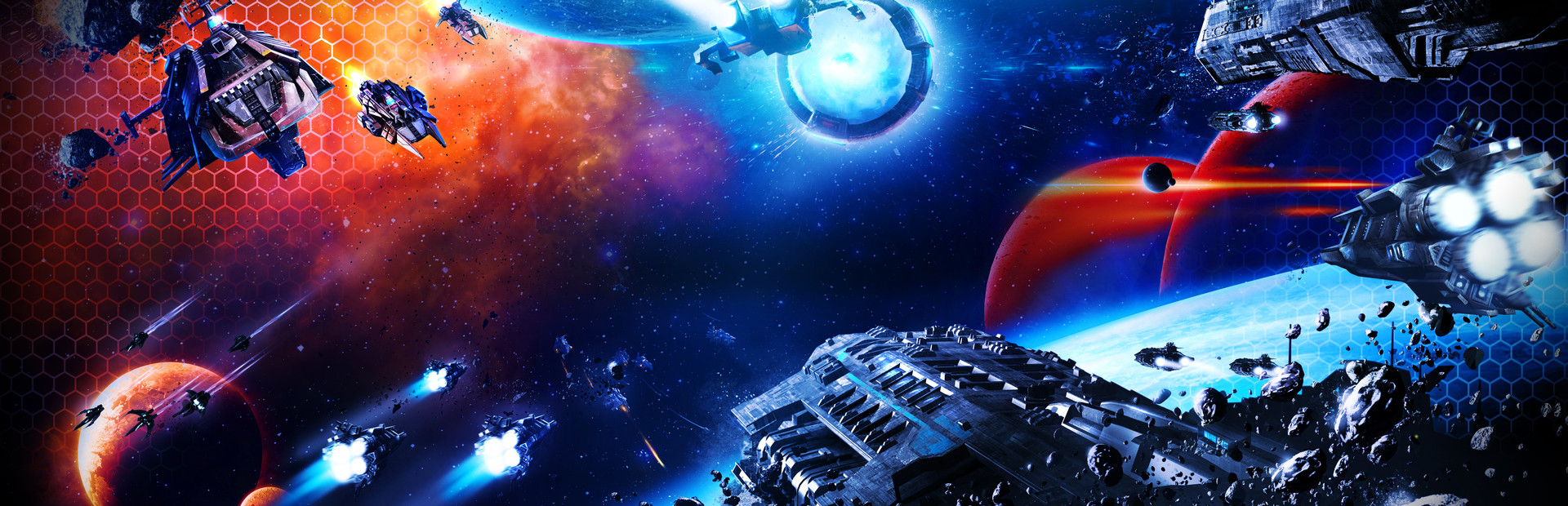
My spreadsheet instincts told me something was off the moment I booted this up and found fewer graphics options than a browser flash game. That suspicion hardened fast: Sid Meier's Starships was built mobile-first and ported sideways onto PC, and nearly every design choice reflects that origin. The loop is split between a galactic map where you move your fleet between planets and collect resources (food, industrial production, science, and energy), and smaller tactical arenas where you fight turn-based battles on a 2D hex grid littered with asteroids, wormholes, and planetary bodies as terrain. You win by hitting one of four thresholds: controlling 51% of the galaxy's population, constructing seven wonders, researching three technology lines to level six, or eliminating all rival factions. It sounds like a light 4X on paper. In practice, the strategic layer is so thin you can read it in a lunch break. The one genuinely interesting system is fleet customization. Each ship upgrades along branching module paths covering engines, weapons (torpedoes, plasma cannons, fighters), sensors, and stealth, and ships visually evolve to match their new loadout as they improve. That tactile sense of a cruiser becoming something meaner over time has real appeal. The trouble is that the AI does not know what to do with the stealth and torpedo mechanics on the other side of the table. Pouring resources into stealth builds and opening with a torpedo volley can effectively end most engagements before they develop. The enemy fleets on the galactic map wander with a kind of random-walk logic, grabbing planets without apparent strategic intent. On normal difficulty the combat AI leaves openings wide enough to pilot a fleet through, and higher difficulties do not meaningfully tighten those holes. The diplomacy screen is equally bare: rival leaders quote their own military statistics at you and then agree to peace or war with a couple of clicks. There is no negotiation texture, no relationship history worth reading. Replayability is the other structural problem. The roughly five mission types repeat from planet to planet for the entire run of a campaign, and a single session can expose most of what the game has to offer. The tech tree is linear growth of existing stats rather than genuinely branching choices, so there is little incentive to run a second campaign with a different build philosophy. The cross-connectivity with Civilization: Beyond Earth unlocks bonus missions if you own both titles, but the link is barely explained in-game and adds only a thin layer of content. No mod ecosystem exists to paper over these gaps, and there is no multiplayer mode at all. Where the game earns partial credit is in approachability. Someone who has never touched a 4X title can understand every system within thirty minutes, and the randomized galactic maps give each campaign a slightly different shape. If you genuinely have fifteen minutes to spare and want something with a Civ flavor, Starships scratches a very specific itch without demanding the cognitive overhead of a full Firaxis release. The Escapist noted it "lacks the strategic depth of Civilization, but the added tactical layer, and shorter game times make it a fair substitute" for bite-sized sessions, and that framing is probably the most honest pitch the game can make. The Metacritic score of 64 is a fair ceiling for what is here. For strategy players who live in the deep-game layers of Endless Space, GalCiv, or even Beyond Earth itself, Starships will feel like a proof-of-concept that never got a second pass. The AI quality, the depth of decision-making, and the mod ecosystem are all either absent or embryonic. Treat it as a palette cleanser between longer campaigns, not as a destination in its own right. Diego, Scout Team

Sid Meier's Starships
Strategy

Sid Meier's Starships

Mar 12, 2015Firaxis Games2K
GamerScout Says

A Firaxis-branded mobile port wearing PC clothes: worth a glance at a deep discount, but strategy veterans will chew through it before dinner is ready.

PCMac
Best Price Available
0.00
at N/A
Historical low: $0.45

Compare Prices(0 stores)

Loading prices...

We may earn a commission when you buy games through links on this page — at no extra cost to you. It never affects our rankings or verdicts.

Screenshots & Media

Screenshot

About Sid Meier's Starships

My spreadsheet instincts told me something was off the moment I booted this up and found fewer graphics options than a browser flash game. That suspicion hardened fast: Sid Meier's Starships was built mobile-first and ported sideways onto PC, and nearly every design choice reflects that origin. The loop is split between a galactic map where you move your fleet between planets and collect resources (food, industrial production, science, and energy), and smaller tactical arenas where you fight turn-based battles on a 2D hex grid littered with asteroids, wormholes, and planetary bodies as terrain. You win by hitting one of four thresholds: controlling 51% of the galaxy's population, constructing seven wonders, researching three technology lines to level six, or eliminating all rival factions. It sounds like a light 4X on paper. In practice, the strategic layer is so thin you can read it in a lunch break. The one genuinely interesting system is fleet customization. Each ship upgrades along branching module paths covering engines, weapons (torpedoes, plasma cannons, fighters), sensors, and stealth, and ships visually evolve to match their new loadout as they improve. That tactile sense of a cruiser becoming something meaner over time has real appeal. The trouble is that the AI does not know what to do with the stealth and torpedo mechanics on the other side of the table. Pouring resources into stealth builds and opening with a torpedo volley can effectively end most engagements before they develop. The enemy fleets on the galactic map wander with a kind of random-walk logic, grabbing planets without apparent strategic intent. On normal difficulty the combat AI leaves openings wide enough to pilot a fleet through, and higher difficulties do not meaningfully tighten those holes. The diplomacy screen is equally bare: rival leaders quote their own military statistics at you and then agree to peace or war with a couple of clicks. There is no negotiation texture, no relationship history worth reading. Replayability is the other structural problem. The roughly five mission types repeat from planet to planet for the entire run of a campaign, and a single session can expose most of what the game has to offer. The tech tree is linear growth of existing stats rather than genuinely branching choices, so there is little incentive to run a second campaign with a different build philosophy. The cross-connectivity with Civilization: Beyond Earth unlocks bonus missions if you own both titles, but the link is barely explained in-game and adds only a thin layer of content. No mod ecosystem exists to paper over these gaps, and there is no multiplayer mode at all. Where the game earns partial credit is in approachability. Someone who has never touched a 4X title can understand every system within thirty minutes, and the randomized galactic maps give each campaign a slightly different shape. If you genuinely have fifteen minutes to spare and want something with a Civ flavor, Starships scratches a very specific itch without demanding the cognitive overhead of a full Firaxis release. The Escapist noted it "lacks the strategic depth of Civilization, but the added tactical layer, and shorter game times make it a fair substitute" for bite-sized sessions, and that framing is probably the most honest pitch the game can make. The Metacritic score of 64 is a fair ceiling for what is here. For strategy players who live in the deep-game layers of Endless Space, GalCiv, or even Beyond Earth itself, Starships will feel like a proof-of-concept that never got a second pass. The AI quality, the depth of decision-making, and the mod ecosystem are all either absent or embryonic. Treat it as a palette cleanser between longer campaigns, not as a destination in its own right. Diego, Scout Team

Tags

singleplayerachievementstrading-cardstier:sub-5Mobile PortFleet CustomizationHex TacticsBite-Sized SessionsBeyond Earth Tie-InNo MultiplayerShallow DiplomacyBeginner-Friendly 4X

Steam Deck & Linux

Steam Deck PlayableProtonDB Platinum

Valve rates this game Steam Deck Playable. Runs flawlessly on Linux out of the box. Based on 33 ProtonDB community reports.

System Requirements

Minimum

OS
Windows Vista SP2/ Windows 7
Memory
2 GB RAM
Storage
841 MB available space
Graphics
256 MB ATI HD2600 XT or better, 256 MB nVidia 8800 GT or better, or Intel HD4000 or better integrated graphics
Processor
Intel Core 2 Duo 1.8 GHz or AMD Athlon X2 64 2.0 GHz
Sound Card
Audio output capability

Community Discussion

Be the first to comment on Sid Meier's Starships.

Reviews & Ratings

Metacritic
64

Game Info

Developer
Firaxis Games
Publisher
2K
Release Date
Mar 12, 2015

Price Alert

Get notified when the price drops below your target!

Create Alert

Price History

2026-06-100.45(lowest)

More from Firaxis Games

Buy smarter: helpful guides

Looking for more? See games like Sid Meier's Starships

Frequently asked questions about Sid Meier's Starships

How much does Sid Meier's Starships cost?

Sid Meier's Starships pricing changes often and varies by store, edition and region. The live price table on this page compares the cheapest in-stock key and store offers across 50+ verified shops, so you always see the current lowest price before you buy.

Where can I buy Sid Meier's Starships cheapest?

Compare Sid Meier's Starships prices across every verified store in the price table on this page. We list the cheapest in-stock key and store offers, updated regularly, so you always see the best current deal before you buy.

What platforms is Sid Meier's Starships available on?

Sid Meier's Starships is available on PC, Mac.

When was Sid Meier's Starships released?

Sid Meier's Starships was released on 12 March 2015.

Who developed Sid Meier's Starships?

Sid Meier's Starships was developed by Firaxis Games and published by 2K.

Is Sid Meier's Starships worth buying?

Sid Meier's Starships holds a Metacritic score of 64/100, making it one of the standout Strategy titles. See the full reviews, ratings and how-long-to-beat times on this page to decide.