
Sid Meier's Civilization IV - Beyond the Sword (DLC)
Add-on / DLC for Sid Meier's Civilization® IV — view full gameThe definitive expansion to Civ IV, stacking espionage, corporations, and 12 new scenarios onto an already elite 4X foundation. Still the gold standard for the series.
GamerScout Verdict
Essential if you own Civ IV - the espionage layer, corporation system, and mod foundation make the base game feel incomplete without it.
Compare Prices(1 stores)
Every store in this table quotes us in euros, so the EUR figure is the price the seller actually set, not our arithmetic — which is why EUR is also the currency we rank in. We only list an offer here when the store gives us its price in euros, so nothing in this table is a number we invented.
Pick USD, PLN, GBP, CAD or AUD in the header and we convert from EUR at the European Central Bank reference rate — converted amounts are prefixed with ~. Your bank or the store may apply a different rate at checkout. We never hide offers based on where you are: everyone sees this whole table.
We may earn a commission when you buy games through links on this page — at no extra cost to you. It never affects our rankings or verdicts.
Price History
Screenshots & Media
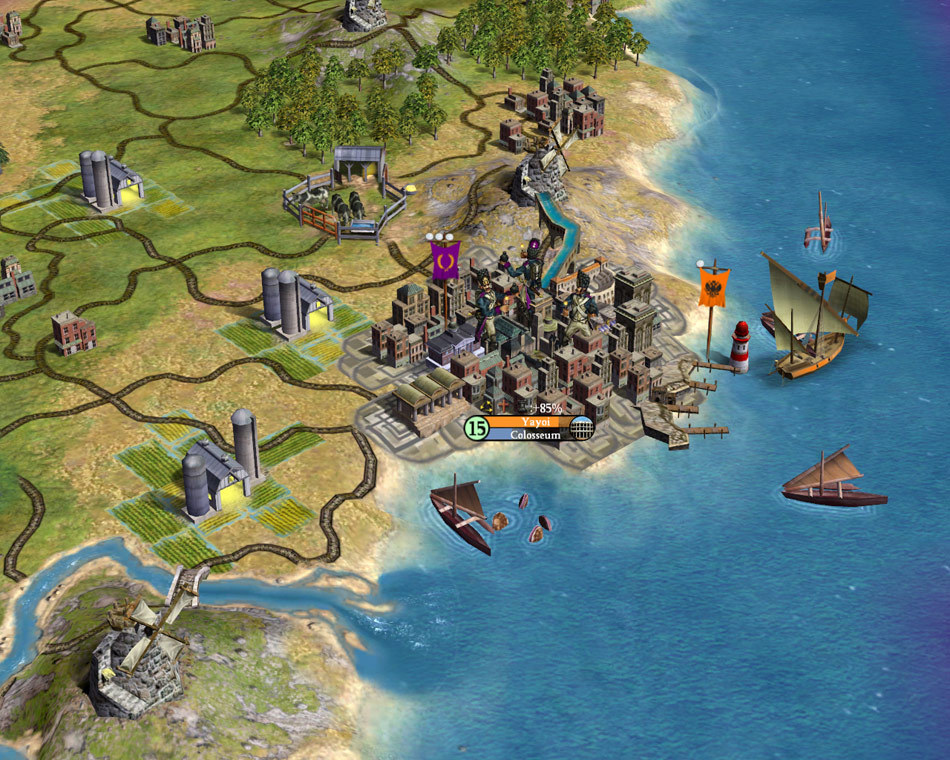
About Sid Meier's Civilization IV - Beyond the Sword (DLC)
Beyond the Sword is not a side dish. It is the reason Civilization IV holds a 94 on Metacritic and keeps pulling players back nearly two decades after launch. If you own the base game and skipped this expansion, you are playing roughly half the game Firaxis intended. This DLC adds enough mechanical weight to change how you think about every era from the Ancient period forward, and the late-game complexity it introduces is the closest a turn-based 4X has ever come to making a spreadsheet feel like an action sequence. The headline addition is a fully fleshed-out espionage system that replaces the original's thin spy mechanics. You allocate espionage points against rival civilizations each turn, spending accumulated resources to steal technologies, poison wells, bribe city defenders, or simply gather intelligence. It is not a minigame bolted on top - it feeds directly into diplomatic calculations, meaning a civ you've been actively spying on will remember it, adjusting trade and alliance willingness accordingly. Corporations arrive alongside this, functioning as a late-game economic layer that lets you spread commercial influence across foreign cities the way religions spread faith earlier in the game. Managing a corporation network while keeping a rival from counter-spying you is exactly the kind of overlapping decision pressure that separates good 4X design from great 4X design. The expansion ships with 12 scenarios, several of which are legitimately standalone experiences. Rhye's and Fall of Civilization - included here in a streamlined form - introduces historical starting positions and dynamic victory conditions tied to each civilization's real-world rise and fall. The Final Frontier sci-fi scenario and the Afterworld post-apocalyptic mode each rework core rules enough to feel distinct. That variety is worth calling out because it makes this package more than a mechanical patch. New players who find the standard Pangaea setup overwhelming can use a scenario as a structured on-ramp with narrower objectives. For newcomers approaching Civ IV for the first time in 2024, the learning curve is real but manageable. The tutorial in the base game covers basics, and Beyond the Sword's additions layer in gradually enough that you will not hit espionage micromanagement until you are already comfortable with city management and unit promotion trees. What actually helps beginners is the expansion's AI improvement pass. Rival leaders make more coherent long-term decisions, which means you learn strategic cause and effect faster because the AI actually punishes mistakes. A poorly defended border city will get taken. A religion you ignore will consolidate against you. The feedback loop teaches you the game more honestly than a passive opponent ever would. The mod ecosystem is where this expansion ages best. Beyond the Sword shipped with expanded Python and SDK support that unlocked the modding community completely. Fall from Heaven 2, Realism Invictus, and dozens of other total conversions require this expansion as a base. If you are buying into Civ IV specifically to explore community content - and there is an enormous amount of it - Beyond the Sword is not optional, it is the foundation those mods are built on. The Steam reviews sitting at 92 percent positive across several thousand ratings are not nostalgia votes. They reflect a package that still delivers more decision-making depth per hour than most modern strategy releases.

Strategy & simulation
Tags
System Requirements
Minimum
Windows 2000/XP, 1.2GHz Intel Pentium 4 or AMD Athlon processor or equivalent, 256MB RAM, 64 MB Video Card w/ Hardware T&L (GeForce 2/Radeon 7500 or better) DirectX7 compatible sound card, 1.7GB of free hard dr…
Keep exploring
Community Discussion
Be the first to comment on Sid Meier's Civilization IV - Beyond the Sword (DLC).
Reviews & Ratings
Game Info
- Developer
- Firaxis Games
- Publisher
- 2K Games
- Release Date
- Oct 25, 2006