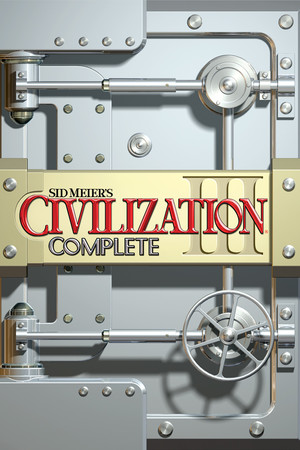
Sid Meier's Civilization® III Complete
Older than some of its players, Civ III Complete still earns its reputation as the series entry that nailed the 'one more turn' loop without burying you in districts, loyalty pressure, or a dozen overlapping yield systems.
GamerScout Verdict
9/10Best for strategy fans who want a transparent, systems-driven 4X without modern Civ's layered complexity getting in the way.
Compare Prices(5 stores)
Every store in this table quotes us in euros, so the EUR figure is the price the seller actually set, not our arithmetic — which is why EUR is also the currency we rank in. We only list an offer here when the store gives us its price in euros, so nothing in this table is a number we invented.
Pick USD, PLN, GBP, CAD or AUD in the header and we convert from EUR at the European Central Bank reference rate — converted amounts are prefixed with ~. Your bank or the store may apply a different rate at checkout. We never hide offers based on where you are: everyone sees this whole table.
We may earn a commission when you buy games through links on this page — at no extra cost to you. It never affects our rankings or verdicts.
Price History
Screenshots & Media
About Sid Meier's Civilization® III Complete
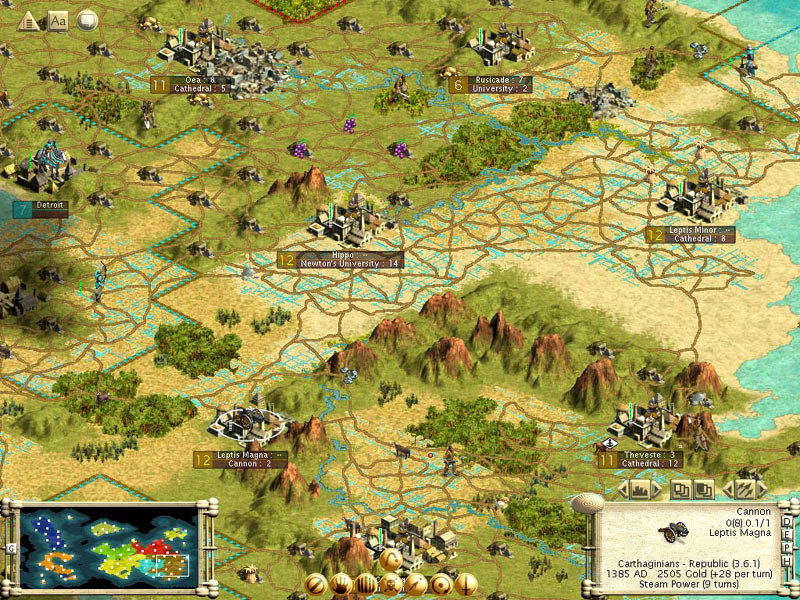
I keep a shortlist of strategy games I return to when modern releases feel over-engineered, and Civ III Complete sits near the top of it. The Complete edition bundles the base game with both expansions, Play the World and Conquests, giving you the full picture of what this era of 4X design looked like at its ceiling. Starting in 4000 BC with a single settler and a warrior, you build cities, research technologies across distinct eras, manage food, shields, and commerce, train unique historical units, and either outlast rivals diplomatically or grind them into the map through military attrition. The systems are transparent in a way modern Civ games often are not: build a Temple, then a Cathedral; build a Marketplace, then a Bank. The decision trees are legible, and that legibility is not a weakness. What makes Civ III genuinely distinct from its successors is a short list of mechanics that later games dropped or softened. The corruption system ties city productivity to distance from your capital and government type, which means expansion is never free and the choice of when and how to switch governments carries real long-term weight. The Golden Age mechanic rewards you for triggering it with your civilization's unique unit or matching Wonder, but timing it wrong wastes the production surge under an early despotism penalty. Strategic resources shift in importance across eras, from iron to coal to oil to uranium, so the geopolitical shape of the map genuinely changes as technology advances. Unit stacking, left-click movement orders, and a max city cap of 256 give the game a texture that players coming down from Civ V or VI will find disorienting at first and satisfying once they adjust. The Conquests expansion is where the Complete edition earns its keep for returning players. The included historical scenarios, praised consistently by the CivFanatics community as a high point the series never quite replicated, give you structured alternate-history sandboxes that play very differently from the open-world game. Difficulty runs from Chieftain up through Demigod and Sid, the latter being a difficulty level named after the creator himself, and the gap between Monarch and Emperor is steep enough to keep veterans occupied for a long time. The Civilopedia, an in-game encyclopaedia covering every unit, building, and concept, means newcomers have a genuine reference tool on hand rather than a wall of loading-screen tips. There are real rough edges. The endgame micromanagement problem was never solved: once your empire spans thirty-plus cities and dozens of worker units, late turns become a slow administrative slog. The AI city governor is unreliable, capable of queuing archers centuries after muskets exist, so automation is a trap for anyone who cares about efficiency. Online multiplayer was formally suspended back in 2014, leaving LAN as the only supported multi-player mode. Resolution handling on modern monitors can require third-party patches or compatibility tweaks, and the UI makes finding specific units or resources across a large map genuinely tedious. These are known quantities for a game of this vintage, not surprises, but they are worth stating plainly. For someone new to the franchise who finds Civ VI's districts and governor systems intimidating, Civ III Complete is a structurally honest starting point. The systems ramp in gradually as you advance through eras, the Civilopedia covers the gaps, and the lower difficulty settings are genuinely forgiving. For veterans who burned out on modern Civ's layered complexity and want the feeling of running an empire where your choices have clear, traceable consequences, this is exactly what they are looking for. The mod ecosystem, while quieter than it was at peak, still has material worth downloading at CivFanatics. Just go in knowing that the last quarter of every game will test your patience as much as your strategy.

Strategy & simulation
Tags
System Requirements
Recommended
Windows® 2000/XP (only), Pentium® II 400 MHz, 128 MB RAM, 1.7 GB Free HDD space, Windows® 2000/XP compatible video card*, Windows® 2000/XP compatible sound card*, DirectX® version 9.0b (included) or higher…
Keep exploring
Community Discussion
Be the first to comment on Sid Meier's Civilization® III Complete.
Reviews & Ratings
Game Info
- Developer
- Firaxis Games
- Publisher
- 2K
- Release Date
- Oct 25, 2006