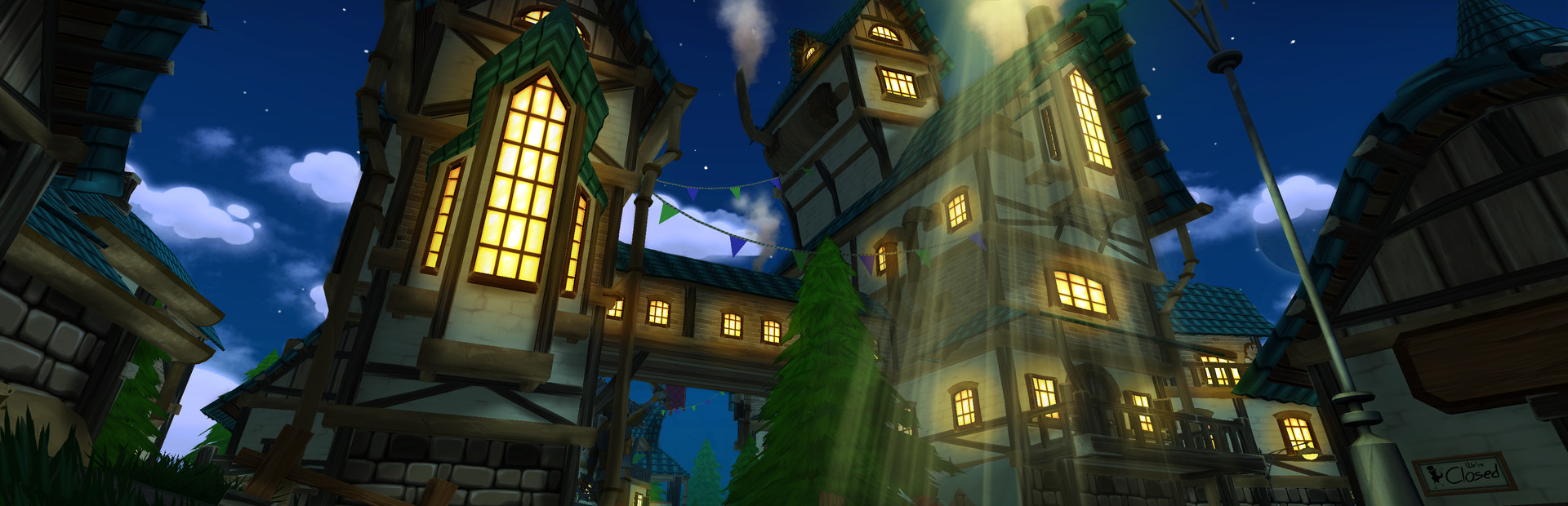

Shoppe Keep 2
Playing the support role in an RPG party is more interesting than most give it credit for - Shoppe Keep 2 bets its whole design on that idea, and lands somewhere between promising and frustrating.
GamerScout Verdict
Worth a look for co-op management fans willing to accept a rough single-player late-game and persistent multiplayer quirks.
Compare Prices(0 stores)
Loading prices...
We may earn a commission when you buy games through links on this page — at no extra cost to you. It never affects our rankings or verdicts.
Price History
Screenshots & Media
About Shoppe Keep 2
My instinct as someone who color-codes resource loops is to check the risk-reward system before anything else, and that is exactly where Shoppe Keep 2 starts showing its cracks. The core concept is genuinely clever: you run the supply side of a fantasy economy, pricing weapons, armor, potions, and food for adventurers while managing taxes, theft, customer satisfaction, and shop layout. The progression works in a micro-to-macro direction that I respect on paper. You start with a single room, three or four product types, and barely enough gold to cover your first tax bill. Survive that opening grind, grow the town, and eventually you unlock automated helper bots to handle restocking and theft prevention, NPC craftsmen like blacksmiths and cooks who supply your shelves, and an open world you can actually leave to hunt, fish, or mine raw materials for pure profit margins. The time-management tension at the heart of solo play is the most interesting thing here. Your shop loses customer satisfaction every minute you are not behind the counter sweeping litter, chasing thieves, and restocking displays. But you also need to leave to gather higher-value inventory. Getting out early enough to mine gems or hunt wolves for sellable pelts while keeping shop losses minimal is a genuine decision problem - the kind I find engaging even when the execution is rough. The activity-based skill system adds a quiet layer on top: sprint enough and your movement stat climbs, fight enough and your combat endurance improves, which feeds into which off-world gathering runs you can actually survive. It is not deep by grand-strategy standards, but it is coherent. Where the game loses me is the lack of escalating stakes. Once you have automated the theft prevention and shelf restocking, the tension largely evaporates. There is no escalating competitor system, no rival merchant, no economic event layer that forces reactive decisions. The competing families who arrive as the town grows do offer benefit-and-drawback choices when you align with them, but the consequences are mild enough that the decision rarely feels weighty. The combat when exploring is shallow - the bow-and-backpedal method neutralizes almost everything outdoors. The UI is clunky in places, particularly when setting prices manually before unlocking the price-list skill, and the menus feel like they were never fully stress-tested with mouse-and-keyboard input. Multiplayer is where the concept finds its best shape. The division of labor - one player minding the counter while another hunts for stock - maps almost perfectly onto the game's core tension. The co-op mode supports up to four players online, and community feedback consistently points to the multiplayer experience as the reason to own this over the solo run. Be aware that multiplayer requires launching a separate executable from the Steam library, and connection issues have been a persistent complaint since launch. Quest objective progress also does not sync properly across players in co-op, which is a real quality-of-life gap that the developers never fully patched. The honest summary for anyone approaching this as a single-player sim: the early hours have a pleasant loop and genuine resource-management appeal, but the mid-to-late game runs out of meaningful decisions faster than it should. For a co-op session with two or three friends who enjoy relaxed management games with some light RPG exploration, the value proposition improves significantly. The game shipped feeling slightly undercooked and the active player count reflects that the developer has moved on. Go in with calibrated expectations and a friend or two in tow.

Strategy & simulation
Tags
System Requirements
Minimum
- OS
- Windows 7/8/10 (64bit)
- Memory
- 4 GB RAM
- DirectX
- Version 9.0
- Storage
- 7 GB available space
- Graphics
- Dedicated graphics card with 1GB memory
- Processor
- Intel Core i3 2GHz or equivalent
Recommended
- OS
- Windows 7/8/10 (64bit)
- Memory
- 8 GB RAM
- DirectX
- Version 9.0c
- Storage
- 7 GB available space
- Graphics
- Dedicated graphics card with 4GB memory
- Processor
- Intel Core i5 2GHz or hiegher
Keep exploring
Community Discussion
Be the first to comment on Shoppe Keep 2.
Reviews & Ratings
No ratings available
Game Info
- Developer
- Strange Fire
- Publisher
- Excalibur Publishing
- Release Date
- Apr 25, 2019