
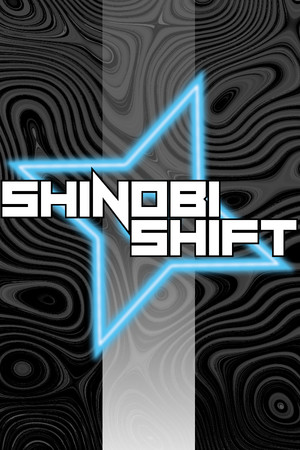
Shinobi Shift
Time-bending shurikens in a neon cyberpunk corridor: a tiny solo-dev first-person platformer that earns its 100% positives by knowing exactly how small it is.
GamerScout Verdict
Best for arcade-minded players who want a focused 90-minute time-bending session and zero fluff.
Compare Prices(3 stores)
Every store in this table quotes us in euros, so the EUR figure is the price the seller actually set, not our arithmetic — which is why EUR is also the currency we rank in. We only list an offer here when the store gives us its price in euros, so nothing in this table is a number we invented.
Pick USD, PLN, GBP, CAD or AUD in the header and we convert from EUR at the European Central Bank reference rate — converted amounts are prefixed with ~. Your bank or the store may apply a different rate at checkout. We never hide offers based on where you are: everyone sees this whole table.
We may earn a commission when you buy games through links on this page — at no extra cost to you. It never affects our rankings or verdicts.
Price History
Screenshots & Media
About Shinobi Shift
I went into Shinobi Shift with the lowest expectations imaginable - a sub-five-dollar solo-dev project sitting in the discount bin with no press coverage and a review count you could count on two hands. What came out the other side surprised me, not because it reinvented anything, but because it committed so cleanly to one specific mood: the cinematic slow-motion ninja fantasy, stripped to its bones. The core loop is first-person platforming laced with shooter mechanics, and the thing that ties it together is a trio of time-manipulation abilities. You can slow time to a crawl for precise shuriken throws, freeze it entirely to line up a tricky platform landing, or rewind to undo a bad jump into a neon-lit void. It is a direct spiritual cousin to the bullet-time rush of old-school action games, transplanted into a compact first-person format. The cyberpunk visual language - bright, saturated, minimalist geometry - suits the pace well. It never tries to be a sprawling open world. It is a series of focused corridors and arenas, and within those boundaries the time mechanics get enough room to feel genuinely playful. For a one-person project, the level design shows real intent. Stages do not overstay their welcome. Each one introduces a variation on the timing-and-movement puzzle before moving on. That discipline is rarer than it sounds in this tier of indie development. The challenge curve is genuine without tipping into cruelty - the levels ask for precision, and the time controls give you just enough grace to feel capable rather than frustrated. Shuriken throwing in slow-time has a low-key satisfying weight to it, the kind of small tactile pleasure that keeps short games memorable. The weaknesses are honest ones. The review pool is too small to draw firm conclusions about long-term staying power, and the runtime is short - this is a session or two, not a weekend. There is no narrative to speak of, no progression system, no unlockables reported by anyone. If you arrive wanting depth, a skill tree, or a reason to replay beyond chasing clean runs, this is not where you find it. It is also a solo-dev release with the rough edges you would expect: no robust audio design, no story hook, production values that are functional rather than beautiful. But here is the thing I keep coming back to when I look at that 100% positive rating on a tiny review pool: every person who played it left satisfied. That speaks to an honest transaction. The game does not pretend to be something it is not. It offers a short, focused, time-bending first-person platformer in a neon cyberpunk wrapper, and it delivers that specific experience without padding or deception. For the right kind of player - someone who likes compact arcade-ish challenges and has 90 minutes to spend on a weird little thing - Shinobi Shift punches at exactly its weight class.

Indie & narrative
Tags
System Requirements
Minimum
- OS
- Windows 7, 8, 10
- Memory
- 4 GB RAM
- DirectX
- Version 9.0
- Storage
- 2 GB available space
- Graphics
- NVIDIA GeForce GTX 1050 / AMD Radeon RX 560
- Processor
- Quad Core Processor 2.5+ GHz
Recommended
- OS
- Windows 7, 8, 10
- Memory
- 6 GB RAM
- DirectX
- Version 9.0
- Storage
- 2 GB available space
- Graphics
- NVIDIA GeForce GTX 1650 / AMD Radeon RX 570
- Processor
- Quad Core Processor 3.0+ GHz
Keep exploring
Community Discussion
Be the first to comment on Shinobi Shift.
Reviews & Ratings
No ratings available
Game Info
- Developer
- Semyon Maximov
- Publisher
- BekkerDev Studio
- Release Date
- Oct 8, 2021