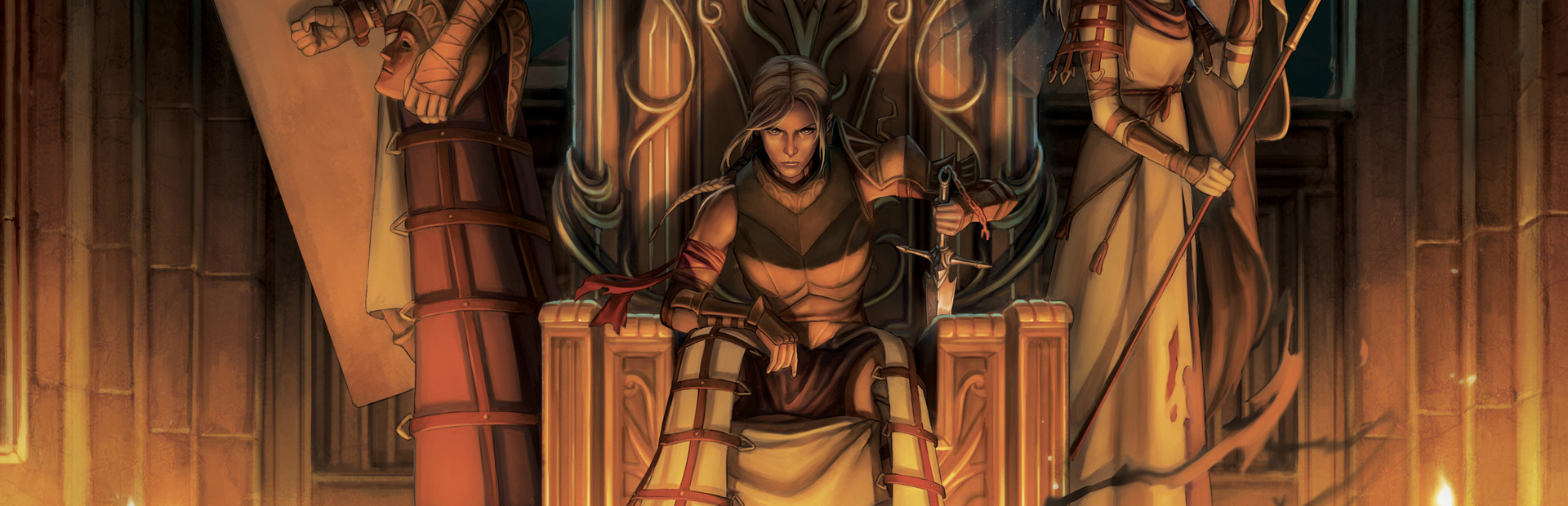
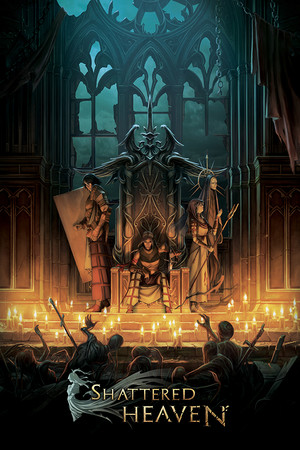
Shattered Heaven
Three decks, three archetypes, one dying world - Shattered Heaven asks more of you than most card games dare, but buries its best ideas under a wall of small fonts and information clutter.
GamerScout Verdict
Best for patient strategy players who want genuinely distinct deck archetypes and a real story, and can tolerate clunky UI and overpromised crafting.
Compare Prices(9 stores)
Every store in this table quotes us in euros, so the EUR figure is the price the seller actually set, not our arithmetic — which is why EUR is also the currency we rank in. We only list an offer here when the store gives us its price in euros, so nothing in this table is a number we invented.
Pick USD, PLN, GBP, CAD or AUD in the header and we convert from EUR at the European Central Bank reference rate — converted amounts are prefixed with ~. Your bank or the store may apply a different rate at checkout. We never hide offers based on where you are: everyone sees this whole table.
We may earn a commission when you buy games through links on this page — at no extra cost to you. It never affects our rankings or verdicts.
Price History
Screenshots & Media
About Shattered Heaven
My first instinct when I see 'deck-builder RPG' these days is to reach for the skeptic's checklist: does each character have a genuinely distinct mechanical identity, or are we just recoloring the same cards? Shattered Heaven actually passes that test. You manage three separate decks simultaneously, one per hero. Andora the Vestal cycles through ruby, sapphire, and emerald cards with a color-balance mechanic that punishes thoughtless drafting. Magni is a pure armor-stacker whose whole value is protecting the party and strengthening weaker cards. Ishana specializes in debuffs and status pressure. These are not interchangeable archetypes - they pull in genuinely different directions, and the post-dungeon card-drafting moment, where you pick one neutral card for each hero and permanently alter their deck composition, is the sharpest decision point in the game. The tactical bones are solid. Boss encounters run through multiple health-bar phases, escalate their ability pools as they take damage, and demand that you respect the party's AP economy rather than simply going all-in every turn. A per-dungeon modifier system, where each run starts with a chosen difficulty plus a random special effect, adds meaningful variance without leaning on pure randomness as a crutch. The dark forge, fed by black bones earned from those modifiers, provides persistent character upgrades that carry forward between runs and soften the roguelite friction considerably. If anything, reviewers who called this a 'roguelite' are being generous - the emphasis on story continuity and permanent progression means most players will experience it closer to a dungeon-crawl RPG with procedural spice than a true run-reset experience. Where Shattered Heaven loses ground is presentation and UX. Font choices are genuinely puzzling for a text-heavy game - small, poorly contrasted against colorful art backgrounds, and there is a lot of text. The UI commits to putting the player's party on the right side of the screen, a deliberate inversion of genre convention that reads as thematically intentional but feels physically uncomfortable during long sessions. The crafting system, used to build potions, weapons, and amulets from dungeon loot and recipes, is advertised with more confidence than it delivers - it works, but lacks the depth the marketing implies. The skill tree, meanwhile, locks significant branches behind story progress, which limits your ability to plan multi-dungeon builds in advance. And the game can tip into information overload, especially in its second half, where lore density outpaces the pacing of its branching visual-novel narrative sequences. That narrative, however, is the strongest argument for giving this one a fair run. The world - humanity cursed after killing its god, four factions condemned to die at 40, a Vestal offered up in a ritual called the War of Ascension - is genuinely original dark-fantasy writing. Story beats arrive at a reasonable pace, player choices influence faction outcomes and character fates, and an opera-led soundtrack does real atmospheric work in boss fights. The dev team came out of Dry Drowning, an Italian investigative visual novel, and that narrative pedigree shows. Steam user sentiment sits in the 'Mostly Positive' range, which feels accurate: this is not a game without flaws, but the people it clicks with tend to stick with it. For a strategy-minded player who wants card decisions to matter and does not mind working through a clunky first hour of information density, Shattered Heaven offers more genuine tactical texture than most of its mid-budget peers. Go in knowing the roguelite label undersells how story-driven this actually is, and manage your expectations on the crafting system.

Strategy & simulation
Tags
System Requirements
Minimum
- OS
- WINDOWS 10 (64-BIT Required)
- Memory
- 4 GB RAM
- DirectX
- Version 11
- Storage
- 7 GB available space
- Graphics
- AMD Radeon R9 270 (2GB VRAM) / NVIDIA GeForce GTX 660 (2GB VRAM)
- Processor
- Intel Core i5-4460 (3.20GHz)
Recommended
- OS
- WINDOWS 10 (64-BIT Required)
- Memory
- 8 GB RAM
- DirectX
- Version 11
- Storage
- 7 GB available space
- Graphics
- AMD Radeon R9 380 (4GB VRAM) / NVIDIA GeForce GTX 960 (4GB VRAM)
- Processor
- Intel Core i5-4690 (3.50GHz)
Keep exploring
Community Discussion
Be the first to comment on Shattered Heaven.
Reviews & Ratings
No ratings available
Game Info
- Developer
- Leonardo Production
- Publisher
- Leonardo Interactive
- Release Date
- Nov 8, 2023