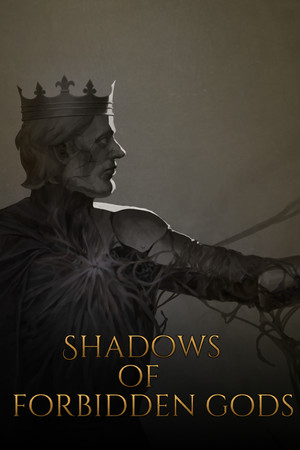
Shadows of Forbidden Gods
Playing the villain has never required this much lateral thinking. Pick a god, build your network of covert agents, and dismantle an entire living fantasy world from the inside out.
GamerScout Verdict
Best for tactics players who want a covert-ops puzzle disguised as an apocalypse sim and can tolerate a spartan UI.
Compare Prices(3 stores)
Every store in this table quotes us in euros, so the EUR figure is the price the seller actually set, not our arithmetic — which is why EUR is also the currency we rank in. We only list an offer here when the store gives us its price in euros, so nothing in this table is a number we invented.
Pick USD, PLN, GBP, CAD or AUD in the header and we convert from EUR at the European Central Bank reference rate — converted amounts are prefixed with ~. Your bank or the store may apply a different rate at checkout. We never hide offers based on where you are: everyone sees this whole table.
We may earn a commission when you buy games through links on this page — at no extra cost to you. It never affects our rankings or verdicts.
Price History
Screenshots & Media
About Shadows of Forbidden Gods
I went in expecting a novelty evil-god toy and came out three sessions later with a spreadsheet tracking which rulers I had already corrupted and which heroes were closing in on my Warlock. That gap between expectation and reality is exactly what makes Shadows of Forbidden Gods worth talking about seriously. At its core this is a turn-based covert-operations sim set in a procedurally generated fantasy world full of kingdoms, orc clans, wandering heroes, and political grudges that exist completely independently of you. Your job, as a waking Elder God, is to steer that world toward total collapse without ever becoming the obvious threat. You start with one or two agents and a tomb, mostly powerless, racing to break seals before the forces of good level up enough to shut you down. The four playable gods, She Who Will Feast, Iastur, Vinerva, and Ophanim, are not reskins of the same strategy. Iastur spreads Madness through his tome and rewires hero personalities. Vinerva gifts golden roses to rulers, then poisons their minds or destroys their settlements once they have accepted her generosity. Ophanim exploits fear of shadow to build a genuine theocracy, complete with commandable armies. Each god demands a completely different game plan, and the three locked gods only unlock after you beat the starter run, which is a smart pacing decision for a game with this much going on. The agent roster is where decision-making gets genuinely interesting. Generic agents like the Hierophant, Warlock, and Warlord are repeatable workhorses, but the thirteen unique agents, the Courtier, the Plague Doctor, the Trickster, the Harvester, and others, each carry stat lines, passive traits, and personal challenges that shape whole strategies around them. Losing a unique agent permanently for that run is a real stakes moment. Stat management across four axes (Might, Intrigue, Lore, Command) means every recruitment and gear choice has an actual downstream effect. The Courtier can manufacture court scandals to split alliances; the Trickster can deflect heat onto heroes; rulers can be driven into gold-obsessed insanity through carefully timed manipulations. The AI governing heroes and rulers responds dynamically, levelling up threats it perceives as most dangerous, which means staying covert is a legitimate strategic layer, not just a flavour suggestion. Here is the honest friction report. The UI is sparse to the point of austerity. Text boxes look functional rather than considered, and the game's documentation has gaps that push new players toward community wikis and Steam guides faster than most genre peers. The onboarding for the first god is manageable, but the jump to the later gods assumes knowledge the game does not always explicitly hand you. Players who bounced off Dominions or early-access Paradox betas will feel at home with this level of rough presentation. Players who need a polished front-end to stay engaged may not reach the depth that makes this rewarding. The modding hooks are real and well-documented by the community, with a DLL modding framework that lets you build entirely new agents with custom traits and rituals, which extends the shelf life considerably for anyone who goes that route. For strategy players who care about decision density, this sits closer to Plague Inc. evolved into a full political sim than anything in the 4X space. No two runs play the same because the world generates its own drama before you have even taken a turn. That living-world quality, rulers pursuing their own interests, heroes investigating based on perceived threat level, religions spreading on their own logic, is genuinely rare at this price point and scope. The ceiling is high. The floor requires patience.

Strategy & simulation
Tags
System Requirements
Minimum
- OS
- Windows 7
- Memory
- 1024 MB RAM
- Storage
- 1 GB available space
- Graphics
- Integrated Graphics
- Processor
- Intel i5-2500 or equivalent
Recommended
- OS
- Windows 10
- Memory
- 2048 MB RAM
- Storage
- 2 GB available space
- Processor
- Intel i5-7400 or equivalent
Keep exploring
Community Discussion
Be the first to comment on Shadows of Forbidden Gods.
Reviews & Ratings
No ratings available
Game Info
- Developer
- Bobby Two Hands
- Publisher
- Forbidden Oak Games Limited
- Release Date
- Jul 15, 2023