Secret Government
Ruling the world from the shadows is a genuinely fresh grand-strategy angle - but Secret Government's tutorial and UI fight you harder than any rival Brotherhood ever will.
GamerScout Verdict
Worth it only for grand-strategy veterans hungry for an indirect-control twist and willing to forgive a punishing UI and undercooked tutorial.
Compare Prices(0 stores)
Loading prices...
We may earn a commission when you buy games through links on this page — at no extra cost to you. It never affects our rankings or verdicts.
Price History
Screenshots & Media
About Secret Government
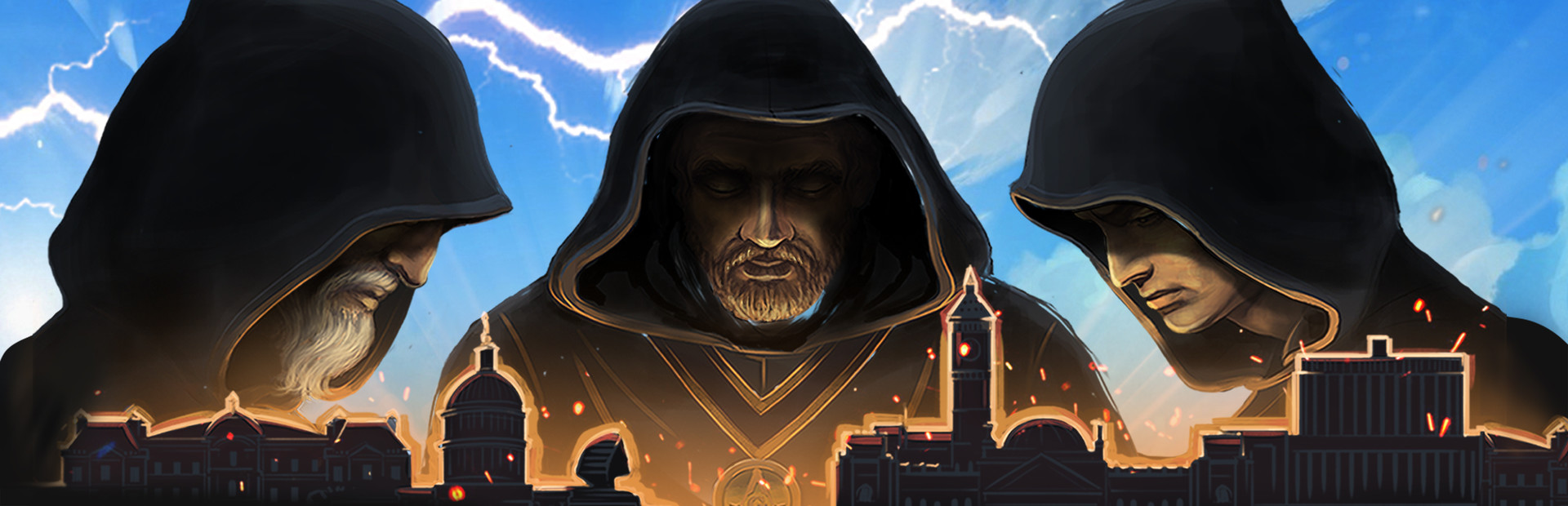
My spreadsheet instincts lit up the moment I heard the pitch: play not a king, but the kingmaker behind every king, spanning centuries from the 18th all the way to the present day. That premise alone separates Secret Government from virtually every other entry in the grand-strategy genre, and for a genre tourist starved of genuinely new angles, it matters. You are running the Brotherhood, an Illuminati-adjacent secret society whose symbolism the developer leaves refreshingly un-subtle, and your toolkit runs to over fifty distinct actions: manipulating taxation levels, adjusting civil liberties, bribing or intimidating government officials, planting agents inside military and economic institutions, and provoking wars or alliances without ever issuing a direct military order. On paper, that indirect control loop is exactly what a genre weary of clicking "raise army" buttons should want. In practice, the execution lands somewhere between promising and frustrating. The simulation underneath is genuinely layered: a shortage of steel cascades into reduced army combat power, which triggers peasant mobilization, which dents food production, which shifts estate populations in ways that ripple back into your influence calculations. Those chain reactions are the kind of emergent complexity I want from a game about pulling invisible strings. The problem is that the UI rarely lets you see those chains clearly. Checking the conversion odds for a single government official requires clicking through each of your six Brothers one at a time, then cycling through each conversion type individually - bribe, intimidate, persuade - before you can make an informed call. That is not strategic depth, that is clerical labour. The agent management screen suffers similarly: all Brothers share matching cloaked designs with no name labels or colour-coding on the map, making it genuinely easy to lose track of who is doing what in which country. The rival Brotherhood mechanic deserves its own paragraph because it is the game's most divisive design choice. Competing secret societies operate on the same map and push back against your influence, which is conceptually correct - the Brotherhood should not be the only shadow power in history. In practice, players report that mid-to-late game sessions get dominated by counter-Brotherhood operations rather than the geopolitical puppet-mastery the concept promises. You end up spending more turns neutralising rival agents than nudging France into a war it never wanted. The secrecy mechanic compounds this: after each action you wait for your exposed agents to cool down, which critics have correctly noted turns large stretches of play into passive watching rather than active scheming. Steam reviews settled at a mixed 52 percent positive across 247 reviews, and that split tracks with my read: the people giving thumbs-up are in it for the concept and willing to grind through the rough edges; the thumbs-down crowd wanted a finished, fluid product. For newcomers to the sub-genre: the tutorial is the biggest structural problem here. The in-game manual exists and reportedly covers the mechanics reasonably well, but it is locked during the tutorial, which is exactly the moment you need it most. The tutorial also restricts player actions for too long while the world simulation keeps rolling, leaving you watching events you cannot yet influence or understand. My honest advice - treat this like you would a mid-tier Paradox game on release day. Skip the tutorial, open the manual directly, pick a small region to focus on first, and let the mechanics reveal themselves through freeplay. The American Revolution campaign scenario is a workable entry point with a tighter geographic scope than a full freeplay sandbox. Grand-strategy learners who approached Crusader Kings 2 the same way - wiki first, campaign second - will find the learning curve surmountable. Secret Government is a niche purchase for a specific player: someone who has already exhausted the kingmaker fantasy in Crusader Kings 3, wants something slower and more indirect than a 4X, and is comfortable accepting a rough-edged, lower-budget package in exchange for a concept no major studio has seriously attempted. If you need a polished UI and a tutorial that respects your time, this will irritate you within the first hour. If you are the kind of person who finds satisfaction in watching a carefully placed agent tip a country's ideology six months before a war you quietly engineered, there is a real game buried here, waiting for you to dig it out.

Strategy & simulation
Tags
System Requirements
Minimum
- OS
- Windows 7/Windows 8/Windows 10
- Memory
- 8 GB RAM
- DirectX
- Version 11
- Storage
- 9 GB available space
- Graphics
- NVIDIA GeForce GTX 660
- Processor
- Intel Core i5-3470
- Sound Card
- Direct X - compatible soundcard
Recommended
- OS
- Windows 7/Windows 8/Windows 10
- Memory
- 16 GB RAM
- DirectX
- Version 11
- Storage
- 9 GB available space
- Graphics
- NVIDIA GeForce GTX 1060
- Processor
- Intel Core i7-6770
- Sound Card
- Direct X - compatible soundcard
Keep exploring
Community Discussion
Be the first to comment on Secret Government.
Reviews & Ratings
No ratings available
Game Info
- Developer
- GameTrek
- Publisher
- Fulqrum Publishing
- Release Date
- Apr 15, 2021