Seasons after Fall
Swing Swing Submarine's hand-painted fox adventure earns its place beside the greats of atmospheric indie, if you can forgive a map that doesn't exist and a pace that refuses to hurry.
GamerScout Verdict
Worth it for atmosphere-first players who can tolerate vague navigation; skip if you need mechanical teeth with your puzzle-platformer.
Compare Prices(6 stores)
Every store in this table quotes us in euros, so the EUR figure is the price the seller actually set, not our arithmetic — which is why EUR is also the currency we rank in. We only list an offer here when the store gives us its price in euros, so nothing in this table is a number we invented.
Pick USD, PLN, GBP, CAD or AUD in the header and we convert from EUR at the European Central Bank reference rate — converted amounts are prefixed with ~. Your bank or the store may apply a different rate at checkout. We never hide offers based on where you are: everyone sees this whole table.
We may earn a commission when you buy games through links on this page — at no extra cost to you. It never affects our rankings or verdicts.
Price History
Screenshots & Media
About Seasons after Fall
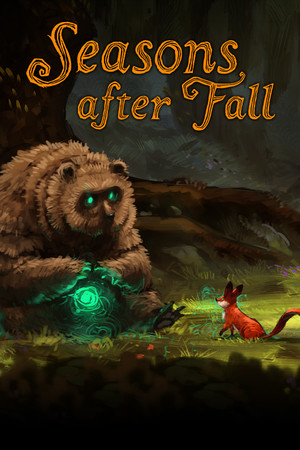
I keep coming back to the moment when you first press a shoulder button and watch an entire forest repaint itself from amber to white. That one gesture, switching from Autumn to Winter and seeing a lake solidify beneath your fox's paws in real time, is the clearest argument Seasons after Fall makes for its own existence, and it makes it beautifully. Swing Swing Submarine is a tiny studio, and this feels like a game made by people who genuinely love the idea of seasons as a mechanic, not just a costume. You play as a spirit seed, a nondescript sliver of energy that possesses a fox and is guided through a forest by a narrator with uncertain motives. The goal is to visit four totemic Guardians, the Bear for Winter, the Crane for Autumn, the Eel for Spring, the Cicada for Summer, and absorb their powers one by one. Each season reshapes the world in distinct ways: Winter freezes lakes and waterfalls into walkable paths, Spring raises water levels to reach higher ledges, Summer coaxes plants into bloom so they stretch into platforms, and Autumn opens mushrooms and stirs wind currents that lift you to otherwise inaccessible spots. There is a bark mechanic too, used to interact with certain plants and trees, which gives the fox a wonderfully tactile feel even in a game with essentially zero combat and no fail state whatsoever. You cannot die. Missed jumps drop you back to the last ledge you stood on. The challenge lives entirely in working out what the environment is asking of you. The soundtrack deserves its own paragraph. It was composed for and performed by a live string quartet, and that choice alone separates this game from ninety percent of its contemporaries. Each season gets its own tonal character, the foley follows suit, with the fox's footsteps changing texture depending on whether she is crossing stone, grass, or frozen water. It is the kind of soundscape you put on headphones for. The hand-painted art holds up the same end of the bargain; every zone was painted four times over, once per season, and the palette shifts when you flip between them are genuinely arresting the first dozen times they happen. Whether the novelty holds all the way to the end is a fair question. Here is the honest accounting. The world lacks a map, and the environments, as gorgeous as they are, share enough visual vocabulary that backtracking becomes genuinely disorienting in the second half. The Metroidvania loop of revisiting zones with new seasonal powers is a smart structure, but the game gives you almost no navigational scaffolding, and some players will spend real time running laps through identical-looking forest corridors trying to remember which waterfall they forgot to freeze. The collectible dream sequences, hidden spots where the fox naps and flashes back to story context, are among the best moments in the game, but they are easy to miss and the game will not remind you they exist. The story itself starts stronger than it finishes; the narrator's arc goes places, but the telling-over-showing approach means the emotional payoff depends on how much goodwill the atmosphere has built up in you by that point. For players who want a decompression game, something to run through in three to five quiet evenings with the lights low and the volume up, Seasons after Fall is close to exactly right. For anyone expecting the mechanical depth of Ori and the Blind Forest or a Metroidvania with genuine exploration tension, the gaps will sting. This is a game that knows what it is and mostly knows when to end, and that kind of self-awareness from a small studio deserves credit even when the puzzles don't challenge and the map screen stays empty.

Indie & narrative
Tags
System Requirements
Minimum
- OS
- Windows 7/8/10
- Memory
- 4 GB RAM
- DirectX
- Version 11
- Storage
- 4 GB available space
- Graphics
- 1 GB, DirectX 11, AMD Radeon HD 6750/NVIDIA GeForce GT 640
- Processor
- Intel Core 2 Duo E4500 (2.2GHz)/AMD Athlon 64 X2 5600+ (2.8GHz)
Keep exploring
Community Discussion
Be the first to comment on Seasons after Fall.
Reviews & Ratings
Game Info
- Developer
- Swing Swing Submarine
- Publisher
- Focus Entertainment
- Release Date
- Sep 2, 2016