
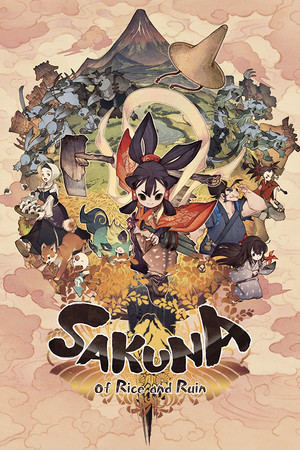
Sakuna: Of Rice and Ruin
A two-person studio somehow built one of the most quietly radical genre hybrids on Steam: hack-and-slash demon slaying whose entire progression system runs on the quality of your rice paddy.
GamerScout Verdict
Built for patient players who want their character progression tied to genuine agricultural craft, not a stat screen.
Compare Prices(5 stores)
Every store in this table quotes us in euros, so the EUR figure is the price the seller actually set, not our arithmetic — which is why EUR is also the currency we rank in. We only list an offer here when the store gives us its price in euros, so nothing in this table is a number we invented.
Pick USD, PLN, GBP, CAD or AUD in the header and we convert from EUR at the European Central Bank reference rate — converted amounts are prefixed with ~. Your bank or the store may apply a different rate at checkout. We never hide offers based on where you are: everyone sees this whole table.
We may earn a commission when you buy games through links on this page — at no extra cost to you. It never affects our rankings or verdicts.
Price History
Screenshots & Media
About Sakuna: Of Rice and Ruin
I came to Sakuna: Of Rice and Ruin expecting a charming curiosity and left having genuinely thought more carefully about soil fertilizer than I have in any game before or since. That sentence alone should tell you whether this is your kind of thing. Edelweiss, a tiny indie team, spent years building a side-scrolling action game whose leveling system is not an XP bar but an in-depth rice-farming simulation, and the audacity of that decision pays off in ways that feel almost philosophical once the loop clicks. The structure splits cleanly between two modes that feed each other constantly. In the 2.5D combat stages, you chain light and heavy attacks using Sakuna's farm tools as weapons, string together combos, and use the divine raiment - a magical sash that functions as a grapple hook - to zip across platforms and fling yourself at demon groups. The movement ceiling is high and satisfying when the raiment lands true, though several reviewers note that its eight-directional locking can frustrate in tight platforming sections, particularly near lethal hazards. Back at the hamlet, the farming half takes over: tilling soil, sorting seed kernels, managing water temperature across seasons, scooping fertilizer the unglamorous way, weeding, pest control, and eventually hulling the harvest. Every crop you complete permanently raises Sakuna's stats, so the paddy is not a side-activity - it is your character sheet. Meals prepared from foraged ingredients also grant temporary combat buffs, meaning the loop between field and dungeon is always in motion. What makes Sakuna stay with you is less the systems themselves and more the intentionality behind them. The game does not hand-hold the farming, doles out guidance through NPC conversations and scrolls, and expects you to learn by doing - which mirrors the arc of a spoiled goddess being humbled into a real farmer. The watercolour-adjacent art, rooted in research visits to Kyoto and Shirakawa-go architecture, and the use of traditional Japanese instruments in the soundtrack give the whole thing a warmth that few games this mechanically dense manage to hold. Reviewers consistently single out that visual and audio craft as the reason the game's quieter domestic moments land as well as its combat spectacle. The criticisms are real and worth knowing before you commit. Some side characters grate. The mid-to-late game asks you to revisit stages and fulfill repetitive objective quotas - defeat-X-enemies tasks that pad runtime without adding texture. And the pacing inside individual seasons can feel stubborn to anyone who arrived expecting a breezy farming cozy. This game wants patience from you the same way rice cultivation wants patience from a farmer. If you are hoping to sprint through the story, the structure will push back hard. For the right player - someone who finds the idea of genuinely learning rice agriculture mechanics in order to unlock better combat skills exciting rather than absurd - Sakuna: Of Rice and Ruin is something rare: a small-team game that commits fully to its strange premise and earns that commitment. The post-game even adds a multi-hundred-floor dungeon for those who want to keep going after credits. The anime adaptation that came later is a fine endorsement, but the game itself is what started it. Play it slow.

Indie & narrative
Tags
System Requirements
Minimum
- OS
- Windows 8.1/10
- Memory
- 6 GB RAM
- DirectX
- Version 11
- Storage
- 7 GB available space
- Graphics
- NVIDIA GTX 750 Ti
- Processor
- Intel Core i5-7500
Recommended
- OS
- Windows 8.1/10
- Memory
- 6 GB RAM
- DirectX
- Version 11
- Storage
- 7 GB available space
- Graphics
- NVIDIA GTX 1060
- Processor
- Intel Core i5-7500
Keep exploring
Community Discussion
Be the first to comment on Sakuna: Of Rice and Ruin.
Reviews & Ratings
Game Info
- Developer
- Edelweiss
- Publisher
- XSEED Games
- Release Date
- Nov 10, 2020