
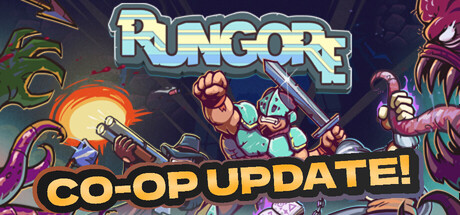
RUNGORE
Slay the Spire collided with Loop Hero at full speed, lost its turn order and its filter, and somehow landed 86% positive on Steam. That should tell you something.
GamerScout Verdict
Worth it for players who want card-build depth delivered at reflex-testing speed, less so for anyone expecting turn-based patience.
Compare Prices(8 stores)
Every store in this table quotes us in euros, so the EUR figure is the price the seller actually set, not our arithmetic — which is why EUR is also the currency we rank in. We only list an offer here when the store gives us its price in euros, so nothing in this table is a number we invented.
Pick USD, PLN, GBP, CAD or AUD in the header and we convert from EUR at the European Central Bank reference rate — converted amounts are prefixed with ~. Your bank or the store may apply a different rate at checkout. We never hide offers based on where you are: everyone sees this whole table.
We may earn a commission when you buy games through links on this page — at no extra cost to you. It never affects our rankings or verdicts.
Price History
Screenshots & Media
About RUNGORE
I'll be honest: when I first clocked the developer name and the meme-forward pitch, I wrote RUNGORE off as a novelty. Two hours later I was still in the chair, mid-run, genuinely thinking about card sequencing. That is the trick this game pulls. On the surface it reads like a joke. Underneath it, there is a real-time card battler with enough systemic texture to keep you optimising across 15 distinct hero classes. The core loop is a gauntlet structure: your hero auto-runs through sewers, graveyards, jungles, and stranger biomes, brawling with everything in the path. Combat is simultaneous, your character and every enemy act at the same time, so the job of your cards is reactive as much as it is proactive. You can slam as many cards as you want in a single encounter, no turn limit, no mana ceiling, which sounds chaotic until you realise the tension comes from card conservation. Enemies scale hard toward late levels, and boss fights can hit brutally fast, so dumping your healing and armor cards early against trash mobs is the kind of mistake you learn once. Between fights, a hub shop lets you spend run gold on new cards, gear, and unlock perks like keyboard hotkeys for faster card play. Multi-floor levels add miniboss checkpoints that award run-wide artifacts granting stat bonuses, HP bumps, or attack rate increases, small choices that compound into meaningful build directions by the time you reach the final boss. The hero variety is where RUNGORE earns its replay value. Each of the 15 characters carries class-specific cards that play differently enough to demand a rethink of every strategy. Knight Guy wants to stack armor and mark effects for bonus damage synergies. Other classes reward entirely different approaches. That said, early runs on a new hero can feel thin, the card pool starts small and fights blur into each other until the deck fills out. The difficulty also makes a sharp turn midgame; some late encounters have attack rates that feel less like design decisions and more like wall-to-wall chaos. Players who expect Slay the Spire's measured pacing will be caught off guard. The tonal design is genuinely strange, and worth flagging. RUNGORE opens as a meme-saturated comedy, dog jokes on card art, a deliberately unhinged tutorial, hidden references scattered across levels. Roughly halfway through, the game pivots toward darker, horror-adjacent territory, with a fake-crash sequence that recontextualises what you are doing. Reactions to this are split down the middle. Some players find it a clever subversion. Others find the shift jarring enough to break immersion. Either way, you should know it is coming. Visuals and soundtrack shift to match: bright pixel colors give way to oppressive palettes, and the upbeat dubstep score turns ambient and eerie. The pixel art itself is sharp throughout, with strong character and enemy silhouettes that make encounters readable even when things get hectic. For my tastes, RUNGORE sits in a very specific lane: it rewards players who think about card timing, artifact stacking, and hero-specific win conditions, but it delivers all of that inside a frenetic real-time wrapper that does not let you sit back and theorise. If your idea of strategy is methodical and deliberate, the speed will frustrate you. If you can context-switch fast and enjoy finding the breaking point of a build, there is legitimate depth here across many hours of unlocking heroes and mapping which cards combo with which class passives. The Steam community reception of 86% positive from nearly a thousand reviews suggests the formula landed for most people who gave it time.

Strategy & simulation
Tags
System Requirements
Minimum
- OS
- windows 7
- Memory
- 256 MB RAM
- DirectX
- Version 9.0
- Storage
- 120 MB available space
- Graphics
- Intel graphics HD 620
- Processor
- Intel Pentium E2180 (2 * 2000) or equivalent
- Sound Card
- existent
Recommended
- OS
- windows 10
- Memory
- 512 MB RAM
- DirectX
- Version 9.0
- Storage
- 120 MB available space
- Graphics
- Nvidia GeForce GT430
- Processor
- Intel Core i3-3240 (2 * 3400) or equivalent
- Sound Card
- existent
Keep exploring
Community Discussion
Be the first to comment on RUNGORE.
Reviews & Ratings
No ratings available
Game Info
- Developer
- YOUR_MOM'S_HP
- Publisher
- GrabTheGames
- Release Date
- May 16, 2024