
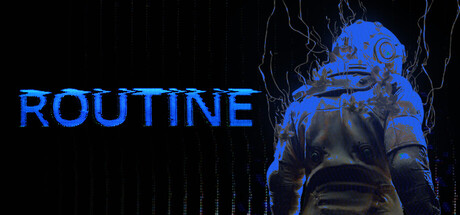
ROUTINE
Thirteen years in the making, ROUTINE is the slow-burn sci-fi horror that patient players have earned. If you can handle zero hand-holding on a dead moon, it gets under your skin and stays there.
GamerScout Verdict
Ideal for players who want atmospheric immersion over mechanical depth and don't mind reading the walls to find their way.
Compare Prices(9 stores)
Every store in this table quotes us in euros, so the EUR figure is the price the seller actually set, not our arithmetic — which is why EUR is also the currency we rank in. We only list an offer here when the store gives us its price in euros, so nothing in this table is a number we invented.
Pick USD, PLN, GBP, CAD or AUD in the header and we convert from EUR at the European Central Bank reference rate — converted amounts are prefixed with ~. Your bank or the store may apply a different rate at checkout. We never hide offers based on where you are: everyone sees this whole table.
We may earn a commission when you buy games through links on this page — at no extra cost to you. It never affects our rankings or verdicts.
Price History
Screenshots & Media
About ROUTINE
I went in knowing almost nothing about the 2012 announcement, and I think that was the right way to arrive. ROUTINE drops you into Union Plaza, a once-busy lunar base built from an 80s fever dream of what the future would look like: chunky CRT terminals, corridors lit by flickering emergency strips, analogue dials on every surface. You play a systems technician sent to restore power and find the crew. The crew is not there. Something else is. The central tool is the Cosmonaut Assistance Tool, the C.A.T., and it earns every letter of its name. It handles terminals, runs diagnostics, fires a last-resort electric shockwave, and displays its own battery level on a side panel you physically rotate to check. There is no HUD. No objective markers on a minimap. No health bar tucked into a corner. The game communicates everything through the world itself: wall signs, emails on broken terminals, audio logs, and the weight of silence between footsteps. That commitment to diegetic design is where ROUTINE earns its reputation. The tactility of interacting with this place is extraordinary for a game made by a team of three or four people. The threats escalate well. Early encounters are the "05" security robots, patrol-route machines that can be temporarily shorted out but not destroyed. They stop being terrifying once you learn their patterns, which is a genuine criticism worth naming: once the spatial logic clicks, the robots become inconveniences rather than monsters. What replaces them later shifts the horror register entirely, in ways worth discovering without a spoiler. The stealth is basic, leaning on crouch, hide, wait, but the environment shapes every confrontation in ways that keep tension present even when the mechanics feel thin. Navigation can punish players who lose their spatial memory mid-session. The base is compact and logical in design, but the lack of a map means a missed fuse or overlooked note can send you wandering. Lean into it, not away from it. The soundtrack, built from low industrial drones and lo-fi 80s-influenced textures, does something rare: it makes silence feel louder than music. Composer Mick Gordon contributed to early work, with Nathaniel-Jorden Apostol completing the score. The result is a soundscape that genuinely trains you to listen for threats rather than music cues. At 8-10 hours across a single playthrough, ROUTINE knows exactly when to end, and the pacing rewards the patience it demands. The narrative is assembled through environmental storytelling rather than cutscenes, and while the human characters are thin on personality, the world around them feels painstakingly inhabited. Children's drawings in the daycare. Oddly specific items in the gift shop. It adds up. The weaknesses are real but narrow. Some puzzle clues hide a little too well in the visual detail. Loading screens between major zones (elevator, subway, airlock) briefly break the immersion that every other system works so hard to build. The story has two endings and a philosophical undercurrent that critics have called uneven, though I found the slow reveal earned its ambiguity. For players who want genre-defining mechanical innovation, ROUTINE is not the answer. For players who want to feel genuinely alone somewhere that should not exist, it is rare and it is worth it.

Indie & narrative
Tags
System Requirements
Minimum
- OS
- Windows 10 64-bit
- Memory
- 8 GB RAM
- DirectX
- Version 11
- Storage
- 10 GB available space
- Graphics
- Nvidia GeForce GTX 1060 / AMD Radeon RX 570
- Processor
- Intel Core i5-8600 / Ryzen 5 3600
Recommended
- Memory
- 16 GB RAM
- Graphics
- Nvidia GeForce RTX 2060 / Radeon RX 5700
- Processor
- Intel Core i5-13600K / AMD Ryzen 5 7600X
Keep exploring
Community Discussion
Be the first to comment on ROUTINE.
Reviews & Ratings
Game Info
- Developer
- Lunar Software
- Publisher
- Raw Fury
- Release Date
- Dec 4, 2025
