
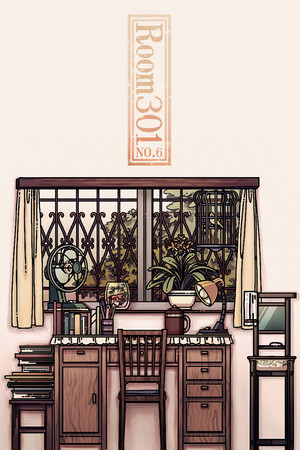
Room 301 NO.6
A one-hour maze-puzzle about forgetting, built by a student team, that punches well above its runtime on emotional weight. Worth knowing what you're signing up for before you launch it.
GamerScout Verdict
Best for players who want a short, mechanically purposeful experience about memory loss - expect emotional resonance over puzzle depth.
Compare Prices(6 stores)
Every store in this table quotes us in euros, so the EUR figure is the price the seller actually set, not our arithmetic — which is why EUR is also the currency we rank in. We only list an offer here when the store gives us its price in euros, so nothing in this table is a number we invented.
Pick USD, PLN, GBP, CAD or AUD in the header and we convert from EUR at the European Central Bank reference rate — converted amounts are prefixed with ~. Your bank or the store may apply a different rate at checkout. We never hide offers based on where you are: everyone sees this whole table.
We may earn a commission when you buy games through links on this page — at no extra cost to you. It never affects our rankings or verdicts.
Price History
Screenshots & Media
About Room 301 NO.6
I went into Room 301 NO.6 expecting a short indie curiosity and came out needing a few minutes of quiet. The premise is mechanical before it is emotional: you play as an elderly woman with Alzheimer's, and every in-game day begins with navigating a fragmented 2D maze on the left half of your screen while simultaneously examining the room around you on the right half - WASD for the maze, mouse clicks to interact with objects. That split-perspective design is not a gimmick. The left-side maze, built from fragmented blocks, literally represents the patient's scrambled internal state. The right side is her physical world, grounded and full of ordinary items that carry extraordinary weight once you understand whose life you are sorting through. The core loop each day is to locate four significant objects - a photograph, a child's toy, a piece of furniture with a story behind it - and collect them to trigger short memory sequences that sketch the protagonist's life: her years as a schoolteacher, her daughter who danced and later moved abroad, her husband's quiet acts of love. The difficulty escalates as the game's "fuzzy border" visual filter tightens your field of view, making item-hunting genuinely harder as the days pass. That is not a difficulty spike for challenge's sake. It is the whole point. Pill Bottles scattered through the room temporarily expand your field of view, offering a brief window of clarity - and the moment you feel relieved to find one, the game has already made its argument about dependency and daily struggle. Honest caveats, because this is where my strategy-brain kicks in: the actual puzzle design is light. Early days are close to trivial, and even the harder later sections are more about patience than problem-solving. The runtime sits around one hour. There is no mod support, no replay structure, no branching - it is a linear, authored experience, closer to an interactive short film than a simulation. Players expecting systemic depth or replayability will not find it. The community has also noted some ambiguity around language options in the demo versus the full release, so confirm English-language support is active before diving in. Who is this for, then? Anyone who has watched a family member lose their grip on memory, or who wants a low-friction, high-empathy experience that uses its mechanics with intention rather than decoration. The hand-drawn aesthetic is warm rather than clinical, and the intergenerational story of a mother and daughter spending difficult days together lands with more sincerity than most games three times the price manage. Developed by a student team at the Communication University of China, it carries the earnestness that polish sometimes erases. Steam players agree: the title sits at 91% positive across roughly 190 reviews, which is a strong signal for something this niche and this short.

Strategy & simulation
Tags
System Requirements
Minimum
- OS
- Windows7
- Memory
- 4096 MB RAM
- Storage
- 1024 MB available space
- Graphics
- Intel HD Graphics 3000
- Processor
- Intel Core i3 2.00 GHz
Recommended
- Memory
- 4096 MB RAM
- Storage
- 1024 MB available space
Keep exploring
Community Discussion
Be the first to comment on Room 301 NO.6.
Reviews & Ratings
No ratings available
Game Info
- Developer
- Inter Frame Studio
- Publisher
- Gamirror Games
- Release Date
- Sep 20, 2022