
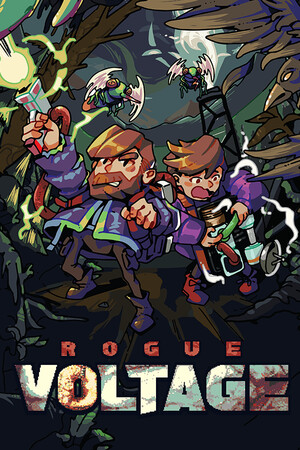
Rogue Voltage
Wire up 150+ modules, chain reactions, and timeline tricks to break a turn-based roguelike wide open, if you can stomach pixel art that divides opinion and early runs that feel almost too approachable.
GamerScout Verdict
Best for tactics players who want a build-order puzzle wrapped in a roguelite, not a reflex-driven card brawler.
Compare Prices(3 stores)
Every store in this table quotes us in euros, so the EUR figure is the price the seller actually set, not our arithmetic — which is why EUR is also the currency we rank in. We only list an offer here when the store gives us its price in euros, so nothing in this table is a number we invented.
Pick USD, PLN, GBP, CAD or AUD in the header and we convert from EUR at the European Central Bank reference rate — converted amounts are prefixed with ~. Your bank or the store may apply a different rate at checkout. We never hide offers based on where you are: everyone sees this whole table.
We may earn a commission when you buy games through links on this page — at no extra cost to you. It never affects our rankings or verdicts.
Price History
Screenshots & Media
About Rogue Voltage
I went in expecting another deckbuilder reskin and came out three hours later having dismantled a Time Bomb by routing an Amplifier's doubled output back into a storage cell I wasn't planning to use. That single moment tells you everything about whether Rogue Voltage is for you. The core loop is genuinely unlike anything I can map cleanly onto a genre label. Each of your two characters gets a 4x4 rack, and you fill it with modules you discover across runs: generators, amplifiers, storage cells, blasters, decelerators, healing canisters. The trick is that nothing activates by itself. You wire them together, deciding each turn where scarce energy flows. Feed the blaster and you hit hard. Feed the battery and you set up a bigger chain next round. Feed the decelerator and you shove an enemy backward on the shared timeline before it can act. That timeline layer is the second big idea, every unit on the field sits on a visible turn order you can push and pull through specific modules, which turns each combat into a priority-management puzzle on top of the circuit-building puzzle. The two systems talk to each other constantly, and that conversation is where the depth lives. With over 150 modules in the pool and nine characters that deploy in pairs (giving 36 distinct starting loadouts), the build space is large enough to stay interesting across multiple runs. The persistent camp progression, spending plasma at the trading post, upgrading the refinery to boost existing modules, unlocking new pieces for future runs, gives you a classic roguelite improvement arc without trivializing early runs. The community spent the Early Access period actively hunting game-breaking combinations, and the developer iterated on those discoveries, which means the 1.0 release lands with a meaningful amount of testing behind the synergy tree. Complaints exist and they are fair. Some players find the pixel art aesthetic off-putting, and the character designs in particular attract specific criticism around readability. Early runs can feel light on resistance, the pacing of threat escalation does not always match how fast a player who has read the tooltips can snowball a circuit into something oppressive. Combat on its own, stripped of clever wiring, is thin: enemies go down in a handful of hits and the variety per encounter is not high enough to paper over sessions where you draw a weak module pool. The tutorial is thoughtful and scaffolds complexity well, but the mid-game difficulty curve needs more attention than it currently gets. For strategy players who miss the tactile satisfaction of an engine-building board game translated to a screen, this scratches that itch better than most. Think of it less as a Slay the Spire clone and more as a Zachtronics puzzle game that decided it wanted to be a roguelite: deliberate, build-order dependent, occasionally brain-meltingly good when the circuit clicks. The pixel art aesthetic and relatively gentle early difficulty are real friction points for some, but the underlying decision space rewards patience and iteration in ways that hold up across many runs.

Strategy & simulation
Tags
System Requirements
Minimum
- OS
- Windows 10
- Memory
- 2 GB RAM
- DirectX
- Version 10
- Storage
- 500 MB available space
- Processor
- 2 GHz
Keep exploring
Community Discussion
Be the first to comment on Rogue Voltage.
Reviews & Ratings
No ratings available
Game Info
- Developer
- Horizont Computergrafik
- Publisher
- Horizont Computergrafik
- Release Date
- May 1, 2026