Rogue Heroes: Ruins of Tasos
Zelda-brained comfort food that earns its roguelite label by making every failed dungeon run feel like progress, not punishment. Bring two friends and it quietly becomes one of the best co-op experiences on PC.
GamerScout Verdict
Best for Zelda nostalgia hunters and co-op groups who want a low-pressure roguelite with genuine charm and a patient upgrade loop.
Compare Prices(9 stores)
Every store in this table quotes us in euros, so the EUR figure is the price the seller actually set, not our arithmetic — which is why EUR is also the currency we rank in. We only list an offer here when the store gives us its price in euros, so nothing in this table is a number we invented.
Pick USD, PLN, GBP, CAD or AUD in the header and we convert from EUR at the European Central Bank reference rate — converted amounts are prefixed with ~. Your bank or the store may apply a different rate at checkout. We never hide offers based on where you are: everyone sees this whole table.
We may earn a commission when you buy games through links on this page — at no extra cost to you. It never affects our rankings or verdicts.
Price History
Screenshots & Media
About Rogue Heroes: Ruins of Tasos
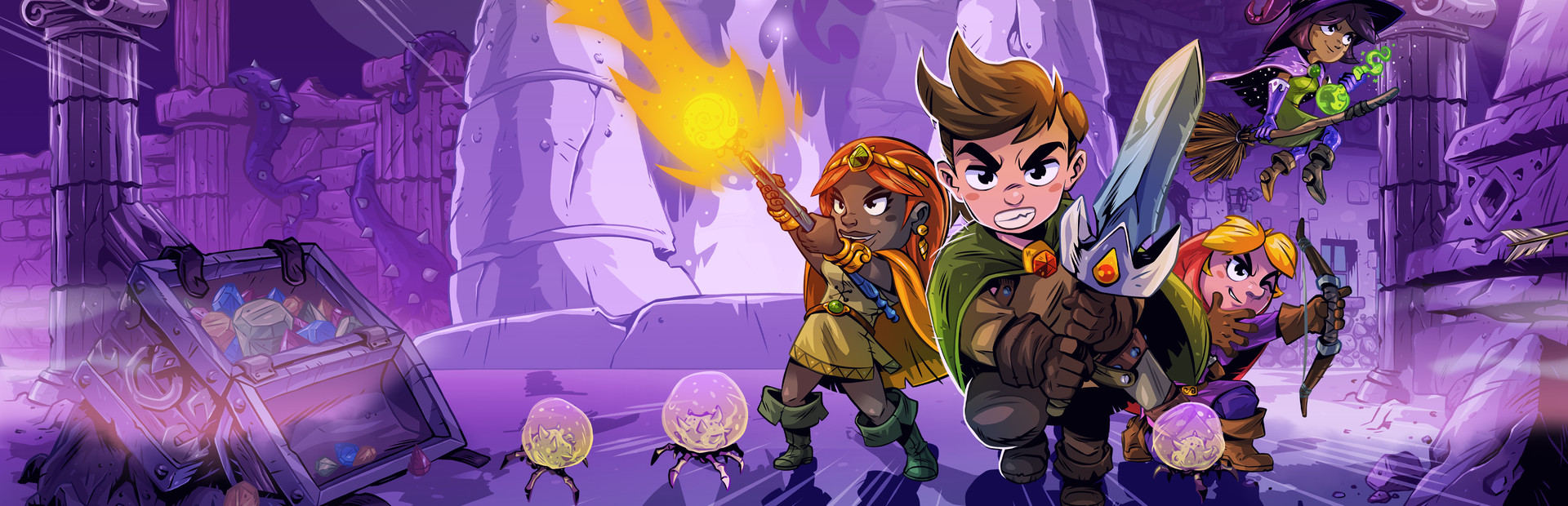
My first hour with Rogue Heroes felt like finding a worn SNES cartridge at the back of a drawer and realising it still works. The top-down pixel world, the sword swung in eight directions, the overworld gated by boulders and broken bridges that only open once you have the right tool - all of it lands with the particular warmth of something that knows exactly what it wants to be. Heliocentric Studios clearly grew up with A Link to the Past, and that affection is present in every hand-drawn swamp and cemetery you wander through. What separates this from a straightforward tribute act is the roguelite loop baked underneath. The four Great Dungeons generate fresh room configurations each run, so the layouts never quite calcify into muscle memory. You die - and you will die, especially early on - and then you spend your collected gems at the village of Intori, slowly constructing a blacksmith, a clinic, a gym, a farm. That town-building layer is lighter than it first appears: buildings mostly unlock upgrade trees rather than weaving a living community. The NPCs who show up are pleasant but quiet. Critics who wanted a richer narrative found the story entirely forgettable, and that is a fair read. The world has atmosphere; the lore barely registers. If you come in expecting character-driven writing, redirect your energy elsewhere. The class roster sits at ten options after post-launch updates, running from the tanky Knight to the elemental Mage to a Druid who shapeshifts into animals. Honest caveat: some classes feel more distinct on paper than in play. The Mage still leads with a sword strike on basic attacks, and a few builds overlap enough to feel redundant. The Reaper stands out as genuinely different in feel, verging on overpowered. Difficulty balance is uneven too - dungeon floors three and four can spike hard while some Titan boss fights end up being less threatening than the corridors leading to them. Solo players will feel that imbalance more sharply than those running with a group. Co-op, local or online, is where the game exhales and becomes something genuinely special. Up to four players crashing through procedural rooms, arguing over who gets the temporary hookshot, pooling gems for the next village building - the chaos is charming rather than frustrating. Local co-op at launch felt tighter than online, and early online builds carried a few rough edges, but the Druids and Dungeons free update patched meaningful improvements. Item management with a controller is still fussier than it should be, and the quick-select system is only adequate. These are friction points worth knowing about, not dealbreakers. For anyone who has a genuine fondness for classic 2D Zelda and wants that sensation stirred into a run-based loop with a patient upgrade curve, Rogue Heroes delivers with real warmth. The overworld rewards wandering, the side quests are quietly charming, and the infinite dungeon waiting after the main content gives the co-op crowd a reason to stay. It is not reinventing anything. But it builds its small world with enough care and craft that the hours pass without complaint.

Indie & narrative
Tags
System Requirements
Minimum
- OS
- Windows 7
- Memory
- 4 GB RAM
- Storage
- 300 MB available space
- Graphics
- GeForce GT 320, 1 GB | AMD Radeon R7 240, 2 GB
- Processor
- Intel Core 2 Quad Q6600, 2.4 GHz | AMD FX-4350
DLC & Add-ons for Rogue Heroes: Ruins of Tasos1
Expansions, DLC packs and add-on content for this game. Click any item to see store offers.

Keep exploring
Community Discussion
Be the first to comment on Rogue Heroes: Ruins of Tasos.
Reviews & Ratings
Game Info
- Developer
- Heliocentric Studios
- Publisher
- Team17 Digital
- Release Date
- Feb 23, 2021