Compare Resort Boss: Golf prices across 50+ stores and find the best deal. Developed by Gus Martin. Published by Excalibur Publishing. Released on 7/25/2019. Available on PC. Genres: Indie, Simulation, Sports, Strategy.

Mostly Negative on Steam and years without meaningful updates: the gap between what Resort Boss: Golf promises and what it delivers is wide enough to lose a golf ball in.

My instinct when I load up a tycoon game is to check three things immediately: how deep is the financial loop, how punishing is the early economy, and whether the AI guests behave in ways that make sense. Resort Boss: Golf answers all three questions badly, and that matters for anyone shopping it as a serious sim. You start with a parking lot, a $100,000 campaign budget that evaporates faster than the tutorial warns you, and a grid-based course editor that is, against all odds, the most enjoyable part of the package. Placing tees, defining fairways, rough, and greens, carving out water hazards and bunkers, raising and lowering terrain - all of that clicks into place well enough that you can spend a satisfying hour just sculpting a par-3 dogleg. The course-building core is genuinely the game's strongest card. Once guests actually show up, the cracks open fast. The financial reporting is broken at a fundamental level: the UI will report monthly income figures that bear no relation to the actual cash movement in your account. Players in the community have flagged this for years, and it has not been fixed. The guest feedback system, which should function like a signal layer telling you where to invest next, delivers vague complaints about hole difficulty that you often deliberately designed in. Golfer AI gets physically stuck on the course, sometimes permanently, bringing play to a halt and forcing a restart. These are not rough edges on a promising foundation - they are load-bearing bugs in the economy simulation itself, which is supposed to be the entire point of the genre. The three game modes - sandbox, scenario, and campaign - give you different entry points, and sandbox in particular is where newcomers to the tycoon genre should start. There are no financial penalties in sandbox, no win conditions, just the course editor and time. That is actually a reasonable place to learn the building systems before committing to a campaign run with real budget constraints. The building construction itself follows a grid blueprint approach: you define footprint, floor count, roof shape, wall type, then staff builds it. Off flat terrain the results get visually ugly fast, and the game does not auto-flatten land or auto-bulldoze obstructions, so expect trees growing through your restaurant walls unless you manually prep every plot first. The play-your-own-course mode deserves a mention because it is more functional than reviewers gave it credit for at launch. You select from woods, irons, and wedges at the tee, follow a shot-prediction arc, and time a swing meter. It is basic, closer to Golf Story's casual feel than any serious golf sim, but it works well enough to let you stress-test a hole you've designed from the management side. The problem is that this mode highlights how shallow the overall package is: the best part of Resort Boss: Golf is a course editor, and the resort management wrapped around it feels half-assembled. With a Steam rating that sits around 35-40 percent positive across roughly 150 reviews, the community verdict has been consistent and clear for several years. If you are a tycoon completionist who wants every golf-adjacent management game in the library and you go in with calibrated expectations, there is an afternoon's worth of course-sculpting fun buried here. For anyone expecting a functional financial sim with competent guest AI, the bugs are not cosmetic - they sit directly in the path of the core gameplay loop. A more polished alternative in the genre will serve you better unless this specific theme pulls you in hard. Diego, Scout Team

Resort Boss: Golf
IndieSimulationSportsStrategy

Resort Boss: Golf

Jul 25, 2019Gus MartinExcalibur Publishing
GamerScout Says

Mostly Negative on Steam and years without meaningful updates: the gap between what Resort Boss: Golf promises and what it delivers is wide enough to lose a golf ball in.

PC
Best Price Available
0.00
at N/A
Historical low: $0.85

Compare Prices(0 stores)

Loading prices...

We may earn a commission when you buy games through links on this page — at no extra cost to you. It never affects our rankings or verdicts.

Screenshots & Media

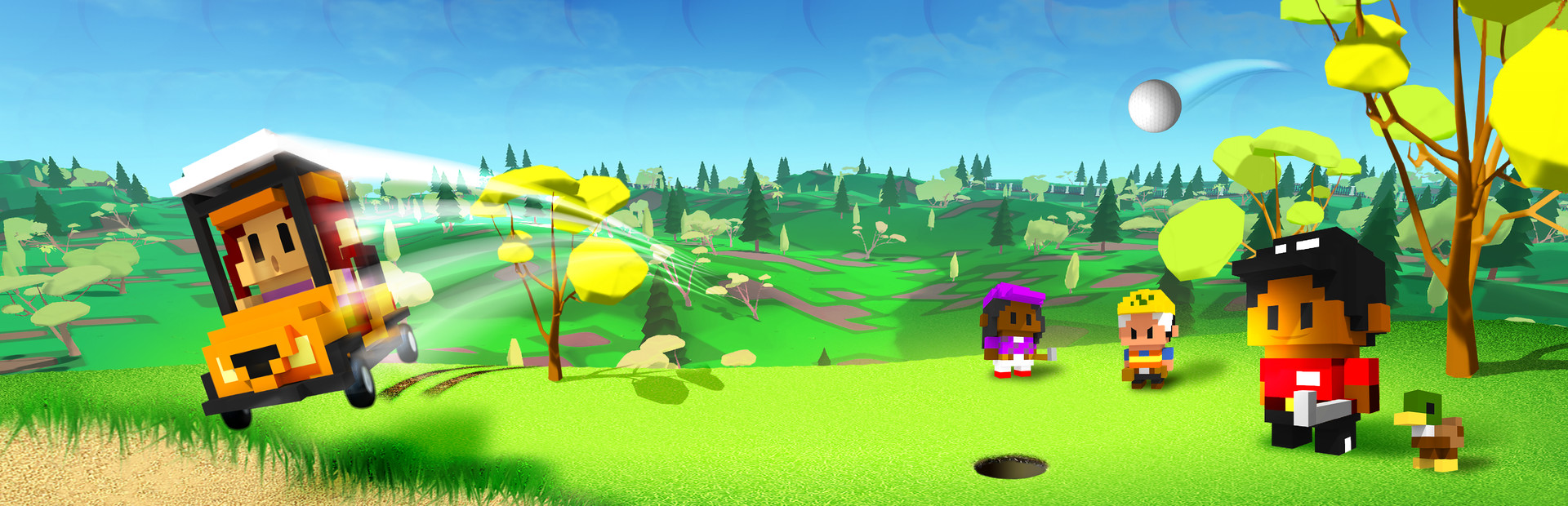
Screenshot

About Resort Boss: Golf

My instinct when I load up a tycoon game is to check three things immediately: how deep is the financial loop, how punishing is the early economy, and whether the AI guests behave in ways that make sense. Resort Boss: Golf answers all three questions badly, and that matters for anyone shopping it as a serious sim. You start with a parking lot, a $100,000 campaign budget that evaporates faster than the tutorial warns you, and a grid-based course editor that is, against all odds, the most enjoyable part of the package. Placing tees, defining fairways, rough, and greens, carving out water hazards and bunkers, raising and lowering terrain - all of that clicks into place well enough that you can spend a satisfying hour just sculpting a par-3 dogleg. The course-building core is genuinely the game's strongest card. Once guests actually show up, the cracks open fast. The financial reporting is broken at a fundamental level: the UI will report monthly income figures that bear no relation to the actual cash movement in your account. Players in the community have flagged this for years, and it has not been fixed. The guest feedback system, which should function like a signal layer telling you where to invest next, delivers vague complaints about hole difficulty that you often deliberately designed in. Golfer AI gets physically stuck on the course, sometimes permanently, bringing play to a halt and forcing a restart. These are not rough edges on a promising foundation - they are load-bearing bugs in the economy simulation itself, which is supposed to be the entire point of the genre. The three game modes - sandbox, scenario, and campaign - give you different entry points, and sandbox in particular is where newcomers to the tycoon genre should start. There are no financial penalties in sandbox, no win conditions, just the course editor and time. That is actually a reasonable place to learn the building systems before committing to a campaign run with real budget constraints. The building construction itself follows a grid blueprint approach: you define footprint, floor count, roof shape, wall type, then staff builds it. Off flat terrain the results get visually ugly fast, and the game does not auto-flatten land or auto-bulldoze obstructions, so expect trees growing through your restaurant walls unless you manually prep every plot first. The play-your-own-course mode deserves a mention because it is more functional than reviewers gave it credit for at launch. You select from woods, irons, and wedges at the tee, follow a shot-prediction arc, and time a swing meter. It is basic, closer to Golf Story's casual feel than any serious golf sim, but it works well enough to let you stress-test a hole you've designed from the management side. The problem is that this mode highlights how shallow the overall package is: the best part of Resort Boss: Golf is a course editor, and the resort management wrapped around it feels half-assembled. With a Steam rating that sits around 35-40 percent positive across roughly 150 reviews, the community verdict has been consistent and clear for several years. If you are a tycoon completionist who wants every golf-adjacent management game in the library and you go in with calibrated expectations, there is an afternoon's worth of course-sculpting fun buried here. For anyone expecting a functional financial sim with competent guest AI, the bugs are not cosmetic - they sit directly in the path of the core gameplay loop. A more polished alternative in the genre will serve you better unless this specific theme pulls you in hard. Diego, Scout Team

Tags

singleplayerachievementstrading-cardstier:sub-5Golf TycoonCourse BuilderBroken EconomyMostly NegativeSandbox ModeCampaign ModeVIP ManagementTournament Hosting

System Requirements

Minimum

OS
Microsoft Windows Vista/7/8/8.1/10
Memory
2 GB RAM
DirectX
Version 9.0c
Network
Broadband Internet connection
Storage
250 MB available space
Graphics
nVIDIA GeForce GTX 260, 512 MB or ATI Radeon HD 5670, 512 MB
Processor
Intel Core 2 Duo, 3.0GHz or AMD Athlon 64 X2 6400+, 3.2GHz

Recommended

OS
Microsoft Windows 7/8/8.1 (64-bit)/10
Memory
4 GB RAM
DirectX
Version 10
Network
Broadband Internet connection
Storage
1 GB available space
Graphics
nVIDIA GeForce GTX 660, 2 GB or AMD Radeon HD 7870, 2 GB
Processor
Intel Core i5-3470, 3.20GHz or AMD FX-6300, 3.5Ghz

Community Discussion

Be the first to comment on Resort Boss: Golf.

Reviews & Ratings

No ratings available

Game Info

Developer
Gus Martin
Publisher
Excalibur Publishing
Release Date
Jul 25, 2019

Price Alert

Get notified when the price drops below your target!

Create Alert

Price History

2026-06-100.85(lowest)

Buy smarter: helpful guides

Looking for more? See games like Resort Boss: Golf

Frequently asked questions about Resort Boss: Golf

How much does Resort Boss: Golf cost?

Resort Boss: Golf pricing changes often and varies by store, edition and region. The live price table on this page compares the cheapest in-stock key and store offers across 50+ verified shops, so you always see the current lowest price before you buy.

Where can I buy Resort Boss: Golf cheapest?

Compare Resort Boss: Golf prices across every verified store in the price table on this page. We list the cheapest in-stock key and store offers, updated regularly, so you always see the best current deal before you buy.

What platforms is Resort Boss: Golf available on?

Resort Boss: Golf is available on PC.

When was Resort Boss: Golf released?

Resort Boss: Golf was released on 25 July 2019.

Who developed Resort Boss: Golf?

Resort Boss: Golf was developed by Gus Martin and published by Excalibur Publishing.