
Reassembly
If you can stomach zero handholding and a loop that is almost entirely self-directed, Reassembly rewards obsessive ship architects with one of the most mechanically honest build systems in the 2D space genre.
GamerScout Verdict
Best for build-obsessed players who treat the ship editor as the game itself and can live without story or structured progression.
Compare Prices(5 stores)
Every store in this table quotes us in euros, so the EUR figure is the price the seller actually set, not our arithmetic — which is why EUR is also the currency we rank in. We only list an offer here when the store gives us its price in euros, so nothing in this table is a number we invented.
Pick USD, PLN, GBP, CAD or AUD in the header and we convert from EUR at the European Central Bank reference rate — converted amounts are prefixed with ~. Your bank or the store may apply a different rate at checkout. We never hide offers based on where you are: everyone sees this whole table.
We may earn a commission when you buy games through links on this page — at no extra cost to you. It never affects our rankings or verdicts.
Price History
Screenshots & Media
About Reassembly
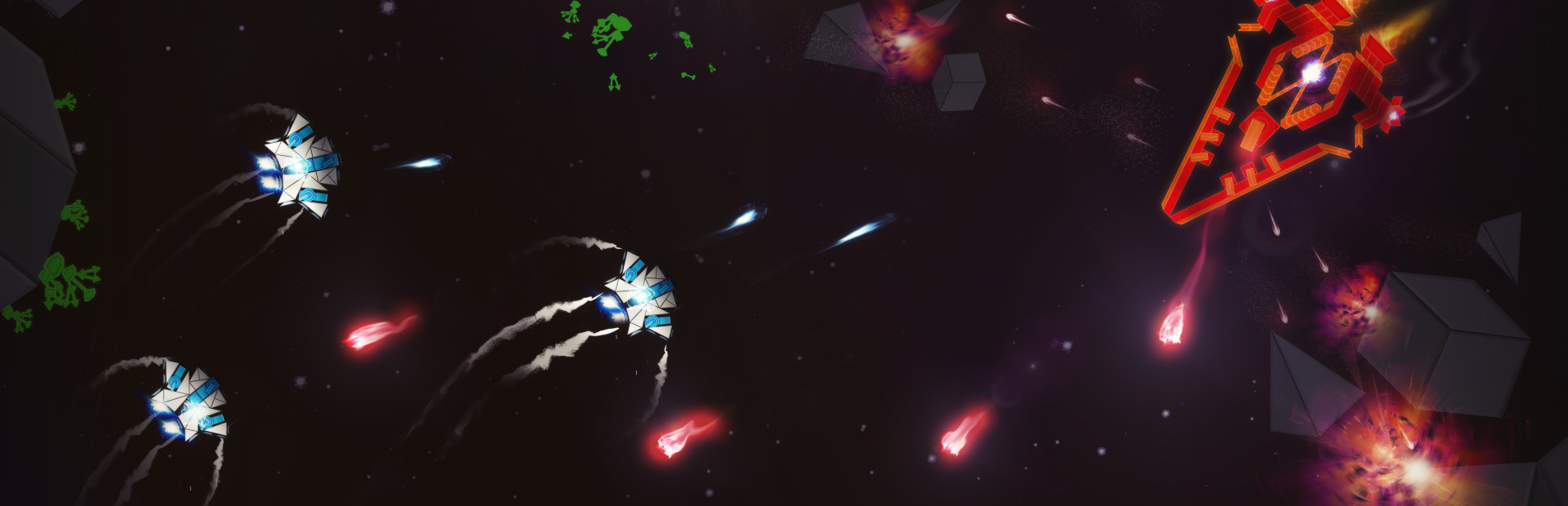
I have a soft spot for games that trust physics over stat sheets, and Reassembly earns that trust immediately. Your ship's turn radius is not a number you level up - it is a direct consequence of where you placed your lateral thrusters and how much mass you bolted to the hull. Get the thruster geometry wrong and your capital ship pirouettes like a drunk satellite. Get it right and you feel the actual engineering payoff. That loop, design, test, die, redesign, is the entire game, and for a certain kind of player it is enough to justify dozens of hours before you have even left your starting sector. The building block itself is a drag-and-drop modular editor where hull pieces, weapons, shield projectors, generators, and thrusters all snap together on a 2D plane. The power budget mechanic keeps you honest: every component costs P (power), so you cannot simply stack antimatter cannons until nothing else survives. You will choose between long-range plasma beams, close-range burst weapons, drone factories, or missile racks depending on the faction you have chosen to play. Factions matter here because they gate which part sets you can unlock, and some lean hard into specific playstyles - close-range brawlers, swarm spawners, artillery platforms. The asymmetry is intentional and creates genuine replayability even if a few factions feel lopsided against specific enemy compositions. The open-world galaxy is procedurally generated, populated by rival factions that behave less like scripted AI and more like a living ecosystem. Small resource harvesters cluster around asteroid fields; mid-sized patrol ships hunt the harvesters; occasional capital ships arrive and destabilize everything. It genuinely feels emergent rather than scripted, and the faction warfare continues in real time whether or not you are present. A wormhole and agent system lets other players' ship designs filter into your single-player run, which quietly extends the long-term difficulty curve without requiring an active multiplayer community. Tournament mode adds a separate arena layer where your designs fight autonomously in pool or bracket format - a genuinely clever way to stress-test a build without the risk of losing campaign progress. The weaknesses are real. There is no story and the developer made that choice deliberately, betting everything on the build-test-tweak flow state. If you need narrative scaffolding to stay invested, Reassembly will feel empty fast. The early-game UI uses abbreviated labels that take time to decode, and the absence of a structured tutorial means the first hour can feel hostile. Some factions exhaust their interesting decisions earlier than others, and the mid-game can stagnate once territory is established and the resource loop becomes mechanical rather than tense. Post-launch updates have slowed, so do not expect major new content drops. The Steam Workshop and the community mod ecosystem do extend the part catalogue and faction variety meaningfully, though the modding scene is niche rather than thriving. For strategy players who think in terms of build optimization and systemic AI behavior, Reassembly is a genuine find. Approach it as a sandbox first and a game with goals second, and the hours disappear. Come in wanting a campaign with story beats and you will bounce off it in an afternoon.

Strategy & simulation
Tags
System Requirements
Minimum
- OS
- Windows 7
- Memory
- 2 GB RAM
- Storage
- 150 MB available space
- Graphics
- OpenGL 2.1
- Processor
- 2 GHz Dual Core
Recommended
- OS
- Windows 10
- Memory
- 4 GB RAM
- Storage
- 250 MB available space
- Graphics
- OpenGL 3.3+, 256MB+
- Processor
- 2.3 GHz+, Quad Core
Keep exploring
Community Discussion
Be the first to comment on Reassembly.
Reviews & Ratings
No ratings available
Game Info
- Developer
- Anisoptera Games
- Publisher
- Indie Voyage
- Release Date
- Feb 19, 2015