
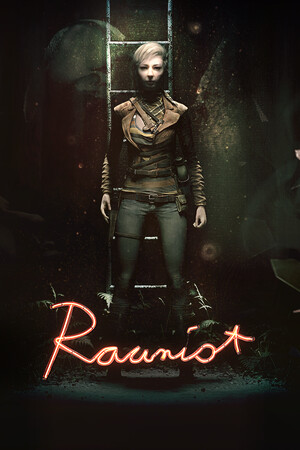
Rauniot
Post-apocalyptic Northern Finland through the eyes of one lone woman, one notebook, and a handful of survivors who barely trust each other. Roughly five hours of bleak, handcrafted atmosphere that rewards patience over reflexes.
GamerScout Verdict
Worth it for patient adventure fans who want mood and craft over length, and who can stomach classic-era puzzle opacity.
Compare Prices(4 stores)
Every store in this table quotes us in euros, so the EUR figure is the price the seller actually set, not our arithmetic — which is why EUR is also the currency we rank in. We only list an offer here when the store gives us its price in euros, so nothing in this table is a number we invented.
Pick USD, PLN, GBP, CAD or AUD in the header and we convert from EUR at the European Central Bank reference rate — converted amounts are prefixed with ~. Your bank or the store may apply a different rate at checkout. We never hide offers based on where you are: everyone sees this whole table.
We may earn a commission when you buy games through links on this page — at no extra cost to you. It never affects our rankings or verdicts.
Price History
Screenshots & Media
About Rauniot
My first thought when I loaded Rauniot was that somebody had poured genuine grief into its every pixel. The world opens at an abandoned gas station in Lapland, 1975, six years after a cascade of natural disasters and nuclear fallout swallowed civilization whole. You are Aino, sent from your small survivor community to track down your missing partner Toivo and, somewhere beyond him, a mythic nuclear train called the F.O.R. project. The premise sounds like a dozen other apocalypses, but the setting is genuinely singular: this is not Kansas in rubble, not a chrome-and-leather wasteland. It is the Finnish north, flat and cold and specific, and that specificity is where Rauniot earns its quiet authority. The whole game is voiced in Finnish, accented to the northern dialect, and subtitled in your language of choice. There is no English dub, and the game is better for it. The voices carry a resignation that feels culturally embedded rather than performed, and even when the acting lacks emotional range in certain moments, the flatness reads as exhaustion rather than incompetence. Pair that with a soundtrack that deploys itself sparingly, sound design that fills the silence with creaking structures and distant wind, and you have a soundscape that does the atmospheric heavy lifting that a bigger budget might have wasted on orchestral swells. Over seventy hand-drawn scenes give Aino's world a painted, slightly monochrome texture. Everything looks like it was made by someone who actually cared where each broken bottle ended up. Mechanically this is a classic isometric point-and-click. Left click moves Aino, right click opens your inventory, notebook, and a fast-travel map that is one of the game's smartest touches. The notebook accumulates character notes, codes, and sketched maps as you play, turning a standard UI element into an artifact of the world. Puzzles are item-based, logic-based, and code-deciphering, and they escalate in complexity as the game progresses. Clues are embedded in dialogue and environmental detail rather than handed to you, which means careful players will feel genuinely clever when solutions click. The catch is the pixel hunting. Some interactive objects are small enough to disappear into the detailed backgrounds, and a few scenes tip from atmospheric investigation into frustrating object-search. A hint system is absent entirely, so when the game's logic skews toward older adventure-game opacity, a walkthrough becomes a real possibility rather than a last resort. The game is honest about this and does not apologise for it. At around five hours even when stuck, Rauniot is a short game. The plot is deliberately thin, more a window into the world than a fully resolved narrative, and the ending arrives with a speed that feels mismatched to the slow pace that precedes it. Some reviewers have noted this whiplash, and it is a fair criticism. What the game trades in length for is density of mood and intentionality of craft. Every location, from the gas station to underground bunkers to overgrown forest clearings, carries the same consistent desolation. The characters Aino encounters, ordinary people worn down to their essentials by years of survival, land harder precisely because they do not scream or weep. This game knows what it is doing with restraint. Resource management adds a thin survival layer, and the in-game notebook's fast-travel support keeps backtracking from becoming punishing, even though backtracking is frequent. Rauniot is not for everyone. It will frustrate players who expect accessibility, generous hint systems, or a plot that pays off with closure. It is also not quite as long as its price might suggest for a genre accustomed to bigger runtimes. But for anyone who wants a handmade adventure from a part of the world that almost never anchors this kind of story, Aino's quiet, brutal search across the Finnish wilderness is the kind of game I think about long after I have closed it.

Indie & narrative
Tags
System Requirements
Minimum
- OS
- Windows 10
- Memory
- 8 GB RAM
- DirectX
- Version 9.0c
- Storage
- 11 GB available space
- Graphics
- NVIDIA GeForce GTX 760 or equivalent
- Processor
- Intel i5 2,67 GHz or equivalent
- Sound Card
- DirectX 9.0c Compatible Sound Card
Recommended
- OS
- Windows 10
- Memory
- 8 GB RAM
- DirectX
- Version 9.0c
- Storage
- 11 GB available space
- Graphics
- NVIDIA GeForce GTX 780 or equivalent
- Processor
- Intel i7 3,50 GHz or equivalent
- Sound Card
- DirectX 9.0c Compatible Sound Card
Keep exploring
Community Discussion
Be the first to comment on Rauniot.
Reviews & Ratings
No ratings available
Game Info
- Developer
- Act Normal Games
- Publisher
- Act Normal Games
- Release Date
- Apr 17, 2024