Radio General
Forget omniscient bird's-eye command - Radio General strips your situational awareness down to a crackling radio and a paper map, and makes that terrifying restriction the entire point.
GamerScout Verdict
Best for strategy players who want the anxiety of real command decisions, not the comfort of omniscient oversight.
Compare Prices(5 stores)
Every store in this table quotes us in euros, so the EUR figure is the price the seller actually set, not our arithmetic — which is why EUR is also the currency we rank in. We only list an offer here when the store gives us its price in euros, so nothing in this table is a number we invented.
Pick USD, PLN, GBP, CAD or AUD in the header and we convert from EUR at the European Central Bank reference rate — converted amounts are prefixed with ~. Your bank or the store may apply a different rate at checkout. We never hide offers based on where you are: everyone sees this whole table.
We may earn a commission when you buy games through links on this page — at no extra cost to you. It never affects our rankings or verdicts.
Price History
Screenshots & Media
About Radio General
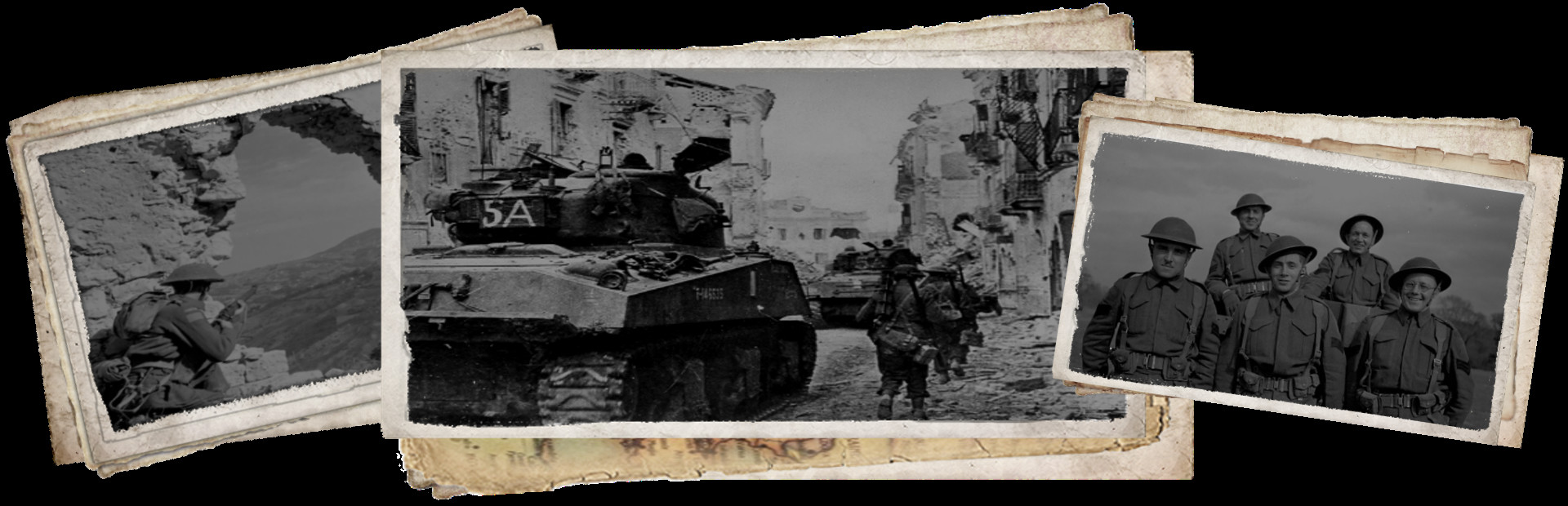
My instinct as a strategy player is to demand perfect information: unit positions, health bars, threat vectors. Radio General spends its entire runtime punishing that instinct, and I mean that as a genuine compliment. You sit in a command tent as a general of the 1st Canadian Army, and every scrap of battlefield data arrives as audio - verbal status reports from units you cannot directly see, sometimes confused, sometimes contradictory, occasionally replaced by ominous static. Your job is to interpret those reports, manually update markers on a map table, and issue orders back based on your best guess of what is actually happening out there. The fog-of-war design here is genuinely clever. Where most RTS titles simulate uncertainty with a darkened minimap, Radio General makes uncertainty the primary gameplay loop. Units report grid references using NATO phonetic alphabet callouts - you might hear that Easy Company is engaged at Hotel Six while your armour reports spotting tanks at Echo Three moving northwest - and you piece together a mental picture that is almost certainly incomplete. Hills matter mechanically (elevated positions extend spotting range and boost damage output), unit personalities affect behavior (zealous officers may refuse a retreat order), and veteran companies unlock specialisations over a persistent campaign that runs through historical operations including the Dieppe Raid, the Hitler and Gothic Lines in Italy, Normandy beach landings, and the Falaise Gap. That is a campaign with genuine historical weight, covering a theatre that most WWII games ignore entirely. The voice command system - the headline feature - is optional but worth understanding before you buy. Speech recognition works on Windows 64-bit and Linux in English only, with two accent profiles covering North American and British speech patterns. In practice the recognition is functional but requires deliberate, clean pronunciation; you need to say "cancel barrage" rather than any natural equivalent, and syllable emphasis on words like "echo" versus "alpha" matters. Players who lean into the voice commands as a roleplay layer tend to enjoy the game more; players who approach it as a pure optimisation problem will find it faster and more reliable to switch to mouse-and-keyboard input, which the game supports fully. That tension is the most honest criticism to level at the title: the optimal play and the intended play are not always the same thing. The cooperative multiplayer mode is an underrated selling point. Unlike the adversarial multiplayer that dominates the RTS genre, Radio General's co-op allows two players to run the entire campaign together, dividing command responsibilities in a way that actually amplifies the communication chaos the game is built around. A Steam Workshop with a built-in map editor lets the community extend the mission pool beyond the base campaign, which matters for longevity. The Steam user reception sits at Very Positive (82% positive across over 500 reviews), which is a reasonable signal that the core loop lands for most players who pick it up. The scope is modest - this is not a 200-hour grand strategy sandbox - but the campaign is focused and the historical documentation bundled in (newsreels, photographs, newspaper clippings from the era) adds context that elevates it above a simple battle simulator. If you have ever wanted a strategy game that forces you to think like an actual field commander working with incomplete reports rather than a god staring down at a chessboard, this is the most direct execution of that premise currently available on PC.

Strategy & simulation
Tags
System Requirements
Minimum
- OS
- Windows 7 or higher
- Memory
- 4 GB RAM
- DirectX
- Version 9.0c
- Network
- Broadband Internet connection
- Storage
- 2 GB available space
- Graphics
- GeForce GTX 660 (2048 MB) or Radeon R9 285 (2048 MB) - Integrated GPUs may work but are not supported.
- Processor
- 64 bit, 3.2 Ghz i3 Processor or equivalent
- Sound Card
- DirectX compatible
Recommended
Requires a 64-bit processor and operating system
Keep exploring
Community Discussion
Be the first to comment on Radio General.
Reviews & Ratings
No ratings available
Game Info
- Developer
- Foolish Mortals Games
- Publisher
- Foolish Mortals Games
- Release Date
- Apr 9, 2020

