
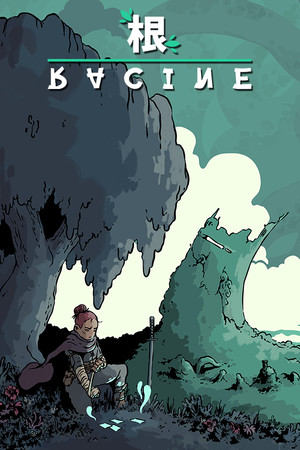
Racine
Timing your cards matters more than collecting them, which makes Racine a sharper proposition than its low-key pixel art suggests. Genre fans should look twice; everyone else should know what they're signing up for.
GamerScout Verdict
Worth a look for players who want a tight, timing-focused deckbuilder, but temper expectations on polish and post-run depth.
Compare Prices(8 stores)
Every store in this table quotes us in euros, so the EUR figure is the price the seller actually set, not our arithmetic — which is why EUR is also the currency we rank in. We only list an offer here when the store gives us its price in euros, so nothing in this table is a number we invented.
Pick USD, PLN, GBP, CAD or AUD in the header and we convert from EUR at the European Central Bank reference rate — converted amounts are prefixed with ~. Your bank or the store may apply a different rate at checkout. We never hide offers based on where you are: everyone sees this whole table.
We may earn a commission when you buy games through links on this page — at no extra cost to you. It never affects our rankings or verdicts.
Price History
Screenshots & Media
About Racine
I went into Racine expecting a passive experience where my hero fights while I watch a pretty screen. What I got instead was a constant fight against my own reflexes. The central hook is unusual enough to warrant attention: combat runs in real time, and the praying cards you play mid-fight do double duty. They can buff your stats permanently between encounters, but timed right at the moment an enemy swings, that same card functions as a parry, blocking incoming damage. That one mechanic reframes the whole system. Suddenly the deck is not just a progression tool, it is a reactive instrument you are hammering under pressure, and that distinction separates Racine from the quieter, turn-based deckbuilders it superficially resembles. The inter-fight progression has genuine depth if you approach it correctly. Stat boosts from cards carry over across encounters, which means your opening choices compound. Prioritising attack speed early snowballs into cycling your deck faster, which in turn generates more parry opportunities. That feedback loop is legitimately interesting from a build-order perspective. Artifacts add another layer, steering you toward coherent archetypes rather than just stuffing your deck. The procedural structure means each run reshuffles those options, and there is enough variety to sustain several hours of exploration before the combinations start feeling familiar. Community reception has been mixed, sitting around 69 percent positive on Steam across roughly 210 reviews, and the criticism is worth taking seriously before you commit. The boss scaling curve is notably steeper than regular encounter scaling, which punishes runs where you optimised for mid-game rather than peak output. Tooltip clarity is another recurring complaint: certain card effects are not explained clearly enough in context, and first-time players can spend a run or two genuinely uncertain whether a given stat is worth pumping. The control scheme drew friction too, with card switching requiring separate key presses rather than direct hotkeys, which stings on Ki-heavy builds where you are cycling cards at speed. None of these are fatal problems, but they collectively contribute to an experience that feels like a good idea that needed one more pass of polish. For strategy-minded players specifically, the game's size is worth factoring in. Runs are short, the main story takes around ten hours by most accounts, and the overall scope is firmly in the small-indie tier. There is no mod ecosystem, no difficulty ladder with unlockable meta-progression layers comparable to what Slay the Spire or Monster Train built. What you get is a focused, idiosyncratic experiment that does something genuinely novel with the autobattler format. If you can accept that ceiling and engage with the parry timing as a skill rather than an annoyance, Racine rewards the effort. Newcomers to the genre might actually find the compact scope an advantage: there is no hundred-hour commitment required to see what the game is doing mechanically.

Strategy & simulation
Tags
System Requirements
Minimum
- OS
- Windows 10+
- Memory
- 2 GB RAM
- Storage
- 250 MB available space
- Graphics
- Nvidia 450 GTS / Radeon HD 5750 or better
- Processor
- Intel i5+
Recommended
- OS
- Windows 10+
- Memory
- 4 GB RAM
- Storage
- 250 MB available space
- Graphics
- Nvidia GTX 460 / Radeon HD 7800 or better
- Processor
- Intel i5+
Keep exploring
Community Discussion
Be the first to comment on Racine.
Reviews & Ratings
No ratings available
Game Info
- Developer
- Dark Root Gardeners
- Publisher
- Goblinz Publishing
- Release Date
- Nov 6, 2023