
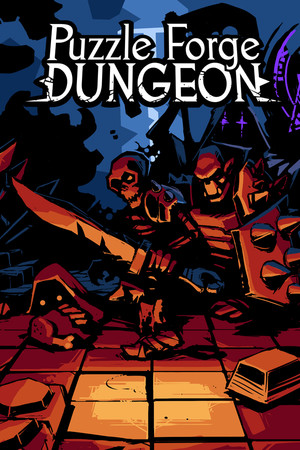
Puzzle Forge Dungeon
Match-3 meets dungeon crawling in a dwarf-forged package that rewards resource-tight decision-making but struggles to push past its mobile roots into full PC depth.
GamerScout Verdict
Worth a look for roguelite fans who want a tactile crafting twist, but manage expectations on polish and post-launch support.
Compare Prices(0 stores)
Loading prices...
We may earn a commission when you buy games through links on this page — at no extra cost to you. It never affects our rankings or verdicts.
Price History
Screenshots & Media
About Puzzle Forge Dungeon
I came into Puzzle Forge Dungeon expecting a light time-killer and walked out having spent several sessions genuinely puzzling over optimal weapon sequences, which is either a good sign or a trap depending on your tolerance for small-budget roguelites. The core loop is legitimately clever: each turn you manipulate a match-3 board to combine ore and material tiles into weapons and armors, then immediately hurl those crafted items at enemies in turn-based combat. The board is your forge and your battle plan simultaneously, which means a bad tile draw is not just annoying, it is strategically punishing. The district-by-district structure of the dwarf city Anvilar functions as a soft tutorial, revealing new heroes, services, and combat wrinkles as you clear each zone rather than front-loading you with a manual. For a strategy-adjacent player that approach works well. Clearing a district unlocks fresh recruits and blacksmith services, and finishing the full campaign opens a procedurally generated endless mode that is where the real replayability lives. The roster includes eight heroes, starting with the Smith and Orcette and gating the more interesting archetypes like the Techno-Forge and the Huntress toward the end, which gives progression a genuine sense of momentum. Enemy variety is decent at around 50 types with procedurally grouped encounters and unique bosses, so the combat rarely feels like pure repetition on the early floors. The weaknesses are real and worth naming. Steam's own community surfaces technical complaints including input-detection issues at launch that broke the very first dialogue prompt for some players, and Tuesday Quest is a micro studio, so patch cadence has been slow. The review sample is small (around 25 user reviews at a roughly 68-70 percent positive split), meaning the "Mixed" label may be harsher than the actual quality floor but also means there is no broad community to answer your questions if you get stuck. The AI is serviceable rather than sophisticated. Enemies telegraph their turn count visibly, which is smart design, but do not adapt to your build in any meaningful way, so late-game challenge comes from board management difficulty rather than opponent intelligence. Where Puzzle Forge Dungeon earns genuine credit is in its price-to-concept ratio. The match-3-to-combat pipeline is a design idea that most bigger studios have not bothered with on PC, and Tuesday Quest executes the core interaction cleanly. If you have ever bounced off roguelites because the deck-building or item menus felt overwhelming, this format is far more tactile, you see the weapon form on your board before it deals damage. There is no mod ecosystem to speak of, and the game does not have the systemic depth of genre peers, but as a focused, unpretentious puzzle-combat experiment from a solo-sized team, it does what it sets out to do without embarrassing itself.

Strategy & simulation
Tags
System Requirements
Minimum
- OS
- Windows 7 SP1+
- Memory
- 2 GB RAM
- DirectX
- Version 10
- Storage
- 500 MB available space
- Graphics
- Graphics card with DX10
- Processor
- SSE2 instruction set support.
- Sound Card
- all
Keep exploring
Community Discussion
Be the first to comment on Puzzle Forge Dungeon.
Reviews & Ratings
No ratings available
Game Info
- Developer
- Tuesday Quest
- Publisher
- Tuesday Quest
- Release Date
- Sep 7, 2021