Project AETHER: First Contact
A mech-piloting bullet-hell that eases newcomers in gently, then cranks the chaos up to screen-filling madness by level four. Short, punchy, and surprisingly tactical if you learn to read the EMP pulse.
GamerScout Verdict
Best for twin-stick fans who want a brisk, mechanically distinct shooter without the genre's usual punishing difficulty floor.
Compare Prices(2 stores)
Every store in this table quotes us in euros, so the EUR figure is the price the seller actually set, not our arithmetic — which is why EUR is also the currency we rank in. We only list an offer here when the store gives us its price in euros, so nothing in this table is a number we invented.
Pick USD, PLN, GBP, CAD or AUD in the header and we convert from EUR at the European Central Bank reference rate — converted amounts are prefixed with ~. Your bank or the store may apply a different rate at checkout. We never hide offers based on where you are: everyone sees this whole table.
We may earn a commission when you buy games through links on this page — at no extra cost to you. It never affects our rankings or verdicts.
Price History
Screenshots & Media
About Project AETHER: First Contact
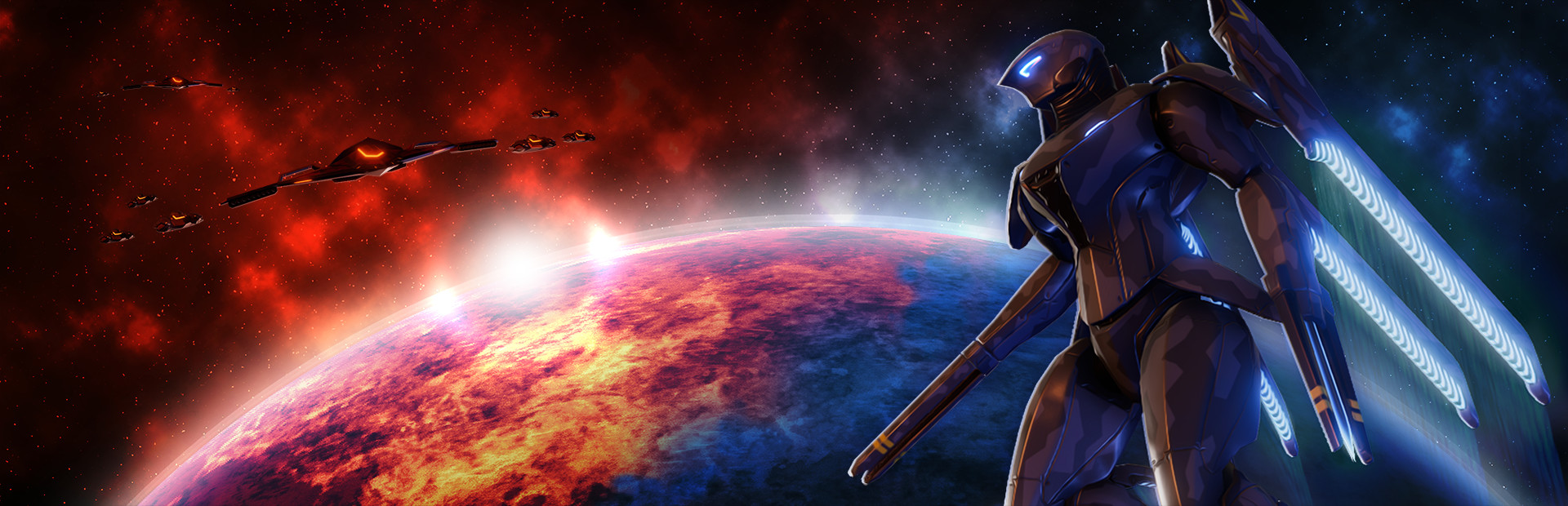
My first thought loading into Project AETHER: First Contact was that it looked modest - clean geometry, scrolling starfields, a cast of anime-portrait characters chattering in the corner. Then the fourth level hit, and suddenly the screen was a wall of projectiles, drones tracking me from three angles, and a boss with destructible components that genuinely rearranged how I had to move. That escalation is real, and it earns the slow start. Sleepy Spider Studios, a small Toronto outfit, built this around a single mechanical idea that turns out to be more interesting than it first appears: the EMP Burst. As you damage enemies they charge up a circular energy field, and diving into that field to detonate it clears everything inside the radius instantly. Chain a detonation through a cluster of drones and something clicks in your brain - this is less a run-and-gun than a puzzle about risk-range calculation. Do you stay at railgun distance and chip safely, or close with the assault rifle to prime targets faster and then sword-swipe into the burst? Those loadout decisions happen before each mission, and the two-weapon carry limit gives each run a distinct character. Light weapons build EMP charge quicker; heavy ones deal raw damage but leave you waiting. That asymmetry is quietly clever. The nine levels run roughly ten minutes each, meaning the main campaign clocks in somewhere between two and three hours on a first pass. Every stage ends with a boss that has its own attack vocabulary and destructible sections, and the general community consensus seems to be that the boss fights are the highlight rather than the filler material. Beyond the campaign, trial missions add thirty objective-based side challenges - time trials, weapon-specific tasks - plus a survival mode and a boss rush you can access before finishing the campaign, which is a small but welcome touch for score-chasers. Four difficulty tiers (Easy through Intense) spread the welcome mat wide: Easy hands you 99 continues, Intense turns the EMP mechanic from optional to mandatory. Where the game stumbles is in presentation and breadth. The backgrounds are largely static imagery that can look rough at higher resolutions, and some reviewers noted that the ship models lack the visual weight to make your heaviest weapons feel impactful - shots can register as whispers rather than punches. The story wrapping the whole thing is functional anime-invasion boilerplate: Captain Theresa Martins pilots AETHER, aliens appear, explosions follow. One supporting character, the monitoring Specialist, landed as awkward and tonally off across multiple reviews, which is a shame because the voice cast otherwise adds genuine texture to the between-mission briefings. The soundtrack, though - atmospheric techno with cyberpunk undertones - is genuinely worth turning up, and sits perfectly under the action without demanding attention it hasn't earned. For players who already love Geometry Wars or Ikaruga, this sits comfortably in that family without reaching either ceiling. It is a well-made, accessible entry point for the genre, not a genre-redefiner. The EMP system gives it a mechanical identity, the boss encounters reward memorization, and the short runtime means it never overstays its welcome - which is a craft decision I genuinely respect. If you care about a game knowing exactly what it is and executing that thing with care, Project AETHER: First Contact earns its place on a wishlist.

Indie & narrative
Tags
System Requirements
Minimum
- OS
- Windows 7/8/10
- Memory
- 4 GB RAM
- DirectX
- Version 11
- Storage
- 4 GB available space
- Graphics
- GPU with 1GB VRAM
- Processor
- Intel Core i3
Recommended
- OS
- Windows 7/8/10
- Memory
- 8 GB RAM
- DirectX
- Version 11
- Storage
- 4 GB available space
- Graphics
- NVIDIA Geforce GTX 1060
- Processor
- Intel Core i5 or above
Keep exploring
Community Discussion
Be the first to comment on Project AETHER: First Contact.
Reviews & Ratings
No ratings available
Game Info
- Developer
- Sleepy Spider Studios
- Publisher
- Sleepy Spider Studios
- Release Date
- Feb 24, 2020
