
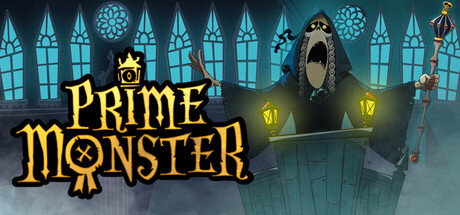
Prime Monster
Balatro proved a poker table could become a strategic arena; Prime Monster does the same with a parliamentary chamber, and the results are sharper, funnier, and more replayable than the concept has any right to be.
GamerScout Verdict
Worth it for deckbuilder fans who want strategic depth wrapped in genuinely funny British political satire, with the caveat that the character roster is thin at launch.
Compare Prices(3 stores)
Every store in this table quotes us in euros, so the EUR figure is the price the seller actually set, not our arithmetic — which is why EUR is also the currency we rank in. We only list an offer here when the store gives us its price in euros, so nothing in this table is a number we invented.
Pick USD, PLN, GBP, CAD or AUD in the header and we convert from EUR at the European Central Bank reference rate — converted amounts are prefixed with ~. Your bank or the store may apply a different rate at checkout. We never hide offers based on where you are: everyone sees this whole table.
We may earn a commission when you buy games through links on this page — at no extra cost to you. It never affects our rankings or verdicts.
Price History
Screenshots & Media
About Prime Monster
I track decision trees the way some people track calories, so when a deckbuilder replaces health bars with vote counts and Unity Meters I pay close attention. Prime Monster, from the makers of The Sexy Brutale, drops you into the Fractured Kingdom, a Westminster-style parliament populated entirely by vampires, orcs, zombies, and worse. Your three playable characters, Chopper Badstone, Viscount Sucksworth, and Rotilda De Cay, each carry distinct starting decks and ruling styles. You begin as the opposition, work through a couple of low-stakes debates to unseat the sitting Prime Monster, then face the harder task of surviving re-election across multi-debate terms. The run structure is the smartest design choice here: failure is not a sudden death screen after a bad fight, it is a general election at the end of a full term, which means you can claw back from a disastrous debate by managing your poll rating, authority stat, and cash reserves wisely in the recesses between sessions. The combat loop asks you to fill your side's circular Unity Meter while depleting your opponent's, but the real wrinkle is Political Capital. Every Debate Card you draw can be played for its printed effect or converted into Political Capital, the currency that powers your Tactics. Tactics are persistent upgrades you slot before each run, and choosing which few to bring into the chamber is where the genuine build thinking lives. Between debates you can hire staff for passive bonuses like drawing an extra card at debate start, spend cash in a randomised shop, upgrade existing cards, or handle crisis events that force tradeoffs across your poll rating, authority, and coffers simultaneously. The Shrieker, the debate moderator, adds unpredictable stakes by occasionally ejecting MPs from the floor mid-fight if you push dirty tactics too far. It is a lot to absorb, and the tutorial leans passive, hiding several mechanics behind optional clicks rather than showing them proactively. Expect your first run to feel chaotic. The writing is where the game punches hardest. Initiatives include decriminalising arson, releasing the Nosferatu Files, and debating same-hex marriage, and the absurdist logic is consistent enough that the jokes land even on repeat playthroughs. Thirty representatives drawn from fifteen parties, each with signature dirty tricks and distinct tactic decks, ensure that the opposing benches rarely feel samey. The cartoony art style and sharp animations carry the mood well, though the soundtrack sits in the background without adding much, and the lack of voice acting beyond grunts is noticeable. There is a real accessibility concern worth flagging: multiple players have reported intense white flashes during debates that cause discomfort for light-sensitive users, and it had not been addressed in early patches. Where Prime Monster earns its criticism is in run variety over time. With only three playable characters, once you have unlocked all of them the deckbuilding paths can start to feel explored. Tactic slots are limited, which keeps individual runs clean but caps how experimental your builds get. Some players find a strong tactic combo early and feel the mid-run decisions stop biting. The roguelite randomness can also produce stretches where the shop simply does not offer meaningful upgrades, leaving you fighting uphill through no fault of your own planning. These are fixable problems, and the four difficulty levels stretch longevity further than the base content count might suggest, but Cavalier will need to expand the character roster and event pool for the game to hold serious long-term players. For newcomers to the deckbuilder genre, Prime Monster is actually a reasonable entry point. The political framing gives every mechanic an intuitive real-world hook: of course you need cash to buy influence, of course bribery yields short-term gains at long-term cost, of course your own backbenchers are your biggest threat. The density of overlapping systems resolves into a legible loop faster than the opening hour suggests, and the term-based run structure means you get meaningful decisions without the ruthless permadeath snap of harder roguelites. Strategy players who want the numbers-deep angle should go straight to Hard or higher difficulty, where managing authority, poll ratings, and card economy simultaneously becomes a genuinely demanding puzzle. The mid-tier difficulty range is where the game currently sits most comfortably as a repeat-play proposition.

Strategy & simulation
Tags
System Requirements
Minimum
- OS
- Windows 10 and above
- Memory
- 8 GB RAM
- DirectX
- Version 11
- Storage
- 2 GB available space
- Graphics
- GeForce GT 640, Radeon R7 250
- Processor
- Intel Core i5-4590, AMD FX-8320
Recommended
- OS
- Windows 10 or above
- Memory
- 8 GB RAM
- DirectX
- Version 12
- Storage
- 2 GB available space
- Graphics
- GeForce GTX 1650, Radeon RX 5500 XT or better
- Processor
- Intel Core i5-6600K, AMD Ryzen 3 2200G or better
Keep exploring
Community Discussion
Be the first to comment on Prime Monster.
Reviews & Ratings
No ratings available
Game Info
- Developer
- Cavalier Game Studios
- Publisher
- Cavalier Game Studios
- Release Date
- May 4, 2026