Compare Poly Towns prices across 50+ stores and find the best deal. Developed by Red Phoenix Studios. Published by Red Phoenix Studios. Released on 4/22/2016. Available on PC, Mac, Linux. Genres: Casual, Indie, Strategy.

A floaty, low-stakes town builder that works best as background noise, but hits a hard ceiling fast for anyone who wants real strategic depth.

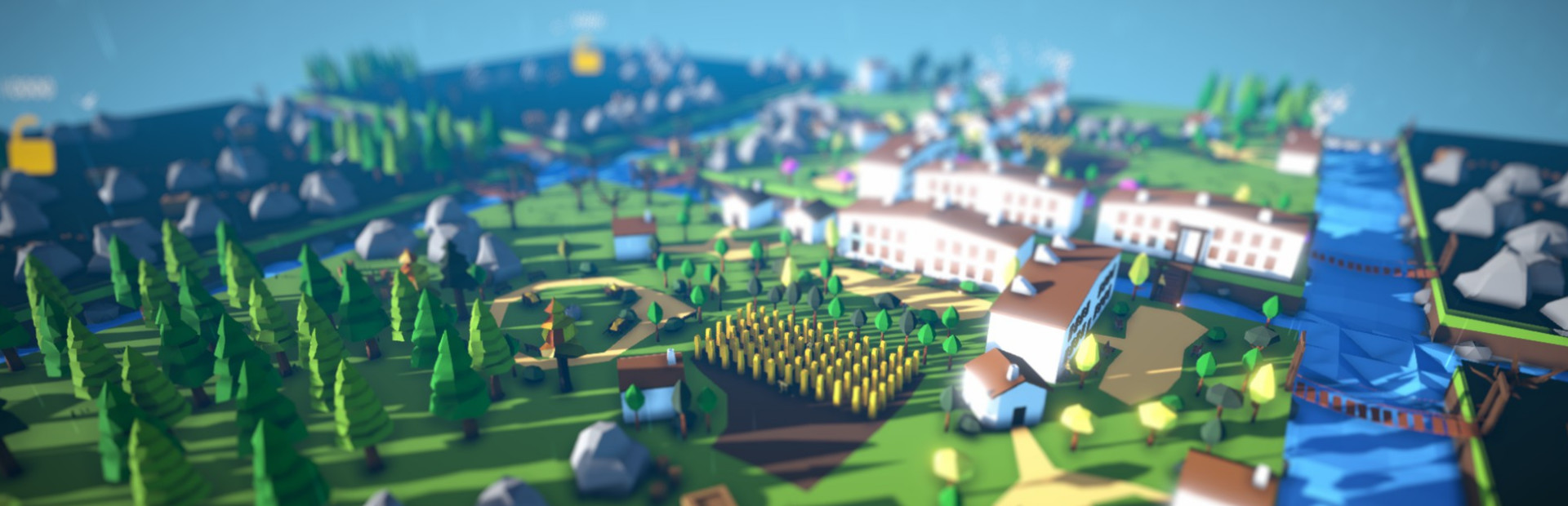
My first honest reaction to Poly Towns was: this is a game for a Tuesday afternoon when your brain is full. You start on a single floating island zone, assign a handful of villagers to jobs like farming and woodcutting, watch your tax income tick up every ten seconds, then gradually unlock new zones to expand into. That loop is genuinely pleasant for about an hour. The low-poly art style is clean and cheerful, the camera lets you zoom and rotate freely, and the whole package is light enough to run on almost anything. From a resource management standpoint, the mechanics are surface-level but not toothless. You are balancing tax income, building upkeep, and food consumption on a short timer, and the two game-over conditions, dropping villager happiness to zero or running a negative balance with nothing left to buy, add a mild edge. The zone-based map structure means expansion feels deliberate rather than sprawling, and upgrading houses and resource buildings does change your income and output math in meaningful, if simple, ways. Players asking whether upgraded farms increase worker capacity or just output are asking exactly the right question, and the game does not always answer clearly enough. That opacity is the core complaint. There is no proper tutorial that walks you through the numbers, and the UI is not forthcoming about worker slots, happiness modifiers, or what exactly triggers a recovery from a negative cash balance. For a strategy-and-sim player like me, the lack of data readouts is frustrating. The game leans into the idler side of things once a town stabilises, and there are genuinely no random negative events or resource depletion curves to keep you honest after that point. A thriving town just stays thriving. That makes for a relaxing sandbox but removes the late-game tension that would reward careful play. The Steam review split, sitting at roughly fifty-fifty, tells the story accurately. Players who came in expecting a pocket-sized zen experience found something serviceable. Players who wanted genuine town-building strategy found the depth missing. There is no mod ecosystem, no campaign structure, and no multiplayer. It is a small, solo, one-developer project that has seen no significant content updates in years. For a specialist in build-order decisions and long-game resource chains, this is the shallow end of the pool, and you will reach the far wall quickly. Diego, Scout Team

Poly Towns
CasualIndieStrategy

Poly Towns

Apr 22, 2016Red Phoenix Studios
GamerScout Says

A floaty, low-stakes town builder that works best as background noise, but hits a hard ceiling fast for anyone who wants real strategic depth.

PCMacLinux
Best Price Available
0.00
at N/A
Historical low: $0.75

Compare Prices(0 stores)

Loading prices...

We may earn a commission when you buy games through links on this page — at no extra cost to you. It never affects our rankings or verdicts.

Screenshots & Media

Screenshot

About Poly Towns

My first honest reaction to Poly Towns was: this is a game for a Tuesday afternoon when your brain is full. You start on a single floating island zone, assign a handful of villagers to jobs like farming and woodcutting, watch your tax income tick up every ten seconds, then gradually unlock new zones to expand into. That loop is genuinely pleasant for about an hour. The low-poly art style is clean and cheerful, the camera lets you zoom and rotate freely, and the whole package is light enough to run on almost anything. From a resource management standpoint, the mechanics are surface-level but not toothless. You are balancing tax income, building upkeep, and food consumption on a short timer, and the two game-over conditions, dropping villager happiness to zero or running a negative balance with nothing left to buy, add a mild edge. The zone-based map structure means expansion feels deliberate rather than sprawling, and upgrading houses and resource buildings does change your income and output math in meaningful, if simple, ways. Players asking whether upgraded farms increase worker capacity or just output are asking exactly the right question, and the game does not always answer clearly enough. That opacity is the core complaint. There is no proper tutorial that walks you through the numbers, and the UI is not forthcoming about worker slots, happiness modifiers, or what exactly triggers a recovery from a negative cash balance. For a strategy-and-sim player like me, the lack of data readouts is frustrating. The game leans into the idler side of things once a town stabilises, and there are genuinely no random negative events or resource depletion curves to keep you honest after that point. A thriving town just stays thriving. That makes for a relaxing sandbox but removes the late-game tension that would reward careful play. The Steam review split, sitting at roughly fifty-fifty, tells the story accurately. Players who came in expecting a pocket-sized zen experience found something serviceable. Players who wanted genuine town-building strategy found the depth missing. There is no mod ecosystem, no campaign structure, and no multiplayer. It is a small, solo, one-developer project that has seen no significant content updates in years. For a specialist in build-order decisions and long-game resource chains, this is the shallow end of the pool, and you will reach the far wall quickly. Diego, Scout Team

Tags

singleplayerachievementstier:sub-5Zone ExpansionVillager ManagementIdle ProgressionLow-Poly ArtShort-Session BuilderNo Mod SupportHappiness Mechanic

System Requirements

Minimum

OS
Windows 64-bit
Memory
2 GB RAM
DirectX
Version 9.0
Storage
65 MB available space
Graphics
AMD Radeon 6000 Series or equivalent
Processor
Intel, AMD

Recommended

OS
Windows 64-bit
Memory
4 GB RAM
DirectX
Version 12
Storage
65 MB available space
Graphics
AMD Radeon R9 Series or equivalent
Processor
Intel, AMD

Community Discussion

Be the first to comment on Poly Towns.

Reviews & Ratings

No ratings available

Game Info

Developer
Red Phoenix Studios
Publisher
Red Phoenix Studios
Release Date
Apr 22, 2016

Price Alert

Get notified when the price drops below your target!

Create Alert

Price History

2026-06-100.75(lowest)

More from Red Phoenix Studios

Buy smarter: helpful guides

Frequently asked questions about Poly Towns

How much does Poly Towns cost?

Poly Towns pricing changes often and varies by store, edition and region. The live price table on this page compares the cheapest in-stock key and store offers across 50+ verified shops, so you always see the current lowest price before you buy.

Where can I buy Poly Towns cheapest?

Compare Poly Towns prices across every verified store in the price table on this page. We list the cheapest in-stock key and store offers, updated regularly, so you always see the best current deal before you buy.

What platforms is Poly Towns available on?

Poly Towns is available on PC, Mac, Linux.

When was Poly Towns released?

Poly Towns was released on 22 April 2016.

Who developed Poly Towns?

Poly Towns was developed by Red Phoenix Studios.