
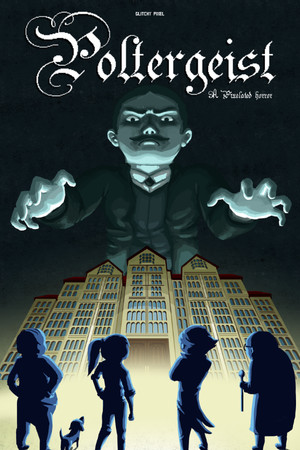
Poltergeist: A Pixelated Horror
Flip the haunted house script: you ARE the ghost, rationing spectral powers across 60 isometric puzzles to chase screaming tenants out of your manor across four eras of history.
GamerScout Verdict
Best for puzzle fans who want a tight, charming 4-6 hour spookfest and can forgive a thin second playthrough.
Compare Prices(3 stores)
Every store in this table quotes us in euros, so the EUR figure is the price the seller actually set, not our arithmetic — which is why EUR is also the currency we rank in. We only list an offer here when the store gives us its price in euros, so nothing in this table is a number we invented.
Pick USD, PLN, GBP, CAD or AUD in the header and we convert from EUR at the European Central Bank reference rate — converted amounts are prefixed with ~. Your bank or the store may apply a different rate at checkout. We never hide offers based on where you are: everyone sees this whole table.
We may earn a commission when you buy games through links on this page — at no extra cost to you. It never affects our rankings or verdicts.
Price History
Screenshots & Media
About Poltergeist: A Pixelated Horror
I keep a soft spot for small studio puzzle games that commit fully to one weird idea, and Poltergeist: A Pixelated Horror commits hard. You play Henry B. Knight, a bitter Victorian widower who died before relinquishing his beloved mansion and has been haunting it ever since, era after era, as waves of oblivious new tenants keep moving in. The hook is quietly brilliant: instead of surviving the haunting, you ARE the haunting. Every level hands you a limited toolkit of spectral moves and asks you to figure out the precise order to spend them. The core loop is tighter than it first appears. Each puzzle room contains a mix of human types, each with a sanity meter above their heads. Ordinary residents crumble fast, dogs are more alert, and special characters like exorcists, gypsies, and ghostbusters actively resist or nullify your powers. You get abilities ranging from rattling loose objects and summoning spectres to full possession and a ghostly dog that herds tenants between rooms. The catch is that every skill has a finite number of uses per level, and certain powers only work in the room where they are activated. Figuring out the correct sequencing, when to use the bell to pull a tenant away from an object they are blocking, when to save possession for the armoured sceptic in the corner, is where the real satisfaction lives. The difficulty curve is gentle at first and then climbs honestly from around level five onward, introducing new wrinkles without hiding the rules from you. The four time periods (1890s Victorian, 1980s, modern day, and an Office Era) give each chapter a distinct flavour. Mullet-sporting 80s residents and priests in oversized hats share the same chunky 16-bit pixel aesthetic, which carries plenty of charm even if the art never pushes beyond "functional and endearing." Boss encounters cap each chapter and demand real strategic patience: a ghostbuster-type named Nicole K. seeds rooms with traps that consume one ability use per trigger, forcing you to weigh whether burning a power to clear a trap is worth it. These boss stages are the game at its most interesting. The music, however, is a mixed bag. The Victorian and modern tracks do their atmospheric job quietly, but one reviewer's description of the Office Era soundtrack as elevator music is accurate and slightly maddening by the end. The honest caveats: the game runs four to six hours on a first playthrough, and once you have internalised the logic of each era, the puzzles can start to feel like variations on a theme rather than genuinely new problems. Replayability is thin outside of a time-trial mode unlocked on completion. Steam user sentiment lands in mixed territory, and the Metacritic sits at 70, which feels about right. This is not a game that reinvents the puzzle genre. What it does is execute a small, underserved niche, the haunting simulator, with care and with a difficulty curve that respects the player. If that subgenre has been a gap in your library since the days of Ghost Master, Poltergeist fills it without wasting your afternoon.

Indie & narrative
Tags
System Requirements
Minimum
- OS
- Windows XP+
- Memory
- 1 GB RAM
- DirectX
- Version 9.0
- Storage
- 500 MB available space
- Graphics
- DX9 (shader model 2.0) capabilities
- Processor
- SSE2 instruction set support
Recommended
- OS
- Windows 7+
- DirectX
- Version 9.0
- Storage
- 500 MB available space
- Graphics
- DX9 (shader model 2.0) capabilities
- Processor
- SSE2 instruction set support
Keep exploring
Community Discussion
Be the first to comment on Poltergeist: A Pixelated Horror.
Reviews & Ratings
Game Info
- Developer
- Glitchy Pixel
- Publisher
- Glitchy Pixel
- Release Date
- Oct 20, 2014