
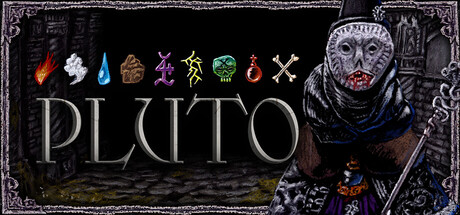
Pluto
Forget saving the world. Pluto gives you eight distinct wizard builds, a gesture-driven combat system nobody else is doing, and the most relatable motivation in deckbuilder history: making it to a birthday party.
GamerScout Verdict
Best for Slay the Spire veterans who want a spatial combat overhaul and can tolerate a steep but fair complexity ramp.
Compare Prices(6 stores)
Every store in this table quotes us in euros, so the EUR figure is the price the seller actually set, not our arithmetic — which is why EUR is also the currency we rank in. We only list an offer here when the store gives us its price in euros, so nothing in this table is a number we invented.
Pick USD, PLN, GBP, CAD or AUD in the header and we convert from EUR at the European Central Bank reference rate — converted amounts are prefixed with ~. Your bank or the store may apply a different rate at checkout. We never hide offers based on where you are: everyone sees this whole table.
We may earn a commission when you buy games through links on this page — at no extra cost to you. It never affects our rankings or verdicts.
Price History
Screenshots & Media
About Pluto
I track complexity budgets in strategy games the way other people track calories, so when a deckbuilder ships a combat system I genuinely have to sit down and diagram, that gets my attention fast. Pluto's core mechanic assigns elemental sigils to individual fingers on your wizard's hand, and spells are constructed by matching and overlapping those finger-pattern recipes. When two spells share an identical segment of that pattern, you can stack them in the same turn, chaining buffs, damage, and blocks into a single volatile combo. The result is that every combat turn reads less like "which card do I play" and more like a spatial logic puzzle where timing and overlap determine whether you chain-activate a devastating synergy or misfire into a catastrophic mess. A built-in outcome preview (the game calls it Wizard Vision) calculates the result of your intended actions before you commit, which is a small design decision that earns enormous goodwill. It communicates that this game respects your time rather than burying you in mental arithmetic. The spell categories add another layer to track. Cantrips discard immediately after casting, Chants stay in hand, Rituals fire once per battle, and Echoes can repeat but still discard like Cantrips. Stacking Inscriptions on top of those - temporary modifiers that alter a spell's recipe or effect for one turn - is where the build depth starts to genuinely compound. The launch roster carries eight spellcasters, each bending the gesture system in a distinct direction. The Apprentice is the clearest entry point. The Necromancer and Pyromancer operate on entirely different tempo curves, and Flame Knight rewards aggressive overlap stacking in a way that feels almost broken until the difficulty catches up. Runs are structured for roughly one-hour sessions, which for a strategy-inclined player means you get a complete decision arc in a single sitting rather than an open-ended commitment. That is a legitimate design virtue. Post-launch updates have already added the Crescent Moon mode (a tuned-down difficulty for newcomers learning new characters) and Blood Moon mode for players who want the system tested at full pressure. A new Inscribe mechanic arrived in the same patch wave, and the developers have confirmed that Steam Workshop mod support is in progress. A two-person studio shipping that kind of post-release velocity is worth noting. Community sentiment on Steam sits at 93% positive across over 400 reviews, which for a deckbuilder in a crowded genre signals genuine word-of-mouth rather than launch-window enthusiasm alone. The hand-drawn art by DitchWitch is doing serious work here too - grotesque, detailed, and tonally consistent with the dry black humor that runs through the whole game. The legitimate criticism is complexity density. One reviewer noted that the tooltip system eventually produces tooltips that have their own tooltips, which is a real signal that the jargon load can outpace the onboarding, especially in the mid-game when new mechanics stack fast. The absence of persistent meta-progression between runs will also frustrate players conditioned by the modern roguelite standard of unlocking permanent buffs to soften repeated attempts. Pluto leans closer to pure roguelike structure, which means early runs can feel punishing before the finger-pattern logic becomes intuitive. If you hit that wall, switch to Crescent Moon, clear two or three runs with a character you like, and the systems will click. The game is not trying to trick you. It is asking you to learn a specific spatial grammar, and once you do, the depth is real. For strategy players who have already exhausted Slay the Spire's ascension ladder and want something that reframes how deckbuilding combat actually works, Pluto is the most mechanically original argument for the genre I have seen in this release cycle. Just give the tutorial the patience it asks for.

Strategy & simulation
Tags
System Requirements
Minimum
- OS
- Windows 10 (64-bit)
- Memory
- 4 GB RAM
- Storage
- 3 GB available space
- Graphics
- Integrated graphics with OpenGL 3.3 support
- Processor
- Intel Core i3 Processor
Keep exploring
Community Discussion
Be the first to comment on Pluto.
Reviews & Ratings
No ratings available
Game Info
- Developer
- Siege Wizard Interactive
- Publisher
- indie.io
- Release Date
- Mar 9, 2026