
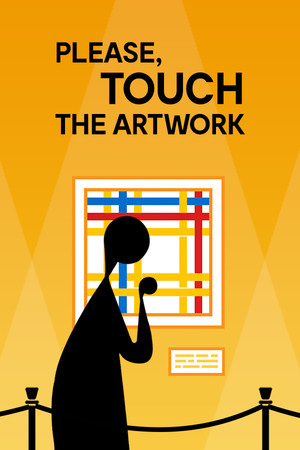
Please, Touch The Artwork
Three puzzle games wrapped in Mondrian geometry and a jazz soundtrack, built by one person in Brussels. Short, gentle, and quietly one of the most original things on Steam.
GamerScout Verdict
Worth it for cozy puzzle fans and art-curious players who want a gentle, beautifully crafted three-hour session over a hard brain workout.
Compare Prices(7 stores)
Every store in this table quotes us in euros, so the EUR figure is the price the seller actually set, not our arithmetic — which is why EUR is also the currency we rank in. We only list an offer here when the store gives us its price in euros, so nothing in this table is a number we invented.
Pick USD, PLN, GBP, CAD or AUD in the header and we convert from EUR at the European Central Bank reference rate — converted amounts are prefixed with ~. Your bank or the store may apply a different rate at checkout. We never hide offers based on where you are: everyone sees this whole table.
We may earn a commission when you buy games through links on this page — at no extra cost to you. It never affects our rankings or verdicts.
Price History
Screenshots & Media
About Please, Touch The Artwork
My first reaction when I loaded this up was that I had wandered into a small, carefully tended museum that nobody else knew about. That feeling never quite left. Please, Touch The Artwork is a solo-developed zen puzzler built around the abstract paintings of Piet Mondrian, and the entire thing radiates the kind of quiet intentionality you only get when one person cares unreasonably much about every detail. The game splits across three distinct modes, each with its own rules and emotional register. The Style asks you to recreate Mondrian-style compositions by tapping shapes in a specific sequence, with color spreading outward from your touch to every connected cell except the one you pressed. It sounds simple until the grid grows mirrors, warps, and additional color layers, at which point the ink-blot logic demands real attention. Boogie Woogie shifts into a city-grid sliding-block puzzle where little blue squares travel forward like ice until they hit an obstacle, and figuring out the correct tap order to unite them with their matching homes is the most satisfying mechanical workout here. The third mode, New York City, is a maze navigator where you guide a line through a top-down painting to collect fragments of a poem, slowly spelling out a bittersweet story of a city worker feeling stuck. The maze mode is the lightest of the three, and critics have fairly noted it borders on autopilot, but the developer seems to have intended that: the tone gets heavier, and the mechanical resistance drops to match it. The audio is the quiet MVP of the whole experience. A jazzy, percussion-forward soundtrack sits underneath everything without ever demanding your attention, but it does something subtly irreplaceable: it makes the geometry feel alive. Reviewers consistently pointed to the soundtrack as the reason the game holds together as a complete audiovisual package rather than a curiosity. The developer also won Best Sound at the Belgian Game Awards, which tracks. Headphones, as the game itself quietly suggests, are worth it. Where some players will push back is on depth. At roughly three to four hours across 160-plus procedurally generated puzzles, this is not a puzzle game that will leave your brain sore. Hardcore puzzle fans accustomed to The Witness or Stephen's Sausage Roll will find the challenge ceiling low. The hint system is generous by design, and the curator who greets you at the opening even calibrates hint timing based on how tired you say you are. That is a deliberate philosophy from a developer who came out of AAA studios and decided his games would be about relaxing and reflecting rather than skill and high scores. Accept those terms and the experience is quietly lovely. Resist them and you will find the puzzles feel thin. What genuinely surprised me is how the narrative lands. Each of the three modes carries a small, bittersweet story told through the puzzles themselves rather than cutscenes or dialogue dumps. The poem fragments in New York City accumulate into something melancholy and human. The origin-of-abstract-art framing in The Style is handled with wit rather than lecture. The whole thing earns its cozy label without being saccharine about it. For a three-to-four-hour solo dev release, the craft here is exceptional. The procedural generation means each player gets a slightly different arrangement of puzzles, the colorblind mode is thoughtfully implemented, and every completed level is displayed in a proper gallery view on the level select screen. These are the small choices that separate a game someone cared about from one that was shipped and forgotten.

Indie & narrative
Tags
System Requirements
Minimum
- OS
- Windows XP
- Memory
- 1 GB RAM
- DirectX
- Version 9.0
- Storage
- 250 MB available space
- Graphics
- DirectX 9 compatible, 64 MB VRAM
- Processor
- Intel Pentium 4/ AMD Athlon XP 1.5 Ghz
Recommended
- Memory
- 2 GB RAM
- DirectX
- Version 9.0c
Keep exploring
Community Discussion
Be the first to comment on Please, Touch The Artwork.
Reviews & Ratings
No ratings available
Game Info
- Developer
- Thomas Waterzooi
- Publisher
- Thomas Waterzooi
- Release Date
- Jan 26, 2022