Planet of Lana II
Wishfully's sequel earns its place next to Inside and Limbo, then quietly surpasses both on emotional gut-punch per hour. If six-to-eight hours of hand-painted wonder sounds short, you haven't met Mui.
GamerScout Verdict
A confident, hand-crafted sequel that outpaces its predecessor on every front, built for players who cry at good animation.
Compare Prices(4 stores)
Every store in this table quotes us in euros, so the EUR figure is the price the seller actually set, not our arithmetic — which is why EUR is also the currency we rank in. We only list an offer here when the store gives us its price in euros, so nothing in this table is a number we invented.
Pick USD, PLN, GBP, CAD or AUD in the header and we convert from EUR at the European Central Bank reference rate — converted amounts are prefixed with ~. Your bank or the store may apply a different rate at checkout. We never hide offers based on where you are: everyone sees this whole table.
We may earn a commission when you buy games through links on this page — at no extra cost to you. It never affects our rankings or verdicts.
Price History
Screenshots & Media
About Planet of Lana II
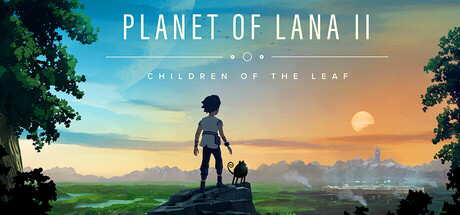
My first hours with Planet of Lana II: Children of the Leaf felt like watching a painter finish a canvas in real time, each new screen a quiet argument that side-scrolling games still have unexplored emotional territory. This is a cinematic puzzle-platformer in the lineage of Limbo and Inside, but where those games lean cold and cruel, Wishfully leans warm. The hand-painted pastel environments move through lush alien forests, snowy mountain peaks, dense urban districts, and deep-sea trenches over the course of around six to eight hours, and the art direction shifts register with every biome without ever losing the cohesive visual language that makes this world feel truly inhabited. The mechanical heart of the game is the cooperative bond between Lana and her cat-like companion Mui. You control Lana directly, issuing commands to Mui separately, which creates what feels like a one-player co-op experience built entirely on trust and timing. Lana arrives as a noticeably more capable protagonist this time: wall jumps, run-slides, and faster base movement feed directly into puzzle design in ways the first game never attempted. Mui, meanwhile, has gained expanded telepathic reach and the ability to possess and direct creatures, turning an Inkfish into a smoke-screen, coaxing a fly into spraying water at wooden mechanisms, or baiting a rock creature across a room so Lana can scale it. None of this ever feels bolted on. The possession system is introduced patiently, and by the midpoint it is woven so naturally into environmental logic that pausing to read a room, identify every creature, and sequence your moves feels genuinely satisfying rather than mechanical. Enemy encounters carry zero traditional combat: every threat is a stealth or timing puzzle, and the checkpoint rhythm is forgiving enough that death from a one-shot laser never kills momentum for long. The story unfolds entirely without recognizable language. Dialogue is performed in an invented tongue, meaning all emotional weight is carried by animation, body language, and composer Takenshi Furukawa's orchestral score. That score is remarkable in the way only small-studio soundtracks can be, built to serve specific quiet moments rather than to impress on a playlist. The narrative itself is darker and more structurally ambitious than the first game, weaving Mui's origin story through flashback chapters set aboard a crashed space colony ship, while the present-day conflict shifts the antagonist from machine invaders to human factions fighting over the planet's resources. Some critics noted that supporting characters don't always land with the same weight as the Lana-Mui bond, and that pacing wobbles once or twice in the middle chapters, which is fair. There may be a few too many underwater sections for players who find breath-management segments stressful. But the emotional peaks in the final third carry genuine weight, and Wishfully's ability to make two characters without readable faces produce visible heartbreak through posture and motion alone is the kind of craft that deserves to be talked about. If you skipped the first game, a recap cutscene gets you oriented, though the emotional connection to these characters runs deeper if you arrive with prior context. For returning players, this is the sequel the original quietly deserved: longer, mechanically richer, and more confident in what it wants to say. It sits comfortably in the 79-to-84 range on review aggregators, and the Steam user reception backs that up. It does not redefine the genre the way Inside did, but it earns its place near the top of it, and given the tiny scale of the studio, that achievement feels significant.

Indie & narrative
Tags
System Requirements
Minimum
- OS
- Windows 10
- Memory
- 4 GB RAM
- Storage
- 44 GB available space
- Graphics
- GTX 660
- Processor
- Intel Core i5
Recommended
- OS
- Windows 10
- Memory
- 6 GB RAM
- Storage
- 44 GB available space
- Graphics
- GTX 1060
- Processor
- Intel Core i7
Keep exploring
Community Discussion
Be the first to comment on Planet of Lana II.
Reviews & Ratings
Game Info
- Developer
- Wishfully
- Publisher
- Thunderful Publishing
- Release Date
- Mar 5, 2026