Pit Blocks 3D
Tetris in three dimensions sounds like a no-brainer, but clearing full layers across an x-y-z grid is a genuinely different mental challenge. Worth a look if classic puzzlers feel too flat.
GamerScout Verdict
Best for puzzle fans ready to trade flat line-clearing for a full 3D spatial challenge with a real score-optimization loop.
Compare Prices(3 stores)
Every store in this table quotes us in euros, so the EUR figure is the price the seller actually set, not our arithmetic — which is why EUR is also the currency we rank in. We only list an offer here when the store gives us its price in euros, so nothing in this table is a number we invented.
Pick USD, PLN, GBP, CAD or AUD in the header and we convert from EUR at the European Central Bank reference rate — converted amounts are prefixed with ~. Your bank or the store may apply a different rate at checkout. We never hide offers based on where you are: everyone sees this whole table.
We may earn a commission when you buy games through links on this page — at no extra cost to you. It never affects our rankings or verdicts.
Price History
Screenshots & Media
About Pit Blocks 3D
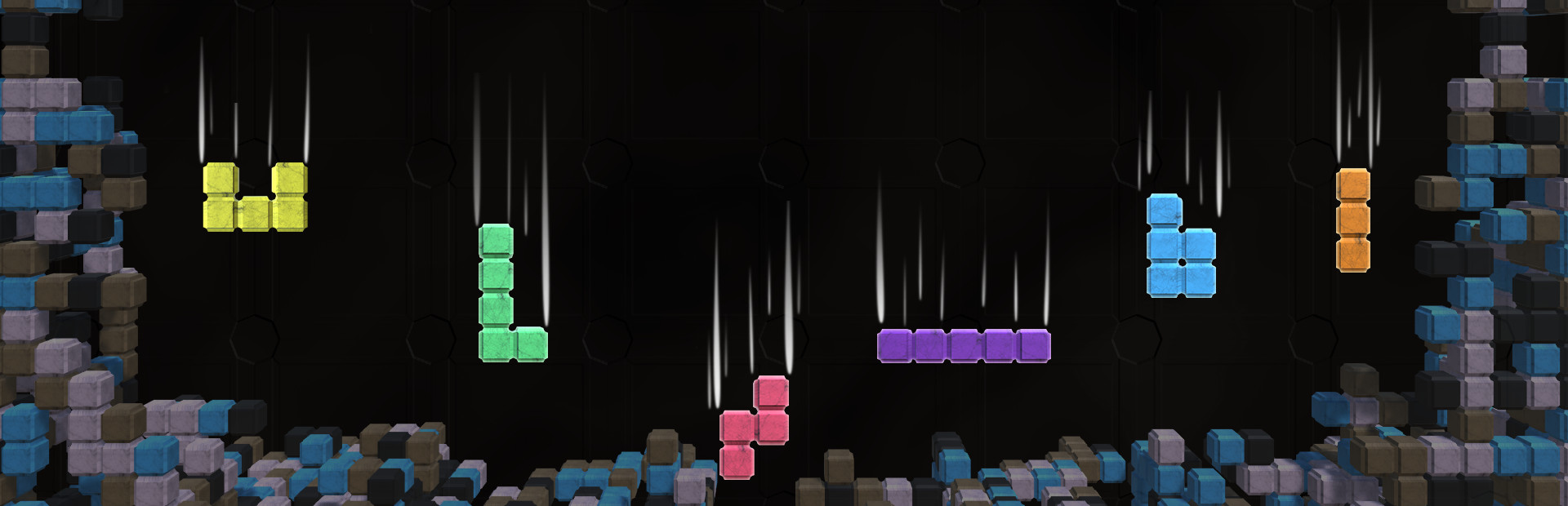
My first instinct when loading Pit Blocks 3D was to treat it like muscle memory from a thousand Tetris sessions. That instinct fails you almost immediately. The jump to three dimensions is not cosmetic. Instead of completing flat lines, you are filling entire horizontal layers of a cubic pit, and the extra axis means errors compound in ways that a 2D grid simply cannot replicate. A misplaced brick on one side of the pit can ghost into a gap that takes three more bricks to fix, by which time the fall speed has ticked up another notch and your mental model is two moves behind. The spatial reasoning required here is genuinely different, and that distinction is worth flagging before you assume this is a reskin. The mode structure gives the game more legs than the concept alone suggests. Race Mode is the time-pressured experience most players will gravitate to first, with falling speed scaling per level in an infinite progression. Free Mode cuts the timer entirely, letting you place each brick at your own pace, which makes it a surprisingly effective teaching tool for learning how rotation and translation work in 3D space before the pressure kicks in. Three difficulty tiers, Basic, Advanced, and Expert, change the brick sizes rather than just the speed, so the complexity of the shapes themselves scales with your investment. Pit size is also configurable, ranging from a tight 3x3x3 cube up to a sprawling 18x18x18 grid, and the scoring formula weights game mode, pit size, current level, and whether you used any assists, which gives score-hunters a real set of variables to optimize around. The five environments add a layer the raw block-stacking loop does not provide on its own. Each background carries its own scrolling narrative and some have interactive creatures or boss-adjacent elements woven into the stage. The Solar System environment eases you in across nine levels spanning Neptune to the Sun. The Painted Forest greets you with a Green Dragon at the entrance. These story beats are slim, more mood-setting than narrative weight, but they break up sessions and give each environment a distinct personality. The soundtrack lets you pick from Retro, Heavy Metal, or Piano themes, which is a small but appreciated touch. There is also a top-down camera option that renders your active brick as wireframe against the solid-colored settled blocks, and that view changes the spatial problem significantly enough to feel like a second game mode in its own right. The weaknesses are honest ones. Camera management is the main friction point. A mouse-and-keyboard setup where the mouse handles camera rotation and keys handle brick manipulation is the most reliable approach, but coordinating both under time pressure is a learned skill and not one the game explains gently enough out of the gate. Controller support exists but the added degrees of camera freedom make a pad feel awkward in faster sessions. The community footprint on Steam is very small, there are no aggregated review scores to lean on, and post-launch updates appear limited, so do not expect a living-service pipeline of new content. What is here is what you get. For a puzzle player who has plateaued on flat block-stackers and wants a genuine spatial upgrade, this scratches an itch that very few games address. The infinite level progression and score-multiplier system give score-chasers a credible optimization target. Newcomers should spend time in Free Mode before touching Race Mode on Expert, and the in-game tutorial for brick rotation is worth sitting through rather than skipping. The commitment floor is low, the ceiling is determined entirely by how deep you want to push the score variables.

Strategy & simulation
Tags
System Requirements
Minimum
- OS
- Windows 7
- Memory
- 2 GB RAM
- DirectX
- Version 10
- Storage
- 4 GB available space
- Graphics
- Intel HD Graphics 4000 or equivalent
- Processor
- Intel Core i3
- Sound Card
- 2.0/2.1 Speakers or Headphones
Recommended
- OS
- Windows 10
- Memory
- 4 GB RAM
- DirectX
- Version 11
- Storage
- 4 GB available space
- Graphics
- GTX 760 / equivalent, or above
- Processor
- Intel Core i5
- Sound Card
- 2.0/2.1 Speakers or Headphones
Keep exploring
Community Discussion
Be the first to comment on Pit Blocks 3D.
Reviews & Ratings
No ratings available
Game Info
- Developer
- SRM Games
- Publisher
- SRM Games
- Release Date
- Sep 27, 2018