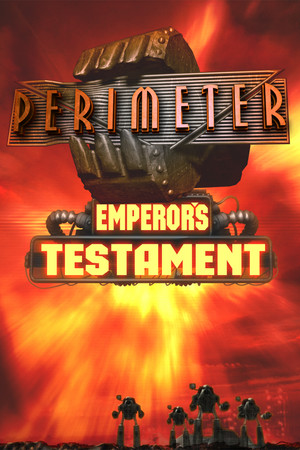
Perimeter
Perimeter is a 2000s RTS oddity where terraforming the map IS the strategy, forget base-spamming, here you're literally reshaping the ground beneath your feet.
GamerScout Verdict
Best for strategy players who want map control to mean something physical - patience required for the dated interface.
Compare Prices(9 stores)
Every store in this table quotes us in euros, so the EUR figure is the price the seller actually set, not our arithmetic — which is why EUR is also the currency we rank in. We only list an offer here when the store gives us its price in euros, so nothing in this table is a number we invented.
Pick USD, PLN, GBP, CAD or AUD in the header and we convert from EUR at the European Central Bank reference rate — converted amounts are prefixed with ~. Your bank or the store may apply a different rate at checkout. We never hide offers based on where you are: everyone sees this whole table.
We may earn a commission when you buy games through links on this page — at no extra cost to you. It never affects our rankings or verdicts.
Price History
Screenshots & Media
About Perimeter
Perimeter sits in a strange corner of the RTS genre that most modern players have never visited. Developed by K-D Lab, it is fundamentally a territorial control game built around one mechanic that changes everything: terraforming. Flattening terrain to extend your energy grid, raise defensive walls, or cut off enemy supply lines is not a side feature here, it is the primary decision space. If you have ever played a Paradox grand-strategy title and loved the moment when geography became a weapon, this scratches a similar itch at a much faster pace. The core loop works like this. Your base extends outward through a network of energy-producing structures, and every structure needs flat, level ground to function. So before you build, you terraform. Before you attack, you terraform. Your opponent is doing the same thing in real time, which means the map itself becomes a living contested resource. The unit system layers on top of this with a morphing mechanic, where basic soldier units can combine into larger, specialized forms mid-battle. You are constantly making small arithmetic decisions: split into skirmishers, merge into a heavy walker, or hold formation and let the terrain do the defensive work. It rewards players who think two moves ahead rather than players who click fastest. For newcomers, the learning curve is real but not punishing if you engage with the campaign rather than diving straight into skirmish. The campaign acts as a structured tutorial in disguise, introducing terraforming, unit morphing, and perimeter defense in digestible chunks. I would argue the first five missions are among the more honest onboarding sequences in early 2000s RTS design, which was not exactly known for holding your hand. The AI holds up reasonably well on higher difficulties and actually uses the terraforming mechanics against you, which is not something you can say about every RTS opponent of this era. What does not hold up as well is the interface. Unit pathing around freshly sculpted terrain can produce genuinely frustrating results, and the camera control requires patience. The visual style is distinctive, almost surreal, with biological-looking structures and a post-apocalyptic sci-fi aesthetic, but do not expect modern graphical clarity when reading the battlefield at a glance. The mod ecosystem is also thin compared to contemporaries like StarCraft or Age of Empires, so if you are the type who logs hundreds of hours in community-built scenarios, that depth is not here. The multiplayer community is predictably small given the game's age. For the right player, specifically someone who values geometric thinking, map control, and resource management over raw mechanical execution, Perimeter delivers something genuinely uncommon. It is a design experiment that mostly works, preserved in a re-release that makes it accessible on modern hardware. Strategy veterans who have exhausted more mainstream RTS catalogues will find it worth the time investment.

Strategy & simulation
Tags
System Requirements
Minimum
- Processor
- Intel Pentium 4+ or AMD Athlon XP 2GHz and faster
- Memory
- 1 GB RAM
- Graphics
- nVidia or AMD video card with 128Mb VRAM or more
- DirectX
- Version 9.0c
- Storage
- 4 GB available s…
Keep exploring
Community Discussion
Be the first to comment on Perimeter.
Reviews & Ratings
Game Info
- Developer
- K-D Lab
- Publisher
- Fulqrum Publishing
- Release Date
- Apr 3, 2014