Per Aspera
Terraform Mars from barren rock to breathable world in this narrative-heavy strategy sim where every resource chain decision genuinely matters.
GamerScout Verdict
A story-driven terraforming sim with satisfying mid-game decisions, best suited for patient players who want narrative alongside their logistics.
Compare Prices(8 stores)
Every store in this table quotes us in euros, so the EUR figure is the price the seller actually set, not our arithmetic — which is why EUR is also the currency we rank in. We only list an offer here when the store gives us its price in euros, so nothing in this table is a number we invented.
Pick USD, PLN, GBP, CAD or AUD in the header and we convert from EUR at the European Central Bank reference rate — converted amounts are prefixed with ~. Your bank or the store may apply a different rate at checkout. We never hide offers based on where you are: everyone sees this whole table.
We may earn a commission when you buy games through links on this page — at no extra cost to you. It never affects our rankings or verdicts.
Price History
Screenshots & Media
About Per Aspera
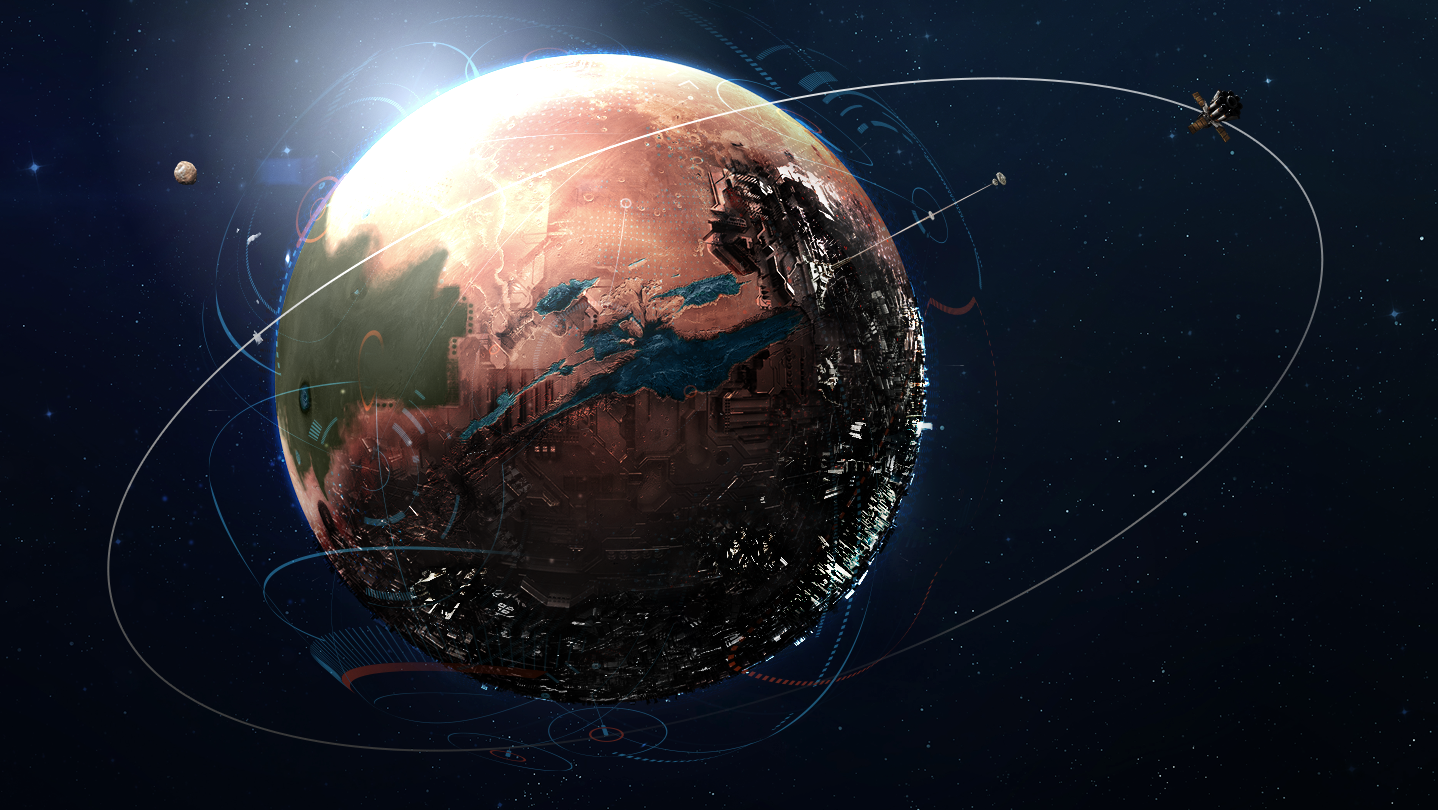
Per Aspera puts you in control of AMI, an artificial consciousness tasked with transforming Mars into a habitable planet. That framing is not window dressing. The story is voiced, branching in places, and carries real weight, which is unusual for a genre that normally treats lore as optional loading-screen text. If you have ever wanted a terraforming sim that makes you care about what you are actually building toward, this is the rare one that tries. The core loop is classic supply-chain strategy: scout terrain, mine raw materials, build production facilities, manage power and population, and slowly push planetary stats like atmospheric pressure, temperature, and oxygen toward human-habitable thresholds. Each of those three dials interacts with the others, and the mid-game is where the decision-making gets genuinely interesting. Do you rush greenhouse gas production to warm the planet faster, risking an unstable atmosphere? Do you over-invest in water extraction early to bank a buffer, or keep capital flowing into expansion? These are not trivial choices, and the game does not hold your hand once the tutorial phase ends. For newcomers to the genre, the learning curve is steeper than the opening hours suggest. The tutorial covers basics competently, but the late-game complexity around logistics routing and tech-tree prioritization is largely self-taught. Veterans of Surviving Mars or Frostpunk will recognize the structural DNA and settle in fast. Pure strategy newcomers may hit a wall around the midpoint when the resource chains start stacking. That said, the pacing is slower and more forgiving than most colony sims, and there is no punishing permadeath loop constantly resetting your progress, which genuinely lowers the barrier to staying engaged. Where Per Aspera earns its mixed-review asterisk is in the AI and late-game variety. The planetary AI opponents that appear in certain scenarios are predictable once you understand their expansion patterns. The technology tree, while wide enough to support different build approaches, does funnel most players toward similar late-game configurations. Mod support is limited compared to the Paradox or Frontier ecosystems, so do not expect community patches to dramatically extend replayability after your first two or three runs. Performance also degrades noticeably on large maps with dense infrastructure, which is a practical concern for long sessions. Still, for what it is, Per Aspera delivers a focused, thoughtful experience. The narrative alone separates it from genre peers. The terraforming mechanics are grounded enough to feel plausible without requiring a geology degree. And the satisfaction of watching a red barren surface gradually shift through orange haze into something resembling breathable sky is exactly the kind of slow-burn payoff this genre lives for. If you want 200-hour sandbox depth, look elsewhere. If you want a 30-to-50-hour campaign that respects your intelligence and tells a real story while you manage logistics, this punches well above its visibility.

Strategy & simulation
Tags
System Requirements
Minimum
- Processor
- Intel Core i5-7400 / AMD Ryzen 3 1200
- Memory
- 8 GB RAM
- Graphics
- NVIDIA GeForce GTX 1050ti / AMD Radeon RX 570
- DirectX
- Version 11
- Storage
- 10 GB available space
- Sound Card
- DirectX Compatible Soun…
Recommended
- OS
- Windows 10
- Processor
- Intel Core i7-8700 / AMD Ryzen 5 3600
- Memory
- 16 GB RAM
- Graphics
- NVIDIA GeForce GTX 1070 / AMD Radeon RX Vega 56
- DirectX
- Ver…
DLC & Add-ons for Per Aspera1
Expansions, DLC packs and add-on content for this game. Click any item to see store offers.
Keep exploring
Community Discussion
Be the first to comment on Per Aspera.
Reviews & Ratings
Game Info
- Developer
- Tlön Industries
- Publisher
- Raw Fury
- Release Date
- Dec 3, 2020