Penumbra Overture
Before Amnesia made run-and-hide horror mainstream, four developers made something rawer and stranger in a Greenland mine. If dread built from isolation matters more to you than polish, pay attention.
GamerScout Verdict
Worth it for atmospheric horror fans willing to forgive clunky combat and dated visuals in exchange for genuine, handcrafted dread.
Compare Prices(3 stores)
Every store in this table quotes us in euros, so the EUR figure is the price the seller actually set, not our arithmetic — which is why EUR is also the currency we rank in. We only list an offer here when the store gives us its price in euros, so nothing in this table is a number we invented.
Pick USD, PLN, GBP, CAD or AUD in the header and we convert from EUR at the European Central Bank reference rate — converted amounts are prefixed with ~. Your bank or the store may apply a different rate at checkout. We never hide offers based on where you are: everyone sees this whole table.
We may earn a commission when you buy games through links on this page — at no extra cost to you. It never affects our rankings or verdicts.
Price History
Screenshots & Media
About Penumbra Overture
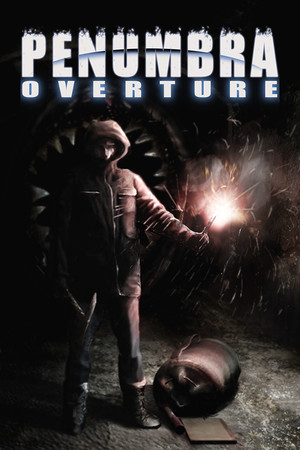
I keep coming back to the fact that Frictional Games built Penumbra: Overture with a skeleton crew and a shoestring budget, and still managed to produce something that rattled people enough to reshape what horror games could be. That context matters, because you will feel the seams. The visuals are dated, the combat is clumsy by any honest measure, and some of the level geometry lands somewhere between grey concrete and greyer rock with very little in between. But underneath those rough surfaces is a genuinely handcrafted sense of dread that most bigger studios were not attempting in the same way at the time. You play as Philip, a physicist who follows a cryptic letter from his supposedly dead father into an abandoned mine in northern Greenland, where the entrance promptly collapses behind him. The setup is quiet and lonely by design. There are essentially two characters: you, and a guiding voice called Red who communicates over radio from somewhere deeper in the facility. That near-total isolation is not an accident. The atmosphere works precisely because it refuses to give you companions or safe rooms. The mine is cold, grey, and full of things that want to hurt you, and the sound design, sparse and deliberate, does far more heavy lifting than the visuals ever could. Creaking pipes, distant movement, the particular silence before something finds you. That soundscape is where the craft lives. Mechanically, the game runs on a physics engine that was genuinely novel for its era. You open drawers by pulling the mouse toward you, push crates by holding and shoving, swing a hammer or pickaxe by moving the mouse like a real arm. It is tactile in a way that felt fresh and still feels intentional. Puzzles ask you to read scattered notes and journals, piece together what the previous inhabitants were doing, and then use the environment creatively to get past obstacles. The AI for the infected dogs and giant worm encounters responds to noise and light, which rewards careful movement and punishes rushing. That said, the melee combat is the game's most consistent weak point. The mouse-swing system sounds clever in theory and feels erratic when a dog is charging your face at close range. The developers themselves acknowledged the problem, stripping combat entirely from the sequel, Penumbra: Black Plague. The worm chase sequences deserve a mention on their own. They are chaotic, multi-step gauntlets where you have to throw switches, break barriers, and cross toxic pools while something enormous is closing the distance behind you. Some players will love the adrenaline. Others will reload that checkpoint fifteen times and feel nothing but frustration. Whether that experience reads as terrifying or unfair depends heavily on your patience with trial-and-error horror. The save system leans on automatic checkpoints you cannot always predict, which compounds the friction. For a game that is only around five to six hours long, it can still leave you stalled longer than feels fair on specific sequences. For Amnesia veterans approaching this as historical context, Overture plays like a prototype with a soul. The core instincts, environmental storytelling through found documents, physics-first interaction, stealth over brute force, are all present. The execution is rougher, but the intention is clear, and the Lovecraftian undercurrent of creeping cosmic wrongness gives the mine its particular flavour. If you come in fresh with no Amnesia comparison point, you may find it more effective. The atmosphere does its quiet, patient work on you in a way that a more polished game might not. For a six-hour game built by four people, Penumbra: Overture knows exactly what kind of feeling it is chasing, even when its tools are not fully up to the task.

Indie & narrative
Tags
System Requirements
Minimum
- OS
- XP/Vista
- Sound
- Soundblaster compatible
- Memory
- 256MB(XP)
- Graphics
- Radeon 8500 / Geforce 3(MX4 Not supported)
- Processor
- 1.0 Ghz
- Hard Drive
- 800MB Free Space
Keep exploring
Community Discussion
Be the first to comment on Penumbra Overture.
Reviews & Ratings
Game Info
- Developer
- Frictional Games
- Publisher
- Frictional Games
- Release Date
- Mar 6, 2009