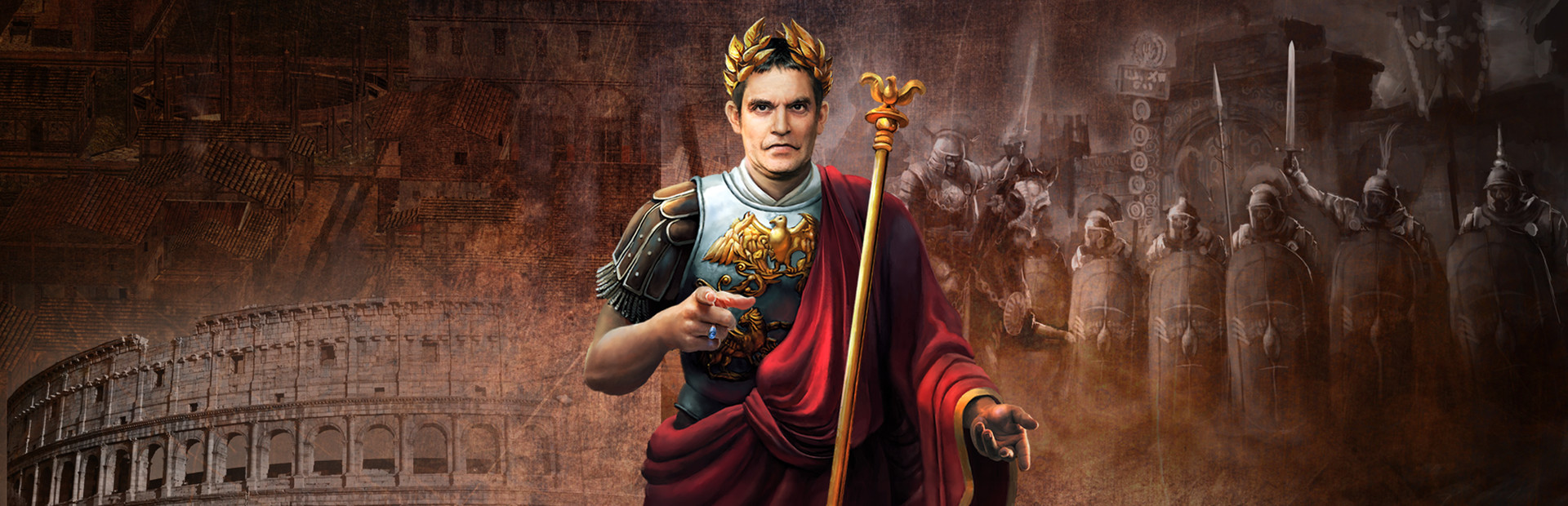
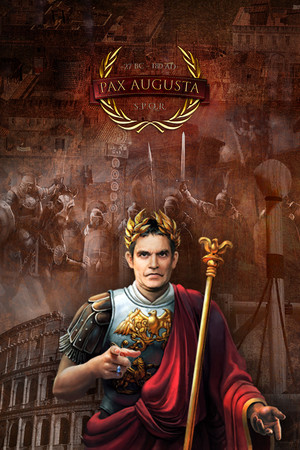
Pax Augusta
Seven years of one man's Roman obsession, shipped as a city-builder with real historical bones - worth it for patient builders, frustrating for anyone expecting a polished launch.
GamerScout Verdict
Best for Caesar-series veterans willing to tolerate a rough launch in exchange for the most historically grounded Roman city-builder available.
Compare Prices(7 stores)
Every store in this table quotes us in euros, so the EUR figure is the price the seller actually set, not our arithmetic — which is why EUR is also the currency we rank in. We only list an offer here when the store gives us its price in euros, so nothing in this table is a number we invented.
Pick USD, PLN, GBP, CAD or AUD in the header and we convert from EUR at the European Central Bank reference rate — converted amounts are prefixed with ~. Your bank or the store may apply a different rate at checkout. We never hide offers based on where you are: everyone sees this whole table.
We may earn a commission when you buy games through links on this page — at no extra cost to you. It never affects our rankings or verdicts.
Price History
Screenshots & Media
About Pax Augusta
My spreadsheet instincts kicked in hard the moment I understood what Pax Augusta actually is: a solo developer's seven-year attempt to out-Caesar the Caesar series, built from scratch by a Swiss programmer who loved Roman history more than he feared the task. That context matters when you're deciding whether to buy right now, because it shapes every strength and every flaw in the package. The city-building loop itself is genuinely absorbing for anyone who thinks in supply chains. You start with little more than a crossroads, a forum, and wooden houses that grow their own food in back gardens. To attract wealthier citizen classes - Liberti first, then progressively more demanding inhabitants - you need to hit development milestones that unlock aqueducts, public baths, gladiatorial arenas, and monumental temples. Every new class tier brings more complex demands, and keeping all of them satisfied simultaneously is where the real decision-making lives. Production chains cover brick, wood, iron, and marble; a slave market feeds the labour needs of religious buildings and quarries; and a named engineer called Vitruvius must physically scout locations before you can pipe in water or place a bridge. Road-first placement rules mean you cannot freely drop a structure and connect it later, which forces deliberate city planning from the earliest turns. Trade agreements with nearby settlements and import-export routes fill resource gaps as your city outgrows its local region. The pacing is slow by design, and players who respect that constraint will find a satisfying optimisation puzzle underneath. The mode selection is solid for a solo project. Career mode drops you onto an overworld map of Gaul and southern Britain, where you found multiple settlements and advance your political standing in Rome. Story mode follows a Roman equites climbing toward the senate, with a narrative inspired by the historian Tacitus and moral choices that add friction. Sandbox removes all restrictions and hands the keys to the diorama enthusiasts. The tutorial covers basics but leaves enough concepts unexplained that new players should expect a trial-and-error learning curve; hovering over locked buildings to preview their unlock milestones is more useful than anything the tutorial explicitly teaches. Here is the honest problem: the technical state at launch is a genuine obstacle. Performance is poor relative to what is on screen, with high-end systems running fans hard and map load times stretching uncomfortably long. The story mode has a reported questline-breaking bug triggered by switching from a city map to the world map, which can strand players before the third quest. Crashes paired with infrequent auto-saves mean repeated progress loss for some users. The camera controls are awkward, building placement feedback is often silent about why a location is invalid, and a few UI labels read like rough translations. Critics landed mostly in the 66-70 range on aggregate, with Steam users sitting at roughly 70 percent positive across several hundred reviews - a spread that accurately reflects a game with real ambition and real roughness coexisting in the same build. If you have patience for an unpolished but sincere passion project, and you have fond memories of Caesar III or Imperium Romanum, Pax Augusta delivers a degree of Roman historical authenticity that no other city-builder currently matches. The citizen class system, the road-centric layout logic, the slave market mechanics, and the social-reputation progression all fit together into something coherent and rewarding once the systems click. The developer is actively patching, the community is engaged, and the foundation is clearly strong enough to support improvement. Right now, though, it asks for tolerance that not every player will have.

Strategy & simulation
Tags
System Requirements
Minimum
- OS
- Windows 10 64-bit
- Memory
- 16 GB RAM
- DirectX
- Version 11
- Storage
- 35 GB available space
- Graphics
- NVIDIA GeForce GTX 960 4 GB or AMD Radeon R9 380 4 GB
- Processor
- Intel Core i5-6402P or AMD Ryzen 1300X
- Sound Card
- Integrated or dedicated DirectX 11 compatible soundcard
Recommended
- OS
- Windows 11 64-bit
- Memory
- 16 GB RAM
- DirectX
- Version 12
- Storage
- 35 GB available space
- Graphics
- NVIDIA GeForce RTX 2060 or AMD Radeon RX 5600 XT
- Processor
- Intel Core i7-9700K / AMD Ryzen 7 3700X
- Sound Card
- Integrated or dedicated DirectX 11 compatible soundcard
Keep exploring
Community Discussion
Be the first to comment on Pax Augusta.
Reviews & Ratings
Game Info
- Developer
- Roger Gassmann
- Publisher
- Senatis
- Release Date
- Apr 17, 2025