
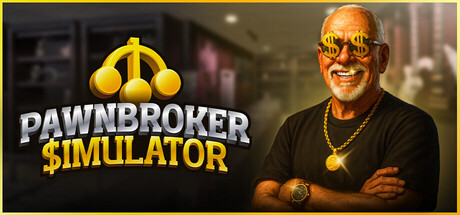
Pawnbroker Simulator
Deeper than its PlayWay-label looks suggest: haggling, fake-spotting, loan risk, and thief management all stack into a surprisingly tense loop for a game this cheap.
GamerScout Verdict
Worth it for sim fans who enjoy margin optimisation and negotiation puzzles; frustrating if polished AI and UI are your baseline requirements.
Compare Prices(6 stores)
Every store in this table quotes us in euros, so the EUR figure is the price the seller actually set, not our arithmetic — which is why EUR is also the currency we rank in. We only list an offer here when the store gives us its price in euros, so nothing in this table is a number we invented.
Pick USD, PLN, GBP, CAD or AUD in the header and we convert from EUR at the European Central Bank reference rate — converted amounts are prefixed with ~. Your bank or the store may apply a different rate at checkout. We never hide offers based on where you are: everyone sees this whole table.
We may earn a commission when you buy games through links on this page — at no extra cost to you. It never affects our rankings or verdicts.
Price History
Screenshots & Media
About Pawnbroker Simulator
My spreadsheet instincts kicked in about thirty minutes after opening day, when I realised I had over-committed cash on a pile of sports memorabilia and a burglar had just cleaned out my unlocked display case overnight. That single sequence tells you most of what you need to know about Pawnbroker Simulator: it is calmer than it sounds on the surface, but underneath the relaxed pacing is a genuine resource-management problem worth taking seriously. The core is a first-person shop-sim built around three interlocking pressures. First, item appraisal: over 200 unique objects pass through your counter, some authentic, some convincing fakes, and your skill tree determines how accurately you can read them. Specialists can be hired for Fine Art, Arms, Gear, and Collectibles categories, which is the closest thing to a tech-tree branch the game offers. Second, negotiation: customers arrive with distinct personalities and patience meters, meaning the same lowball offer lands differently depending on who is standing in front of you. Working out how far to push without losing the deal adds real tension to what could easily have been a rubber-stamp clicking loop. Third, the loan side of the business: accepting pawned goods at interest is genuinely high-stakes because a dynamic market means the collateral item may be worth less by the time you reclaim it. Rent, utilities, and cash-flow pressure are always running in the background, so expanding too fast will actually sink you. For newcomers to the genre, the onboarding is reasonable. Sandbox mode strips out the structured campaign objectives and lets you learn the appraisal and negotiation systems at your own pace, which is the right call. The campaign mode layers in scenario-specific goals for players who want a directed progression path. Character creation goes beyond cosmetics: the starting archetype you pick comes with its own skill buffs, so there is a small but real build-choice at the front door. The shop layout system, which uses a colour-coded item-grouping logic to boost attractiveness, will feel familiar to anyone who has spent time in a store-management sim, and it rewards the kind of obsessive re-arranging that strategy players tend to enjoy anyway. Where the game struggles is polish. The UI has been flagged as clunky by multiple early players, buying AI can feel passive (customers who want to purchase items have a habit of walking out before you reach them), and the overall visual presentation is functional rather than impressive. Steam reviews sit at mostly positive overall but have trended toward mixed in recent weeks, which suggests some post-launch friction around pacing and AI behaviour that the developer has not fully resolved yet. If raw visual fidelity or responsive customer AI are non-negotiable for you, factor that in. If you are the kind of player who reads tooltips and finds satisfaction in margin optimisation, those rough edges will fade into background noise fairly quickly. As a strategy-and-sim specialist, I want to be clear that this is not a deep-systems game by grand-strategy standards. The decision tree is narrow: appraise, negotiate, price, display, secure. But within that narrow corridor it is executed with more consistency than most PlayWay-adjacent releases at this price tier, and the loan mechanic alone adds a layer of deferred-consequence thinking that most shop sims skip entirely. Approach it as a low-commitment economic puzzle with a satisfying flip loop and you will get your money's worth.

Strategy & simulation
Tags
System Requirements
Minimum
- OS
- Windows 10 64-bit
- Memory
- 12 GB RAM
- DirectX
- Version 9.0c
- Storage
- 3 GB available space
- Graphics
- NVIDIA GeForce GTX 960 / AMD Radeon RX 560
- Processor
- Intel Core i5-9400F / AMD Ryzen 5 1600
- Sound Card
- DirectX Compatible
Recommended
- OS
- Windows 11 64-bit
- Memory
- 16 GB RAM
- DirectX
- Version 11
- Storage
- 3 GB available space
- Graphics
- Nvidia GTX 1660 or equivalent
- Processor
- Intel i9 9900k or equivalent
- Sound Card
- DirectX Compatible
Keep exploring
Community Discussion
Be the first to comment on Pawnbroker Simulator.
Reviews & Ratings
Game Info
- Developer
- Next Sky Games
- Publisher
- Ultimate Publishing
- Release Date
- Mar 11, 2026