Compare Pathfinder Adventures prices across 50+ stores and find the best deal. Developed by Obsidian Entertainment. Published by Twin Sails Interactive. Released on 6/15/2017. Available on PC, Mac. Genres: RPG, Strategy. Metacritic score: 85/100.

A card-game adaptation that rewards patience and deck discipline but will frustrate anyone who expected Kingmaker-style RPG depth from the Pathfinder name.

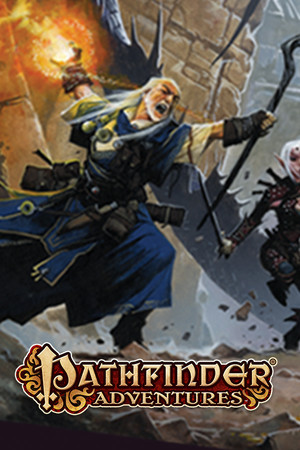
I went into Pathfinder Adventures with my strategy-game brain fully switched on, expecting layered decision trees. What I got was something narrower but genuinely interesting if you meet it on its own terms: a faithful digital port of the Pathfinder Adventure Card Game, specifically the Rise of the Runelords campaign, where the entire mechanical language is cards, dice, and location control rather than leveling menus or skill trees. Each character runs a personal deck that doubles as both inventory and hit points - take damage, discard cards; run out of cards, your character is done for the scenario. That dual-purpose design creates constant, low-key tension that a straight HP bar never could. The core loop sends your party of iconic Pathfinder characters (Fighter, Rogue, Sorcerer, Cleric, and others, each with distinct stat affinities and card-type restrictions) across multiple locations simultaneously. Your job is to flip cards, resolve bane and boon encounters using dice rolls augmented by your hand, lock down locations to corner the scenario villain, and do it all before the blessing deck - effectively a turn timer - runs out. The dice rolling is simulated faithfully, from d4s up through d20s, and cards from weapons to allies to spells can be played to stack extra dice or mitigate incoming damage. Crucially, using a card often means banishing, burying, or discarding it, so resource management is the real strategic layer. Knowing when to burn a Blessing of the Gods on a risky combat check versus hoarding it for the villain confrontation is the kind of decision that separates clean runs from last-turn collapses. The tutorial compresses the rulebook into a playable mini-adventure, which is exactly the right approach for a game this rules-dense. It does not explain everything - character skill icons in particular stay cryptic longer than they should - and the community has produced guides specifically for players drowning in the location-closing and villain-cornering mechanics. But the live rule-checks and in-game reference book mean you cannot accidentally make an illegal move, which eliminates the single biggest frustration of the physical version. Multiple adventure profiles let you replay the full campaign with different party compositions, and higher difficulty tiers exist for those who blew through normal mode. Deck-building between scenarios - swapping acquired weapons, armour, spells, and allies into character decks while respecting each class's card-type limits - gives the game a satisfying between-mission strategy layer. The honest caveats are real, though. Steam player sentiment sits at a mixed 68 percent positive, and the criticisms are consistent: the game can feel mechanically repetitive by mid-campaign as locations recycle their special rules, the RNG is genuinely punishing (rolling snake-eyes on a 95-percent check happens more than comfort allows), and the bug reports across years of community threads are hard to ignore. The macOS situation is worse - the game is outright incompatible with Catalina and above, making it a PC-only purchase in practice. There is also no online multiplayer; pass-and-play is the ceiling for co-op, which hollows out the collaborative fantasy considerably for anyone who wanted to play with friends remotely. The PC version converted from a free-to-play model to a buy-to-play release, and the Obsidian Edition bundles in extra treasure cards including Pillars of Eternity crossover ally cards for Eder and Pallegina, though veterans note that over-leveled treasure chest cards can trivialise normal difficulty if you are not careful about self-imposing restrictions. This is a niche purchase. If you own the physical Pathfinder Adventure Card Game and want to cut setup time to zero, or if you are a solo card-strategy player who can tolerate variance-heavy dice and wants dozens of hours of campaign content with genuine deck-discipline decisions, it clicks. If you want a Pathfinder RPG with story weight and character arcs, point yourself at Kingmaker or Wrath of the Righteous instead - those games share the IP name but almost nothing else with what is on offer here. Diego, Scout Team

Pathfinder Adventures
RPGStrategy

Pathfinder Adventures

Jun 15, 2017Obsidian EntertainmentTwin Sails Interactive
GamerScout Says

A card-game adaptation that rewards patience and deck discipline but will frustrate anyone who expected Kingmaker-style RPG depth from the Pathfinder name.

PCMac
Best Price Available
0.00
at N/A
Historical low: $0.88

Compare Prices(0 stores)

Loading prices...

We may earn a commission when you buy games through links on this page — at no extra cost to you. It never affects our rankings or verdicts.

Screenshots & Media

Screenshot

About Pathfinder Adventures

I went into Pathfinder Adventures with my strategy-game brain fully switched on, expecting layered decision trees. What I got was something narrower but genuinely interesting if you meet it on its own terms: a faithful digital port of the Pathfinder Adventure Card Game, specifically the Rise of the Runelords campaign, where the entire mechanical language is cards, dice, and location control rather than leveling menus or skill trees. Each character runs a personal deck that doubles as both inventory and hit points - take damage, discard cards; run out of cards, your character is done for the scenario. That dual-purpose design creates constant, low-key tension that a straight HP bar never could. The core loop sends your party of iconic Pathfinder characters (Fighter, Rogue, Sorcerer, Cleric, and others, each with distinct stat affinities and card-type restrictions) across multiple locations simultaneously. Your job is to flip cards, resolve bane and boon encounters using dice rolls augmented by your hand, lock down locations to corner the scenario villain, and do it all before the blessing deck - effectively a turn timer - runs out. The dice rolling is simulated faithfully, from d4s up through d20s, and cards from weapons to allies to spells can be played to stack extra dice or mitigate incoming damage. Crucially, using a card often means banishing, burying, or discarding it, so resource management is the real strategic layer. Knowing when to burn a Blessing of the Gods on a risky combat check versus hoarding it for the villain confrontation is the kind of decision that separates clean runs from last-turn collapses. The tutorial compresses the rulebook into a playable mini-adventure, which is exactly the right approach for a game this rules-dense. It does not explain everything - character skill icons in particular stay cryptic longer than they should - and the community has produced guides specifically for players drowning in the location-closing and villain-cornering mechanics. But the live rule-checks and in-game reference book mean you cannot accidentally make an illegal move, which eliminates the single biggest frustration of the physical version. Multiple adventure profiles let you replay the full campaign with different party compositions, and higher difficulty tiers exist for those who blew through normal mode. Deck-building between scenarios - swapping acquired weapons, armour, spells, and allies into character decks while respecting each class's card-type limits - gives the game a satisfying between-mission strategy layer. The honest caveats are real, though. Steam player sentiment sits at a mixed 68 percent positive, and the criticisms are consistent: the game can feel mechanically repetitive by mid-campaign as locations recycle their special rules, the RNG is genuinely punishing (rolling snake-eyes on a 95-percent check happens more than comfort allows), and the bug reports across years of community threads are hard to ignore. The macOS situation is worse - the game is outright incompatible with Catalina and above, making it a PC-only purchase in practice. There is also no online multiplayer; pass-and-play is the ceiling for co-op, which hollows out the collaborative fantasy considerably for anyone who wanted to play with friends remotely. The PC version converted from a free-to-play model to a buy-to-play release, and the Obsidian Edition bundles in extra treasure cards including Pillars of Eternity crossover ally cards for Eder and Pallegina, though veterans note that over-leveled treasure chest cards can trivialise normal difficulty if you are not careful about self-imposing restrictions. This is a niche purchase. If you own the physical Pathfinder Adventure Card Game and want to cut setup time to zero, or if you are a solo card-strategy player who can tolerate variance-heavy dice and wants dozens of hours of campaign content with genuine deck-discipline decisions, it clicks. If you want a Pathfinder RPG with story weight and character arcs, point yourself at Kingmaker or Wrath of the Righteous instead - those games share the IP name but almost nothing else with what is on offer here. Diego, Scout Team

Tags

singleplayerachievementstrading-cardstier:sub-5Digital Board GameDeck ManagementParty CompositionRNG-HeavyLocation ControlTabletop PortSolo StrategyPass-and-Play Co-opScenario-BasedVillain Hunting

Steam Deck & Linux

Steam Deck PlayableProtonDB Silver

Valve rates this game Steam Deck Playable. Playable on Linux with some workarounds. Based on 15 ProtonDB community reports.

System Requirements

Minimum

OS
Windows 7/Windows 8/Windows 10
Memory
2 GB RAM
DirectX
Version 9.0c
Storage
4 GB available space
Graphics
512MB VRAM GPU
Processor
2GHz CPU
Sound Card
DirectX 9.0c compatible sound card

Community Discussion

Be the first to comment on Pathfinder Adventures.

Reviews & Ratings

Metacritic
85

Game Info

Developer
Obsidian Entertainment
Publisher
Twin Sails Interactive
Release Date
Jun 15, 2017

Price Alert

Get notified when the price drops below your target!

Create Alert

Price History

2026-06-100.88(lowest)

More from Obsidian Entertainment

Buy smarter: helpful guides

Looking for more? See games like Pathfinder Adventures

Frequently asked questions about Pathfinder Adventures

How much does Pathfinder Adventures cost?

Pathfinder Adventures pricing changes often and varies by store, edition and region. The live price table on this page compares the cheapest in-stock key and store offers across 50+ verified shops, so you always see the current lowest price before you buy.

Where can I buy Pathfinder Adventures cheapest?

Compare Pathfinder Adventures prices across every verified store in the price table on this page. We list the cheapest in-stock key and store offers, updated regularly, so you always see the best current deal before you buy.

What platforms is Pathfinder Adventures available on?

Pathfinder Adventures is available on PC, Mac.

When was Pathfinder Adventures released?

Pathfinder Adventures was released on 15 June 2017.

Who developed Pathfinder Adventures?

Pathfinder Adventures was developed by Obsidian Entertainment and published by Twin Sails Interactive.

Is Pathfinder Adventures worth buying?

Pathfinder Adventures holds a Metacritic score of 85/100, making it one of the standout RPG titles. See the full reviews, ratings and how-long-to-beat times on this page to decide.