Parkitect
Parkitect is a theme-park builder that nails the classic RollerCoaster Tycoon formula, then adds supply chains, staff logistics, and 8-player co-op on top.
GamerScout Verdict
Best for fans of classic park builders ready to engage with staff logistics and supply lines - not just pretty coasters.
Compare Prices(5 stores)
Every store in this table quotes us in euros, so the EUR figure is the price the seller actually set, not our arithmetic — which is why EUR is also the currency we rank in. We only list an offer here when the store gives us its price in euros, so nothing in this table is a number we invented.
Pick USD, PLN, GBP, CAD or AUD in the header and we convert from EUR at the European Central Bank reference rate — converted amounts are prefixed with ~. Your bank or the store may apply a different rate at checkout. We never hide offers based on where you are: everyone sees this whole table.
We may earn a commission when you buy games through links on this page — at no extra cost to you. It never affects our rankings or verdicts.
Price History
Screenshots & Media
About Parkitect
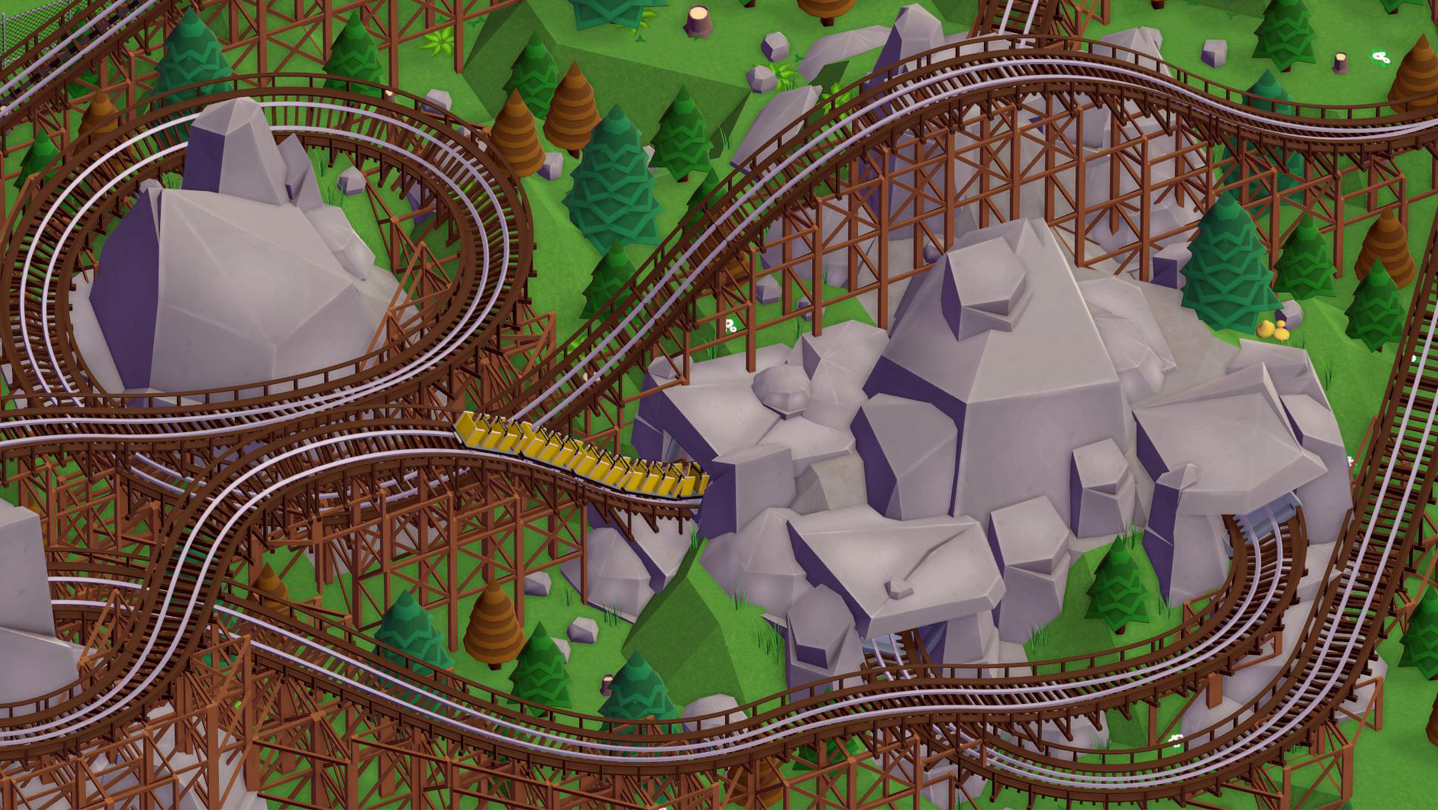
Parkitect is a construction-and-management simulation from two-person studio Texel Raptor, and it sits comfortably in the lineage of the old Bullfrog and Chris Sawyer park builders. You design coasters, lay paths, zone your food stalls, and watch guests pour in. That much is familiar. What separates Parkitect from a simple nostalgia product is the layer of operational systems underneath the pretty rides. Shops generate rubbish that staff must carry to depots. Supply lines affect how quickly food stalls restock. Staff happiness degrades if workers have to march across the entire park to reach their break room. None of this is RollerCoaster Tycoon 2. It is closer to a light operations puzzle wrapped inside a park builder. From a decision-depth standpoint, the game earns its strategy tag. Early parks are forgiving - you can ignore the supply-chain logic and still turn a profit on ride tickets. But medium and late scenarios start squeezing margins. Path layout directly affects guest throughput, so a bottleneck near your entrance genuinely tanks satisfaction scores. Ride theming influences guest perceived value and therefore how much they will pay. Underground service corridors to hide staff movement from guests is a mechanic that sounds fiddly but quickly becomes second nature and deeply satisfying to optimise. The AI guest simulation is solid enough that you can read queue lengths as real feedback rather than noise. That is not always a given in the genre. For newcomers to park management sims, the tutorial campaign does a reasonable job of introducing mechanics one at a time across a sequence of scenarios. Each scenario has a defined goal and a time pressure, which focuses attention better than a pure sandbox start. The sandbox mode is also available, and that is where the mod ecosystem really opens up. The Steam Workshop has a substantial library of custom scenery, blueprints, and scenarios. The modding tools are not deep in a Paradox sense - there is no scripting layer for economic overhauls - but the content volume is genuinely impressive for a game from a two-person team. Co-op supports up to eight players, which is a legitimate differentiator if you have friends who want to divide management duties rather than compete. The downsides are real but minor. The coaster editor is capable, though riders who want extremely technical coaster physics will find it less granular than specialist tools. Scenario variety flattens a bit past the midpoint of the campaign - once you have learned the supply-chain rhythm, later scenarios layer on financial pressure more than they introduce new mechanical problems. And the visual style is clean but plain, which will divide players who want spectacle versus those who want readable information density. If you approach Parkitect as a management puzzle with a charming skin, it delivers strong value across a long campaign plus an active modded scene. If you want a casual park-decoration toy, it still works, though you may feel the operational systems nagging at you. The 94 percent Steam rating across eight thousand reviews is not an accident - this is a well-finished game from people who understood exactly what they were building.

Strategy & simulation
Tags
System Requirements
Minimum
- Processor
- 2.3 GHz Intel i3 or comparable
- Memory
- 4 GB RAM
- Graphics
- Shader Model 3.0 capabilities (anything with a graphics driver that isn't older than ~2016 probably works)
- DirectX
- V…
Recommended
- Processor
- 3.0 GHz Intel i5 or comparable
- Memory
- 6 GB RAM
- Graphics
- Dedicated graphics card made after ~2015
- DirectX
- Version 11
- Storage
- 2 GB available space Additional Note…
Keep exploring
Community Discussion
Be the first to comment on Parkitect.
Reviews & Ratings
Game Info
- Developer
- Texel Raptor
- Publisher
- Texel Raptor
- Release Date
- Nov 29, 2018