Paradox Soul
A four-hour cover-shooter metroidvania set in a 1987 Icelandic research facility gone very wrong. Honest about its budget roots, punishing about your health bar.
GamerScout Verdict
Worth a look for atmosphere-first metroidvania fans who can forgive a thin enemy roster and a runtime that ends just as the cover mechanics get interesting.
Compare Prices(7 stores)
Every store in this table quotes us in euros, so the EUR figure is the price the seller actually set, not our arithmetic — which is why EUR is also the currency we rank in. We only list an offer here when the store gives us its price in euros, so nothing in this table is a number we invented.
Pick USD, PLN, GBP, CAD or AUD in the header and we convert from EUR at the European Central Bank reference rate — converted amounts are prefixed with ~. Your bank or the store may apply a different rate at checkout. We never hide offers based on where you are: everyone sees this whole table.
We may earn a commission when you buy games through links on this page — at no extra cost to you. It never affects our rankings or verdicts.
Price History
Screenshots & Media
About Paradox Soul
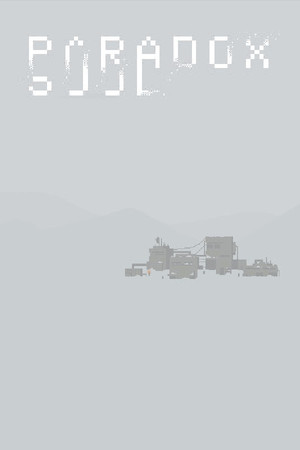
I went into Paradox Soul expecting a forgettable sub-five-dollar curiosity and came out with something more complicated than that. Ritual Games built a compact sci-fi metroidvania around a genuinely unusual mechanical hook: the cover system. You are Dr. Alli Rose, dropped alone into a frozen Icelandic test facility in 1987 with no explanation, no tutorial, and enemies that will kill you in one or two hits depending on your chosen difficulty. The instinct is to run and gun. The game punishes that instinct quietly and repeatedly until you learn to dash behind crates and machinery before firing. Once that click happens, the rhythm of each room shifts from frustrating to almost puzzle-like, each chamber becoming a small spatial problem to solve before you move deeper. The facility descends through numbered rooms, and the map hands itself to you early, which is both a gift and a mild disappointment. Traditional metroidvania mystery, the feeling of not knowing where you are or what connects to what, is largely absent. You always know where to go. The gating is ability-based in the expected way: a laser upgrade here, a bomb there, an electrode that opens previously impassable doors. The electrode and bomb feel more like keys than weapons, and a small roster of enemy types, roughly seven variants across the whole game, means combat grows repetitive before the credits roll. The three bosses are the exception. Because your health is so fragile, boss encounters become strict pattern-reading exercises, and clearing one feels proportionally satisfying. What Paradox Soul does quietly well is atmosphere. The pixel art is lo-fi but intentional, the facility communicating its history through environmental details rather than text. Each room holds small signs of what the scientists were doing and what went wrong. The synth soundtrack leans into cold 1980s sci-fi without becoming intrusive, and the whole thing carries a low-volume dread that rewards players willing to slow down and read the walls. There is a true ending locked behind two hidden rooms that the game barely acknowledges exist, which will either feel like a satisfying discovery or a cheap obscurity depending on your patience for that sort of thing. The honest ceiling here is time. Most players will see credits in three to four hours, and the limited enemy variety and linear structure mean a second run offers little the first did not. The cover mechanic, the strongest and most distinctive thing about Paradox Soul, never gets fully stress-tested. The game ends before it can push that system as far as it deserves. Compared to the genre heavyweights it sits next to on any storefront, this is clearly a micro-budget first outing. But judged as a compact, atmosphere-forward mini-metroidvania with a mechanical identity of its own, it earns its place on the lower shelf without embarrassing itself.

Indie & narrative
Tags
System Requirements
Minimum
- OS
- Windows 7 or higher
- Memory
- 4 GB RAM
- Processor
- Pentium(R) Dual-Core E 5200 2.50GHz or better
Recommended
- OS
- Windows 10
- Memory
- 4 GB RAM
- Processor
- Intel® Core™ i5-5287U Processor
Keep exploring
Community Discussion
Be the first to comment on Paradox Soul.
Reviews & Ratings
No ratings available
Game Info
- Developer
- Ritual Games
- Publisher
- GrabTheGames
- Release Date
- Feb 9, 2018