
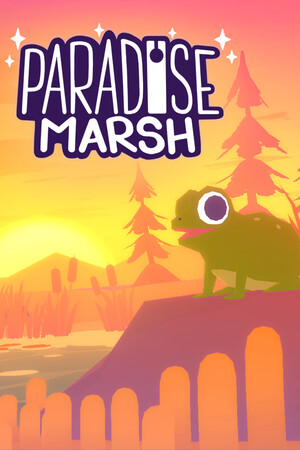
Paradise Marsh
Solo dev LazyEti made a two-to-four-hour bug-catching poem about the sky falling, and somehow it lands harder than games ten times its length. Worth every quiet minute, if wandering is your speed.
GamerScout Verdict
Best for players who find meaning in slow wandering and can finish a game in an evening without needing a combat loop.
Compare Prices(2 stores)
Every store in this table quotes us in euros, so the EUR figure is the price the seller actually set, not our arithmetic — which is why EUR is also the currency we rank in. We only list an offer here when the store gives us its price in euros, so nothing in this table is a number we invented.
Pick USD, PLN, GBP, CAD or AUD in the header and we convert from EUR at the European Central Bank reference rate — converted amounts are prefixed with ~. Your bank or the store may apply a different rate at checkout. We never hide offers based on where you are: everyone sees this whole table.
We may earn a commission when you buy games through links on this page — at no extra cost to you. It never affects our rankings or verdicts.
Price History
Screenshots & Media
About Paradise Marsh
I went into Paradise Marsh expecting a pleasant distraction and came out the other side genuinely sitting with it, which almost never happens in under four hours. Solo developer Etienne Trudeau built a first-person, procedurally generated wetland that loops endlessly through a handful of themed biomes: warm Torii-gate meadows, pine groves, snowfields, rainy fens. There is no minimap, no quest marker, no timer. You have a bug net, a journal, and the sky above you, which is conspicuously empty. The loop is this: catch critters, fill your journal, wait for nightfall (or nudge the day-night cycle by resting), then return those creatures to the sky as stars that slowly rebuild broken constellations. Different species have different rules. Moths appear only under lamp posts after dark. Tadpoles stay close to shallow water. Spiders need patience; butterflies are skittish. Each catch adds a page to your journal with a constellation outline and a small counter. The notebook is your only real guide, and it earns its keep. Once a species is complete and its constellation filled, the animals quietly stop spawning, and the sky gets a little brighter. The rhythm is meditative and, at its best, genuinely moving. What lifts this above a cozy-game checkbox is the writing and the sound. Disasterpeace, who did the music for Fez and Hyper Light Drifter, contributes a soundscape that starts gentle and tilts slowly toward something hushed and vast as you near completion. Birds scattered through the marsh will stop and recite short poems if you approach them. The constellations speak when you fill them, each bug species carrying its own philosophy in small, well-chosen lines. Some of that dialogue is a little uneven, and a handful of the world's secrets feel like they should trigger something more concrete than they do. Bottled messages are hard to find late in a run, and a few environmental interactions, including a fishing rod mechanic and some instrument pickups, leave you wondering if the payoff exists somewhere you have not found, or simply does not. That uncertainty reads more as a small structural fumble than any kind of design statement. There are accessibility options worth noting. You can adjust FOV, screen shake, text wobble, and pixel resolution. Some players report motion sickness in first-person even with those settings tuned down, so factor that in if you are sensitive. The 13 in-game achievements range from obvious to genuinely cryptic, and a guide exists if you want to clean up without a second playthrough. On Steam, player sentiment sits well above 90 percent positive across several hundred reviews, which is the kind of consensus that small handcrafted games rarely reach. The gap between that reception and the more divided critical average is interesting. It tells you something true: this game is a mood. You either give yourself to its pace or you do not.

Indie & narrative
Tags
System Requirements
Minimum
- OS
- Windows 7 SP1+ (or later)
- Memory
- 2 GB RAM
- DirectX
- Version 11
- Storage
- 450 MB available space
- Graphics
- Intel Graphics 4400 or better
- Processor
- Intel or AMD Dual Core at 2 GHz or better
Recommended
- OS
- Windows 69
- Memory
- 9000 GB RAM
- DirectX
- Version 12
- Storage
- 69420 GB available space
- Graphics
- Nvidia RTX 420HD
- Processor
- Quantum fusion reactor 4000
- Sound Card
- Moog System 55 Modular Synth
Keep exploring
Community Discussion
Be the first to comment on Paradise Marsh.
Reviews & Ratings
No ratings available
Game Info
- Developer
- LazyEti
- Publisher
- LazyEti
- Release Date
- Oct 13, 2022