
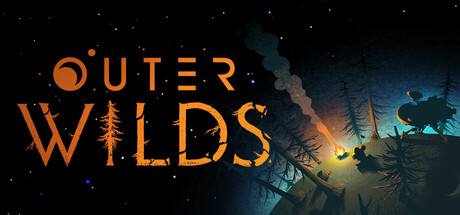
Outer Wilds
Pure curiosity is the only currency that matters here, no combat, no skill trees, just a handcrafted solar system full of secrets and a 22-minute clock before the sun wipes everything out.
GamerScout Verdict
Essential for players who want pure discovery, but expect real friction if time-pressure or zero hand-holding tests your patience.
Compare Prices(9 stores)
Every store in this table quotes us in euros, so the EUR figure is the price the seller actually set, not our arithmetic — which is why EUR is also the currency we rank in. We only list an offer here when the store gives us its price in euros, so nothing in this table is a number we invented.
Pick USD, PLN, GBP, CAD or AUD in the header and we convert from EUR at the European Central Bank reference rate — converted amounts are prefixed with ~. Your bank or the store may apply a different rate at checkout. We never hide offers based on where you are: everyone sees this whole table.
We may earn a commission when you buy games through links on this page — at no extra cost to you. It never affects our rankings or verdicts.
Price History
Screenshots & Media
About Outer Wilds
My first hour with Outer Wilds felt like being handed a library card and told the building was on fire, in the best possible way. You wake up on a small woodland planet called Timber Hearth, locals strumming folk songs around campfires, and within minutes you're piloting a rickety handmade spacecraft into open space with zero instruction and a completely free hand over where to go next. That tonal whiplash, cozy folk-music warmth crashing into the cold silence of orbit, tells you almost everything you need to know about what Mobius Digital was going for. The entire structure rests on a 22-minute time loop. The sun goes supernova, everything resets, and you start again at the campfire. No gear carries over, no map pins, no quest markers. What does carry over is knowledge, yours, not your character's. You learn that a certain planet's sand layer swallows its ruins early in the loop, or that a quantum moon only appears when you're looking directly at it, and you use that understanding to reach places you physically couldn't before. The ship log functions as a sort of corkboard, stitching together text entries and audio logs from the ruins of the Nomai, an extinct alien civilization whose archaeology slowly explains why the star is dying. Progress is entirely knowledge-gated: in theory you could fly to a late-game location in the opening minutes if you knew exactly what to do. That design confidence is rare and it earns the game a huge amount of goodwill. The scout camera is the one real tool in your kit beyond the ship itself, a launchable probe that photographs ahead of you, useful for observing quantum objects without breaking their state by looking at them directly. It is an elegant, low-friction solution to what could have been a fiddly puzzle mechanic. The physics model underneath everything is similarly impressive. Every planet has its own gravity well and orbital path. The ship handles like a ship, not a sports car, and early deaths, crashing into the Attlerock moon, sizzling into the sun, suffocating after stepping out without a suit, are real. The controls take adjustment, and that learning curve puts some players off before the game has had a chance to show its hand. The honest criticism is that Outer Wilds can strand you. Some loops produce nothing useful because you genuinely do not know where to look next, and the game's refusal to nudge you lands differently depending on your patience. Reviewers at major outlets flagged the same wall: you hit a point where everything feels vague, and retreading familiar routes to find the thread you missed can tip from contemplative into frustrating. The time-window problem is real too, some locations are only reachable at specific points in the loop, so a missed window means burning the remaining minutes or dying intentionally and starting over. If you hate time pressure in exploration games, that friction will follow you through the whole runtime. For players who are wired for pure discovery, though, this is one of the most thoughtfully constructed spaces in recent memory. Andrew Prahlow's soundtrack does quiet, unglamorous work, the End Times track that swells as the supernova approaches creates genuine urgency without a single enemy in sight. The Nomai writing scattered across ruins, caves, and orbiting structures unfolds more like archaeology than exposition, and when the pieces finally connect, the payoff is proportional to the confusion that preceded it. Outer Wilds is not replayable in any traditional sense, spoiling it for yourself, or having it spoiled, genuinely damages the experience in a way that almost no other game can claim. Go in knowing as little as possible and accept that the first few loops will feel purposeless. They are not.

Catch-all
Tags
System Requirements
Minimum
- OS
- Windows 7
- Processor
- Intel Core i5-2300 | AMD FX-4350
- Memory
- 6 GB RAM
- Graphics
- Nvidia GeForce 660 (2GB) | AMD Radeon HD 7870 (2 GB)
Recommended
- OS
- Windows 10
- Processor
- Intel Core i5-8400 | AMD Ryzen 5 2600X
- Memory
- 8 GB RAM
- Graphics
- Nvidia GeForce GTX 1060 | AMD Radeon RX 580
- Storage
- 8 GB av…
DLC & Add-ons for Outer Wilds2
Expansions, DLC packs and add-on content for this game. Click any item to see store offers.
Keep exploring
Community Discussion
Be the first to comment on Outer Wilds.
Reviews & Ratings
Game Info
- Developer
- Mobius Digital
- Publisher
- Annapurna Interactive
- Release Date
- Jun 18, 2020

![🌖 Outer Wilds 🌲 [Day 2] - Blind first playthrough. Backseating is ok, no spoilers. To infinity and a bit further](https://static-cdn.jtvnw.net/previews-ttv/live_user_jaydesu_-440x248.jpg)
